
Christina Cedillo, University of Houston Clear Lake
Kimberly Gail Wieser-Weryackwe, University of Oklahoma
Ana Milena Ribero, Oregon State University
Introduction
We are honored to have worked together to edit the very first special issue of constellations: a cultural rhetorics publishing space. As we consider how to introduce our special issue on transnational cultural rhetorics, we ask ourselves (and our readers): What is transnational about culture?
The short answer is: everything. Indeed, culture is very often, although not always, constructed across national contexts. Culture, in many ways, calls into question the primacy of nation and national identity. Culture does not require allegiance to one particular nation. Culture can be simultaneously local and global.
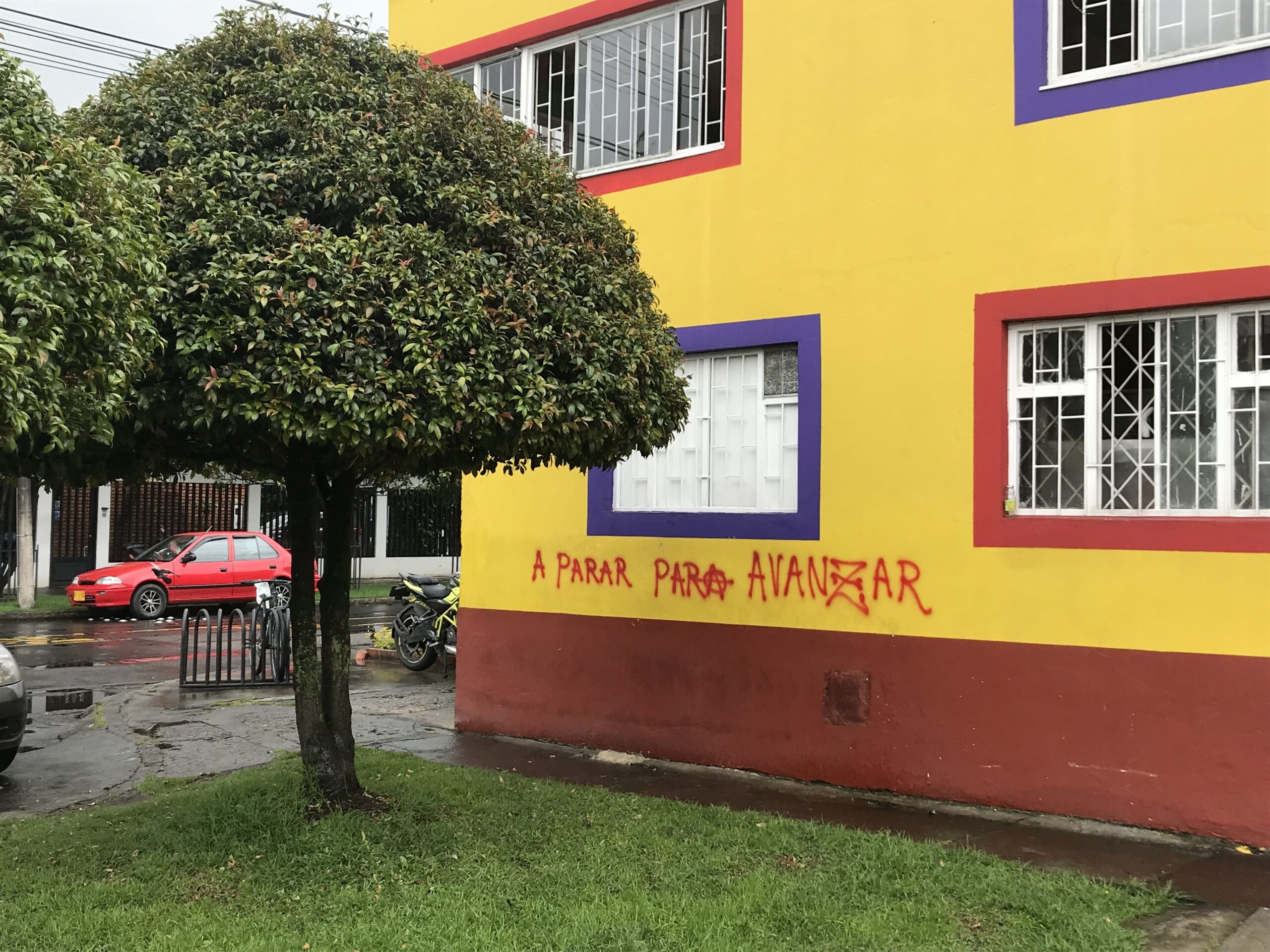
The view from the house where Ana grew up in Bogotá. The graffiti reads “A parar para avanzar,” which literally means, “Stop to progress,” but translates into “Strike to progress.”
To think about transnational cultural rhetorics is to consider the potential of living and thinking beyond the borders of a nation. Chicanx feminist Gloria Anzaldúa theorized this sort of existence through the concept of nepantla, which she used to describe not only her life as a queer Chicana in the US-Mexico borderlands, but also the ideological space of living transnationally—“the overlapping space between different perceptions and belief systems.”[1] While Anzaldúa does not name transnational cultural rhetorics specifically, her description of nepantla illustrates the sort of insight that comes from the fluidity of a transnational existence. She writes, “In nepantla you are exposed, open to other perspectives, more readily able to access knowledge derived from inner feelings, imaginal states, and other events, and to ‘see through’ them with mindful holistic awareness.” [2], In other words, living in nepantla and thinking transnationally allows us to question the taken-for-granted, to understand that there is no single way of living, no single way of doing things, no single politics.
Such a flexibility of mind is particularly valuable for rhetoric scholars in our current geopolitical moment. We are living in a time when nothing can be taken for granted: not the future of our oceans, nor the safety of our children, nor the strength of our democracies.
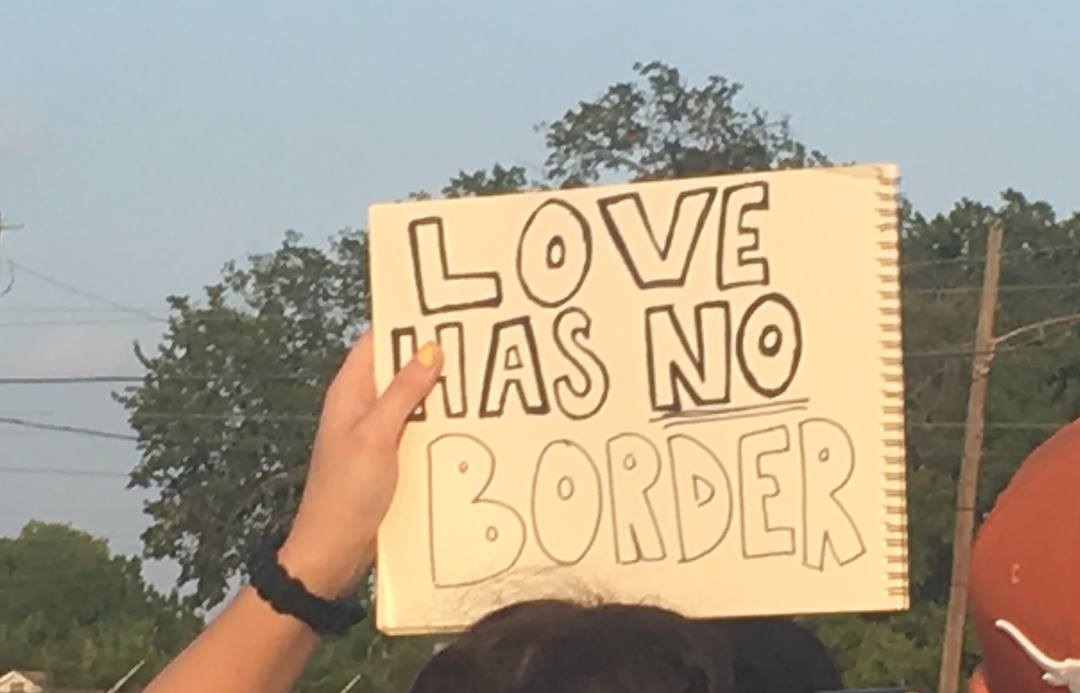
Photo of a protest sign taken in Houston, TX, while marching against family separation of migrants.
The writers in this special issue help us consider the importance of thinking about cultural rhetorics transnationally. While this is only an academic journal issue and cannot save the world, cultural rhetorics’ attention to story creates vital spaces for engaging the personal as political, and these spaces are crucial for people whose lives are always and inevitably politicized. This issue explores the global reality that our bodies are politicized and therefore marked in ways that subject them to regulation and systemic oppression, whether we are inside or outside the academy. Cultural rhetorics allows us to promote alliance and mutual survivance in the spaces we occupy across the community/university divide, across international borders, and across the imbricated communal, academic, and international spaces we occupy. Resisting oppression, no matter where we travel in our bodies, is possible through building relational networks. We can do this by constellating our stories with each other and building new meaning and new solutions as we build alliances.
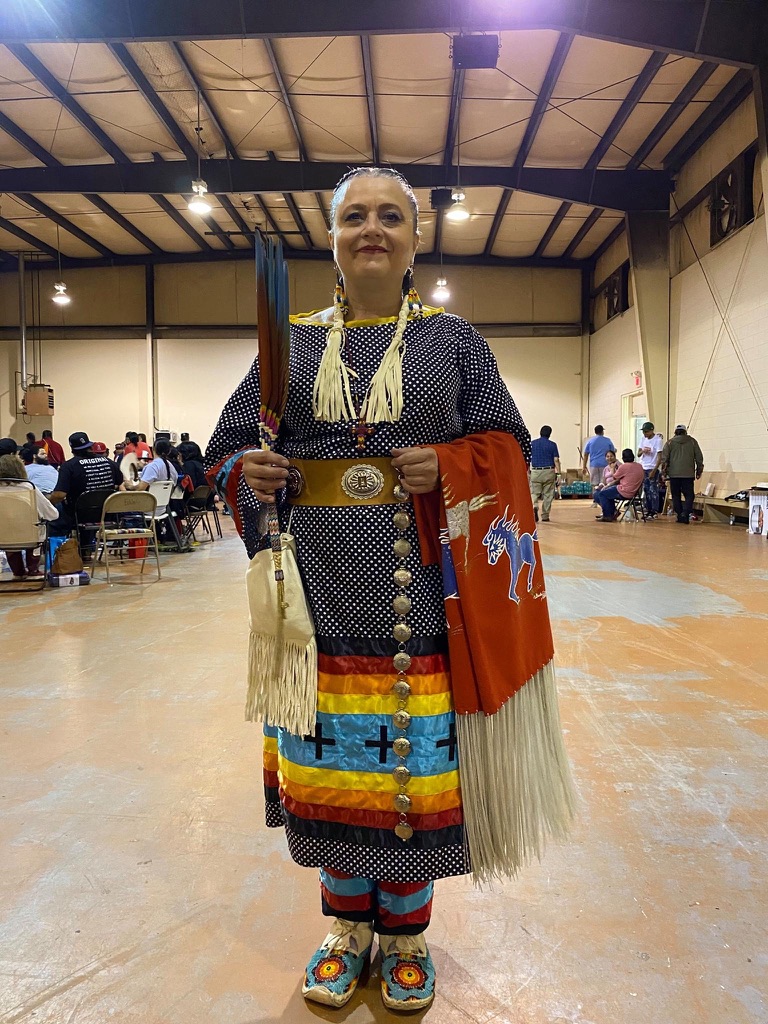
Kim as Head Lady Dancer for two of her nieces—Marie Whitebird and Terra Blackbear—at their high school graduation powwow in Watonga, Oklahoma. Indian Country, made up 274+ sovereign tribal nations—39 of them in Oklahoma alone—is international.
For us, the editors of this special issue, cultural rhetorics’ emphasis on sharing stories about our experiences enriched our editing practices. For me, Christina, editing this issue with Ana and Kim was an illuminating experience that deepened my knowledge of editorial work. Although I am the lead editor of The Journal of Multimodal Rhetorics, co-editing can be a very different process, as I learned while editing journal issues on diversity and equity for Present Tense and Composition Studies alongside Ersula Ore and Kimberly Gail Wieser-Weryackwe, and co-editing an issue on cultural rhetorics for College Composition and Communication with Kimberly Gail Wieser-Weryackwe and Rachel Jackson. Co-editing a journal issue highlights the value of dialogue and mutual support in building more inclusive spaces. There is no one way to edit; the process of editing a journal issue, like rhetoric, cannot be universalized. Each co-editor brings their experiences and knowledges to the process, and together, individual editors weave a collaborative “story” that resonates far beyond the page by illustrating how to build a close community that makes space for others. In other words, editing is its own special kind of embodied rhetoric that (hopefully) demonstrates care for, and accountability to, authors, readers, and the field.
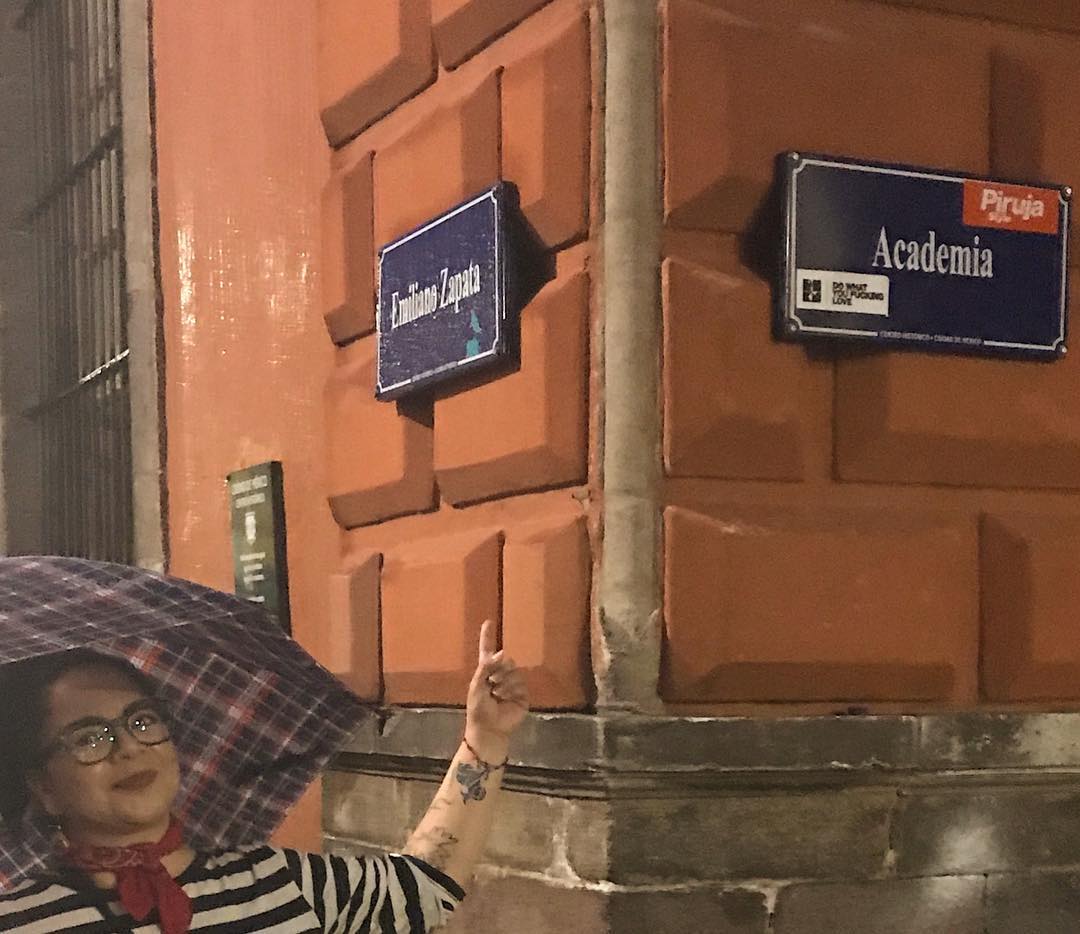
Christina stands at the intersection of Emiliano Zapata and Academia in the center of Mexico City, DF. The Academia street sign bears two stickers, one in English that says “Do what you fucking love” and one in Spanish that says “Piruja” (which translates to “whore”).
I, Kim, came to editing this issue with both excitement and relief. The past several years of work were intense in a number of ways. After the public murder of George Floyd, Ersula Ore organized several scholars from across what are known as the identity caucuses of the Conference on College Composition and Communication, which is part of the larger National Council of Teachers of English, with the goal of publishing a special issue on antiracism within our field. Christina and I were willing to join her as editors, and we began a journey that would be longer than we thought. We wanted to nurture. We wanted to mentor in a world that was clearly anything but nurturing. We gathered together young scholars. We read their thoughts on and responses to racism in the academy and discipline.
They had so much to say.
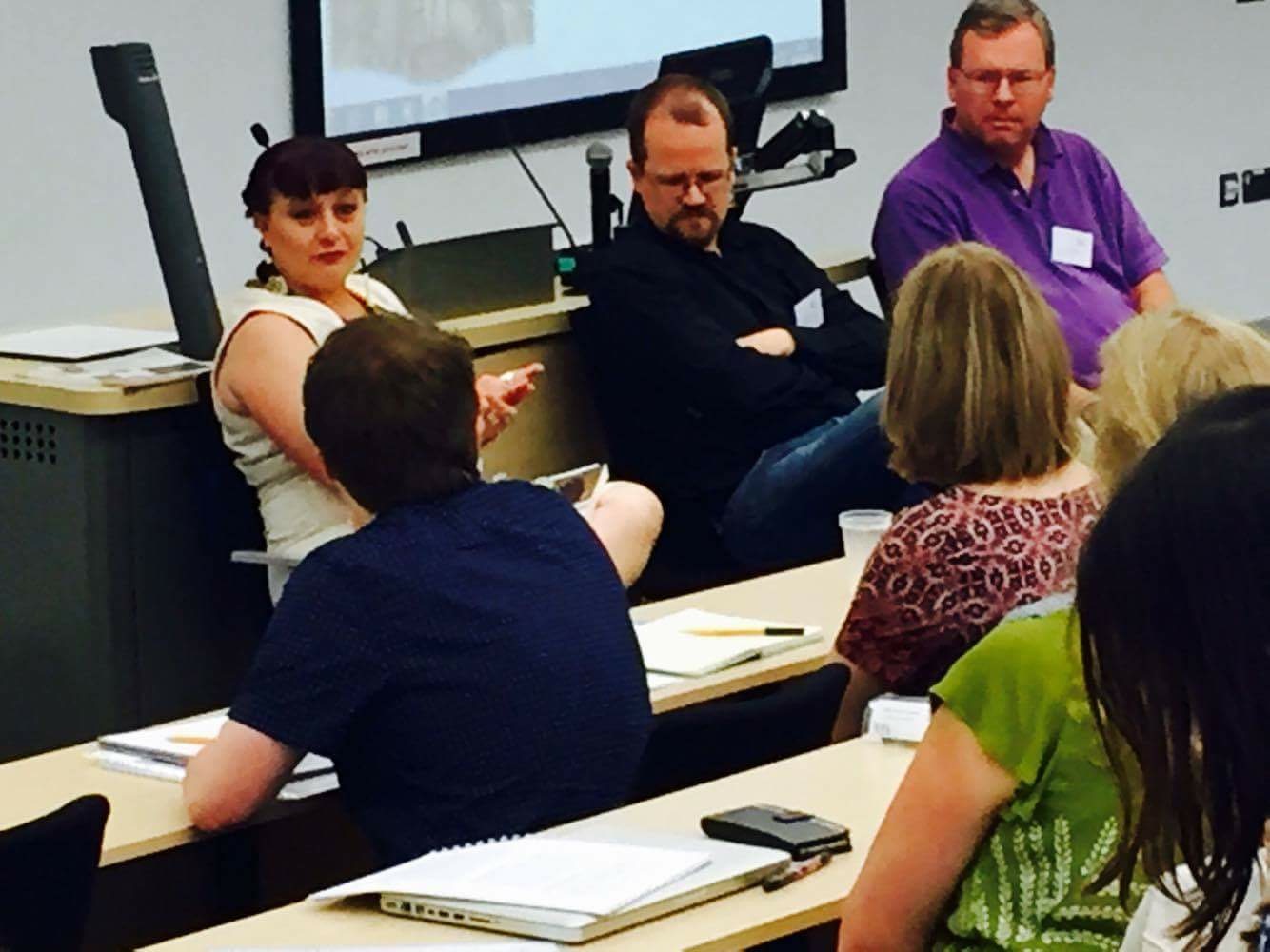
Kim participating in “Indigenous Environments: Contested, Negotiated, Sustained,” hosted by the Native Studies Research Network United Kingdom in Norwich, UK.
What started as one proposed issue turned into editing and publishing two symposia and four special issues. Editing so many issues and symposia was a lot of work, but it was as rewarding as it was difficult, and those rewards were personal as well as intellectual and professional. Christina, Ersula, and I spent much of the pandemic on Zoom together, becoming more than co-editors. We wrote so much together that we began to finish each other’s sentences. We shared our homes and homelife with each other at a time when no one was visiting in person, when many of us barely left our homes at all. We commiserated with each other when times were bad and/or the work was difficult, and we celebrated over wonderful, good things, like the birth of Ersula’s baby. We grew and changed together, and we moved forward transformed. Rachel Jackson joined Christina and me for the third special issue. Ana joined us here for the final one and infused new energy into the work.
This is my (Ana) first experience co-editing a special issue, and, despite the challenges that come with collaborative work, it has been a rewarding experience. The best part of it for me was working with the contributors to make sure their ideas were coming across like they wanted them to. While I was used to working closely with constellations’ book review writers, the work I did with article authors in this special issue taught me more about how to be the kind of editor that lets the writer’s style shine through while helping strengthen clarity and cohesion. It is a skill that I treasure.
That said, the editors of this special issue wish to acknowledge that our editorial community transcends the three of us to include our colleagues at constellations. We thank editor-in-chief Alexandra Hidalgo for her extensive labor and thoughtful guidance throughout the editorial process. We also extend a special thank you to editorial assistants Alex Jennings and Megan Simmermeyer, without whom this work would not be possible. Our gratitude also goes to managing editors Lauren Brentnell, José Luis Cano Jr., Xiqiao Wang, Catheryn Jennings, and Andrés C. López, who helped us answer special conundrums during our editorial meetings. Social media manager Evie Pugh and copyeditor Natalie Cohen expertly helped promote and shape this issue. In addition, we want to thank the authors who wrote the articles we are proud to share with you here: Victoria Houser and Eda Özyeşilpınar, Wilfredo Flores, and Nabila Hijazi, as well as our reviewers, Kristen Moore and Cruz Medina, who reviewed Flores’ article; Noor Ghazal Aswad and Tarez Samra Graban, who reviewed Hijazi’s article; and Anushka Peres and Mudiwa Pettus, who reviewed Houser and Özyeşilpınar’s article. We’d like to thank those people who participated in our conversations: Rachel Jackson, Sonia C. Arellano, Will Kurlinkus, and Caitlan Spronk. And, finally, we are grateful to our book reviewers Justin G. Whitney, Megan Simmermeyer, and Sonia C. Arellano. It takes a lot of work to put a journal issue together and we appreciate everyone’s generosity in donating their time and labor to this effort.
Just as with other issues of constellations, we have included academic articles, scholarly dialogues we call “conversations,” and reviews of new books in the field. We are excited and pleased to share these with you here, as they demonstrate the critical understanding and care vital to practicing transnational cultural rhetorics.
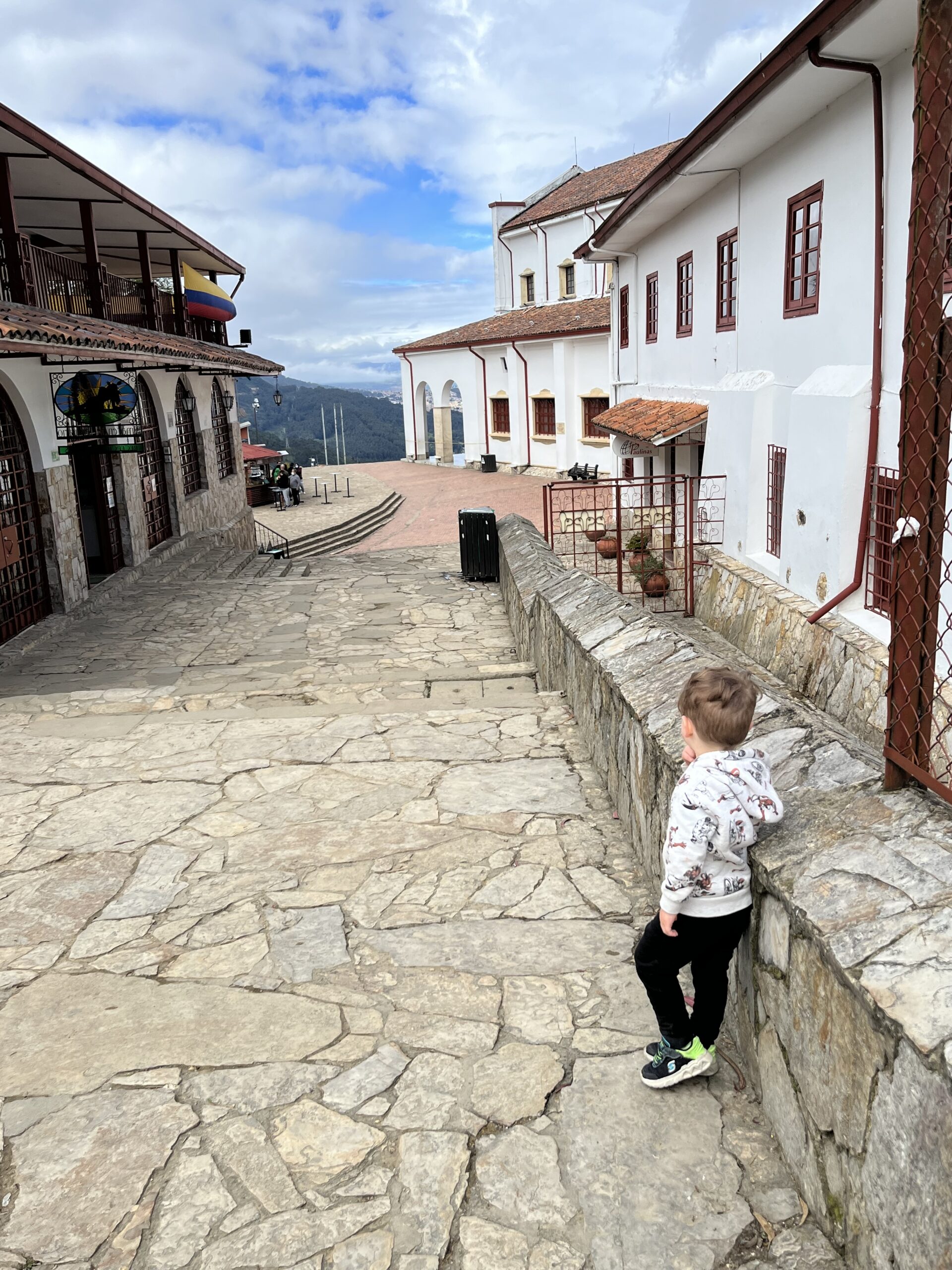
Monserrate is a mountain 3,152 meters above sea level and one of Ana’s favorite places in Bogotá.
Articles
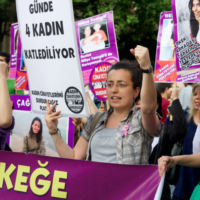
Victoria Houser and Eda Özyeşilpınar bring together their experiences as women affected by misogynist religious norms in “Your Misogyny is not a Cultural Difference: Constellating Transnational Stories of Religious Gender-Based Violence and Feminist Resistance.” By sharing stories as an embodied method, Houser and Özyeşilpınar deconstruct a prevalent paradox: how religious norms can be used to excuse gender-based violence within a community even as they are used to other those with different beliefs because they (also) enact gender-based violence. Writing across Christian and Muslim contexts, the authors show how these norms and the trauma they cause are not restricted to religious spaces but influence the greater culture. Thus, Houser and Özyeşilpınar argue that studying misogynist religious rhetorics transnationally proves crucial to understanding how belief informs gender roles as part of nation-building.
Wilfredo Flores’ “Working in the Community-University Interface: Insurgent Methods for Extraordinary Times” explores this transnational scholar’s concept of the nexus in which we as cultural rhetoricians often work, highlighting the complex and often mundane interactions between academic institutions and their surrounding communities. Flores draws from Estrella Torrez’s work on reciprocity and community engagement and reflects on his experiences as a graduate student and underscores how universities affect communities through multiple means, such as vendor contracts. Flores magnifies for us the intricate network of relationships between these spaces to make those connections and their impact more visible. This article also acknowledges that successful community engagement depends on factors like funding, time, and organizational skills, all of which are limited resources for faculty and graduate students. Flores’ work is a valuable contribution to discussions of ethical, engaged scholarship for which cultural rhetorics aims.
In “Bait al-Mouneh: Traditional Syrian Homemaking as Roots for Women’s Agency,” Nabila Hijazi proposes that the foodways and home-making practices of Syrian women during war and in diaspora are a feminist demonstration of agency. Grounded on the idea that “storytelling and conversational exchanges play a crucial role in shaping and preserving a community’s culture, values, and identity,” Hijazi describes her own practices of bait al-mouneh, the traditional preservation and storage of foods, as well as the practices of the Syrian refugee women in the Washington DC area. Hijazi’s article is a beautiful window into a traditional practice that demonstrates the resilience and resourcefulness of Syrian women and that counters Western feminist notions of what women’s agency looks like.
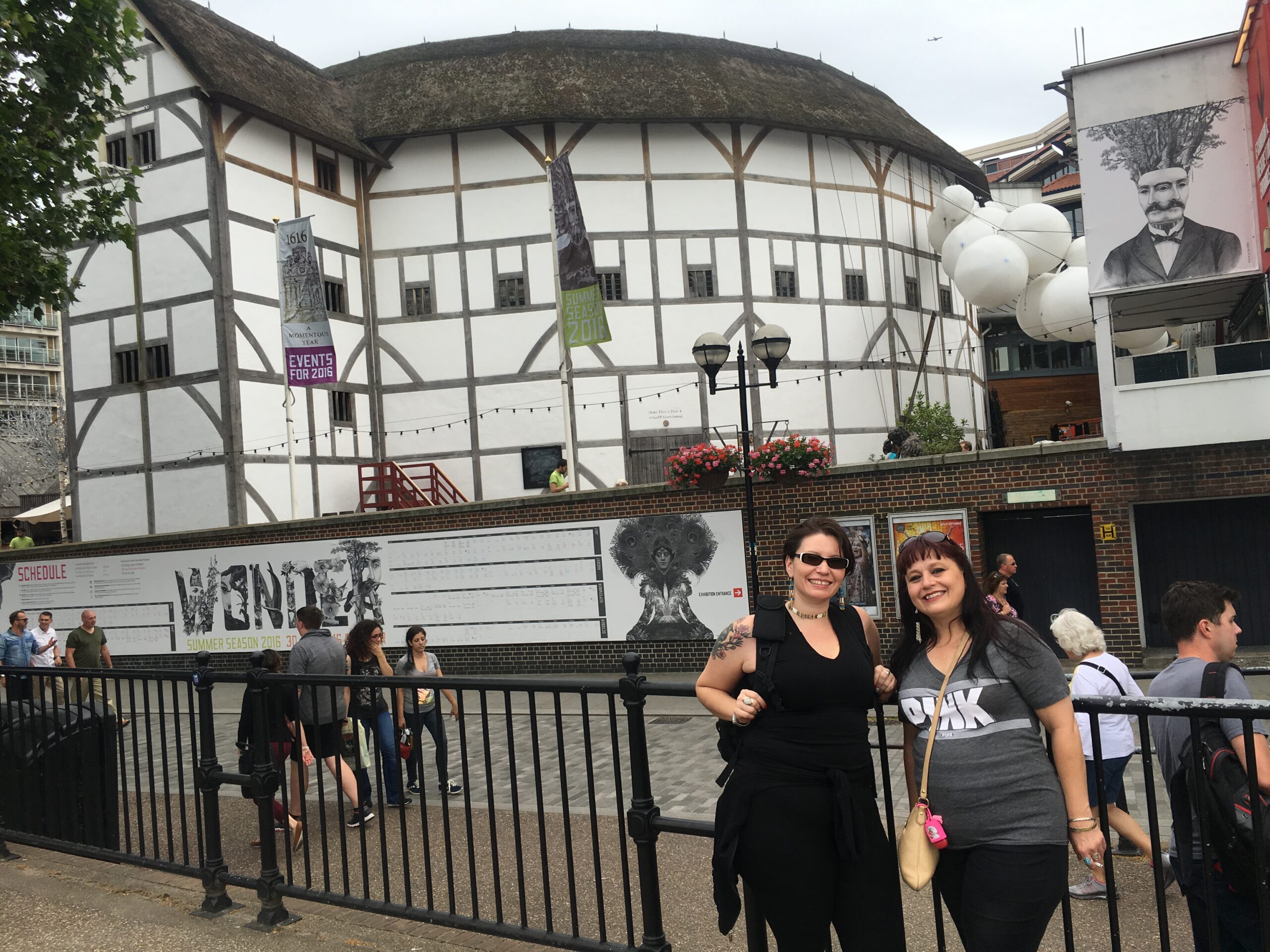
Kim in London in front of Shakespeare’s Globe Theatre with Anishinaabe scholar Christine Diindiisi-Wallette McCleave.
Conversations
“The Mass Exodus: Why People Are Leaving Academia and What We Can Learn from Their Stories,” moderated by Alexandra Hidalgo, this conversation brought together Sonia C. Arellano, Will Kurlinkus, and Caitlin Spronk, three scholars who left the academy. Hidalgo designed this conversation as a way to find answers for a pattern she has noticed for years—people deciding to leave—and for why it seems to be on the rise today in what she terms “a mass exodus.” Arellano, Kurlinkus, and Spronk discuss their reasons for leaving but they also provide advice for those of us who are staying. What can we do as scholars and teachers “to turn academia into a place where graduate students and faculty can see a future for themselves”?
Moderated by Ana Milena Ribero, our conversation “‘Teach and Write for Justice’: Intergenerational Networks, Equity, and Community in the CCCC Caucuses” features Christina Cedillo, Rachel Jackson, Ersula Ore, and Kimberly Gail Wieser-Weryackwe discussing how their scholarly careers have been influenced by the leadership and community of the Conference on College Composition and Communication (CCCC) Caucuses, groups within the organization that are based on shared identity or interests. Participants talk about their first experience of the CCCC Caucuses and the sense of belonging that those spaces have provided ever since. They also share their experiences co-editing special issues focused on justice and equity in some of the discipline’s top journals including College Composition and Communication, Present Tense, and Composition Studies, with this issue being the last of this collaboration.
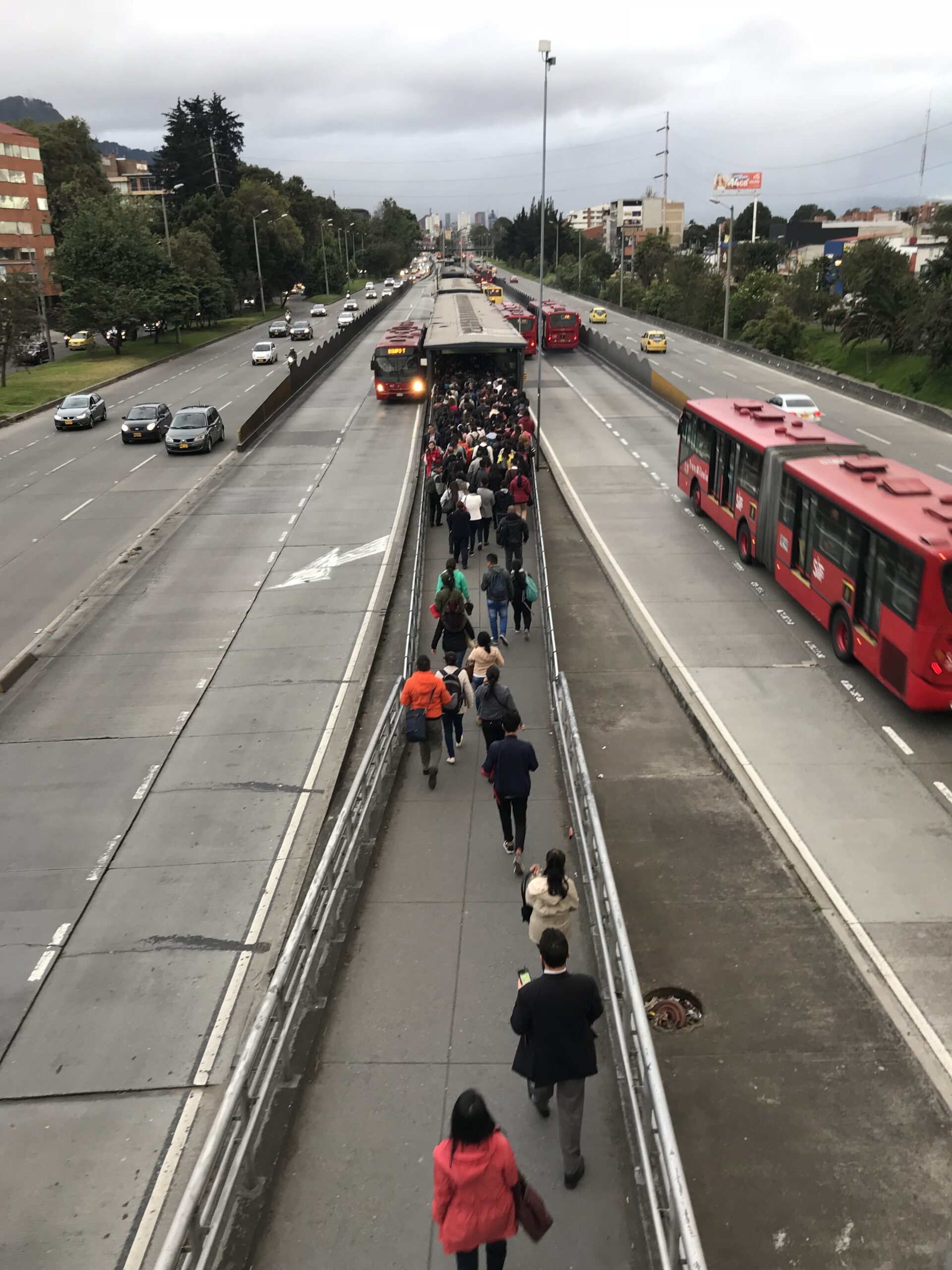
A Transmilenio station in Ana’s hometown, Bogotá, Colombia.
Book Reviews
In “Sovereignty, Lands and Rhetoric: A Review of Danielle Endres’ Nuclear Decolonization: Indigenous Resistance to High-Level Nuclear Waste Siting,” Justin G. Whitney describes Endres’s analysis of the rhetorics of resistance of the Newe (Western Shoshones and Skull Valley Goshutes) and Nuwuvi (Southern Paiutes) tribes of the Great Basin, who successfully resisted the placement of nuclear waste dumps in their tribal lands. Whitney praises Endres’s book for not only presenting an insightful analysis of rhetorics of resistance but also for arguing for recognition of the sovereignty of indigenous peoples and nations.
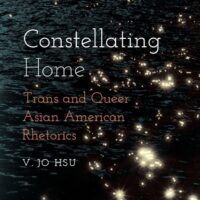
In “Creating Home through Narrative: A Review of V. Jo Hsu’s Constellating Home: Trans and Queer Asian American Rhetorics,” Megan Simmermeyer analyzes Hsu’s award-winning book. Simmermeyer explains how Hsu connects three storytelling projects related to queer Asian American and Pacific Islander communities—the Dragon Fruit Project, the Visibility Project, and the Queer Ancestors Project—to argue that home is a space that is made and remade through shared stories and experiences. Simmermeyer positions Constellating Home as a text that challenges dominant narratives about trans and queer Asian Americans and that makes room for future scholarship about the role of storytelling in creating home for communities in diaspora.
In “Elucidating ‘What Trafficking Texts Do in the World as World-making Matter’: A Review of Annie Hill’s Trafficking Rhetoric: Race, Migration, and the Making of Modern-Day Slavery,” Sonia C. Arellano describes Hill’s “rhetorical-material” approach to her analysis of rhetorics of human trafficking in the UK. Arellano notes the timeliness of one of Hill’s primary arguments: that the UK highlights its abolition of slavery in 1807 to absolve itself from its role in the trans-Atlantic slave trade and to create a parallel between the slave trade and the current trafficking of white Eastern European women into the UK while perpetuating violence (physical and rhetorical) against migrants of color.
We, Christina, Kim, and Ana, hope that the work featured here will encourage others to practice building bridges across ostensibly disparate spaces through constructive and empathic dialogue. We believe that communication across differences, gaps, and geographies is an important first step in acknowledging people’s humanity and subjectivity, especially those who are marginalized. These points prove necessary if we are to learn from one another and work together to counter the many violences that imperil all our relations.
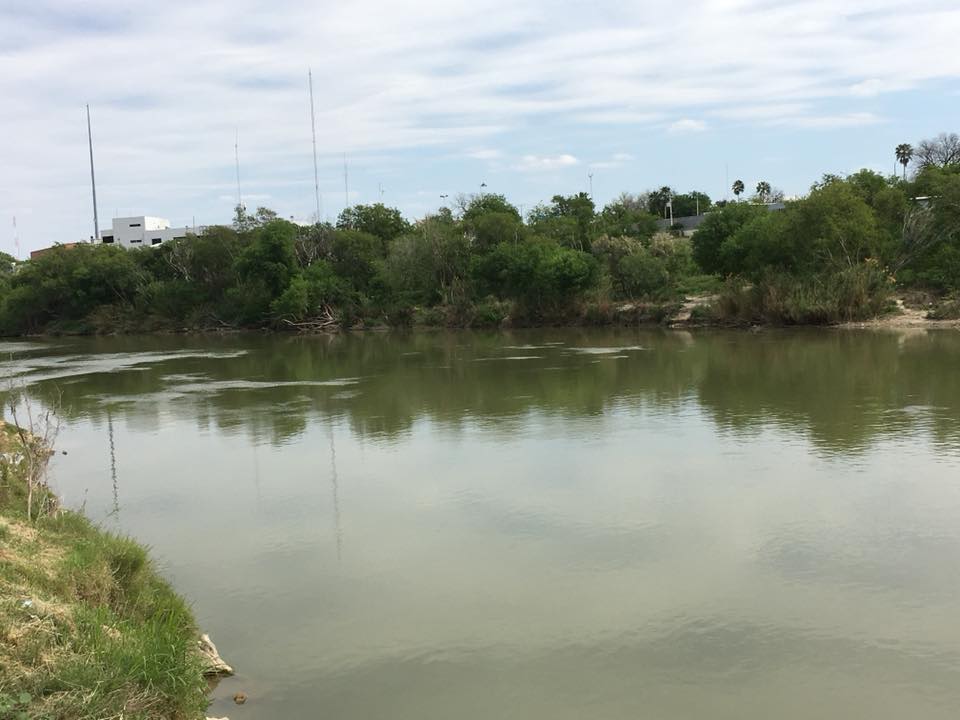
The Rio Grande, the river that supposedly divides the U.S. and Mexico. The image is taken from the U.S. side in Laredo, TX, where Christina grew up.
Notes
[1] Anzaldúa, Gloria, “Now Let Us Shift . . . the Path of Conocimiento . . . Inner Work, Public Act,” in This Bridge We Call Home: Radical Visions for Transformation, ed. Gloria E. Anzaldúa and Analouise Keating (New York: Routledge, 2002), 541.
[2] Ibid, 544.
About the Authors
Christina V. Cedillo (she/they) is an associate professor of writing and rhetoric at the University of Houston-Clear Lake. Christina’s research draws from cultural rhetorics and decolonial theory to focus on embodied rhetorics and rhetorics of embodiment at the intersections of race, gender, and disability. Their work has appeared in College Composition & Communication, Rhetoric Society Quarterly, the Journal for the History of Rhetoric, Composition Forum, and various other journals and edited collections. Christina’s current project examines spatiotemporal tropes that affect how marginalized rhetors and their messages are perceived and received based on modernity’s colonial/modern epistemics. Christina is also the lead editor of the Journal of Multimodal Rhetorics.
Dr. Kimberly Gail Wieser-Weryackwe is Professor of English at the University of Oklahoma as well as affiliated Native Studies and Environmental Studies faculty. Her book Back to the Blanket: Recovered Rhetorics and Literacies in American Indian Studies was published by OU Press in 2017 and is part of the Recovering Languages and Literacies of the Americas Initiative, funded by the Andrew W. Mellon Foundation. Wieser-Weryackwe is one of the co-chairs for American Indian Caucus for NCTE/CCCC and serves as a Managing Editor at Constellations: A Cultural Rhetorics Publishing Space. During Spring 2024, Dr. Wieser-Weryackwe served as the Thomas R. Watson Distinguished Visiting Professor for the University of Louisville English Department. Louisville, Kentucky. Her volume American Indian Literature: An Encyclopedia for Students is forthcoming from Bloomsbury in 2025.
Ana Milena Ribero is an associate professor of rhetoric and writing at Oregon State University. Her research and teaching focuses on rhetorics of im/migration, rhetorics of race, critical literacies, Women of Color feminisms, and critical race and feminist pedagogies. Her latest book is Dreamer Nation: Immigration, Activism, and Neoliberalism and her scholarship can be found in Rhetoric Review, Peitho: Journal of the Coalition of Feminist Scholars in the History of Rhetoric and Composition, Performance Research, Present Tense: A Journal of Rhetoric in Society, and in various edited collections.
Production Credits
Copy Editors: Megan Simmermeyer and Alexandra Hidalgo
Posted by: Natalie Cohen
Editorial Assistants: Megan Simmermeyer and Alex Jennings
Social Media Manager: Evelynn Pugh
Special Issue Editors: Christina Cedillo, Ana Milena Ribero, and Kimberly Gail Wieser-Weryackwe
Editor-in-Chief: Alexandra Hidalgo
Related posts:
 The Mass Exodus: Why People Are Leaving Academia and What We Can Learn from Their Stories
 Sovereignty, Lands and Rhetoric: A Review of Danielle Endres’ Nuclear Decolonization: Indigenous Resistance to High-Level Nuclear Waste Siting
 Bait al-Mouneh: Traditional Syrian Homemaking as Roots for Women’s Agency
 Teach and Write for Justice: Intergenerational Networks, Equity, and Community in the CCCC Caucuses
 Creating Home through Narrative: A Review of V. Jo Hsu’s Constellating Home: Trans and Queer Asian American Rhetorics
 Your Misogyny is Not a Cultural Difference: Constellating Transnational Stories of Religious Gender-Based Violence and Feminist Resistance