
by Florence Elizabeth Bacabac, Utah Tech University
The screen flickers to life on a tight frame of the handlebar and the rider’s torso, then tracks forward to reveal the open road ahead. The camera hustles with each pedal stroke. Then, barely twenty seconds in, it happens: a wobble, a sudden lurch, and the view tips sideways. The rider goes down and narrates, “That’s what you call a drummer rolling over the bar. But thankfully, I’m ok—just a few minor scratches, a sprained finger, and a bruised ego. It wasn’t fast nor technical; I just lost focus when my wheel fell and got stuck in a rut or na-engkanto [enchanted by spirits] or both […] Allryd!” (“ALLRYD ep 6 Maarat-Sandugo Ride” 1 published on 20 Feb. 2021). There is no dramatic slow motion of the crash, no rescue by an editing team, save for the thud of a body on the ground. The camera, still rolling, captures a close-up of gravel and the fallen rider. There is no musical score or aerial drone shot, just the rider, the bike, and the unfolding trail. This video blog footage, or vlog, might seem clumsy or unremarkable. But for a viewer who has traversed these trails in the Philippines, the viewing experience becomes a return to a familiar place. That viewer is not watching a stranger fall off a bike but someone real who stumbles and laughs and keeps going. In some small but meaningful way, that viewer is home.
The rider behind the camera is Raymund Marasigan, a name well known to many Filipinos but perhaps less familiar to international audiences. He is best recognized as a composer, musician, and record producer in the Philippines who played drums for the phenomenal ‘90s rock band, Eraserheads, and currently plays for several bands, including Sandwich, Pedicab, Assembly Generals, Squid 9, Basement Lung, and Ultracombo. He also formed Party Pace in 2021, an experimental rock band born out of the band members’ shared interest in cycling around metropolitan Manila. These bicycle rides inspired his Allryd vlog channel 2 and the brand tagline, “Allryd!” which stands for “all right.”
The opening scene from one of Raymund’s bicycle ride vlogs captures the central premise that this research seeks to understand: how vlogs about familiar places transform passive viewing into active, embodied recognition, and how that recognition fosters identification, trust, and community. At first glance, such a vlog appears uninteresting. The footage is rarely polished with occasional jump cuts, and the narrative thread sometimes unravels entirely. Despite these imperfections, viewers watch, comment, share, and return to Allryd vlogs with a loyalty of more than 69.5K subscribers and almost 9.2M views to date. What accounts for this deep engagement? This question becomes even more pressing since the vlog covers the most mundane of subjects including bicycle rides through familiar streets and rural trails, an unboxing of a new bike, or a casual announcement about merchandise and meet-up events. How can content so ordinary, produced by an artist who deliberately obscures his celebrity status, generate such loyal viewer subscription?
This study argues that through its portrayal of familiar landscapes and the ordinary action of riding a bike, the Allryd vlog moves Filipinos to identify with its author, to place trust in him, and to build a community of viewers through comments, contributing meaningfully to our understanding of digital cultural rhetorics. I believe the power of these vlogs lies in three interconnected elements: (1) depiction of familiar landmarks, (2) cultivation of shared experiences, and (3) invitation for viewers to participate as active rhetorical agents. In this environment, vlogs like Raymund’s Allryd channel offer viewers a way to return, virtually, to streets they could not physically visit and to share, albeit digitally, in the hustle of someone else’s day. When the vlogger rides through the streets of Manila and other locations, the screen ceases to be a barrier and becomes instead a window onto a shared world. The landmark is not merely a backdrop but an anchor. It grounds the viewer’s attention in a concrete reality that they recognize and have memories attached to. Such recognition enables a form of shared experience that differs from the experience of watching a film or a television program. Where traditional media often present places as exotic backdrops for scripted drama, Raymund’s vlogs present them as lived and pedaled-through environments.
The viewers do not simply observe him moving through familiar trails but see the humidity of the afternoon, feel the anticipation of the next turn, and so forth. His vlogs effectively pull together cogent feelings of identification, taking the viewer back to familiar terrains through voice-overs and narrations. As a Filipina in diaspora watching the vlog, I looked forward to an interconnected experience through the speed of each ride, the novelty of sonic accompaniments (particularly from the band Squid 9), and the overall message with code-switches between English and Tagalog (also Hiligaynon in a couple episodes like the Guis Guis ride). Together, these elements made me feel less distant because they felt familiar, easing the isolation I often feel as if the vlog had recovered something from home that I had lost.
I am interested in the cross-border agency of vlogging as a constellative practice of meaning-making for the viewers and the vlogger. As the literacy practices of contemporary societies are expressed in digital platforms, the effects of such technologies on people, ideas, and cultures can span across borders (Carter and Arroyo; Hodgson). Within digital networks, the flow of social and cultural messages from diverse contexts can have varying interpretations, depending on who does the reading and assigning of con/textual meanings and whether the process is done from the vantage of local, global, and/or transnational orientations. When people have diasporic roots, their personal experiences connect them to more than one country, which shapes how they approach rhetoric, composition, and society. Vlog articulations bring socio-cultural information across borders, prompting a constellation of interpretations for diasporic populations.
Method
Using qualitative content analysis and thematic coding, I examine the visual, verbal, and narrative elements of selected Allryd vlogs to advance digital and cultural rhetorics. I turn to qualitative content analysis for its flexible yet systematic approach well suited to the messy, multimodal texture of vlog footage. A context-based analysis of vlog articulations may consider the purpose or factors behind each episode or the variables at play when recording the scenes, selecting background music, and so on, so I draw upon recurring themes that emerged and remain attentive to the theoretical concerns of place, embodiment, and participation. To ensure analytical rigor, each vlog is viewed at least three times across several weeks, refining the themes as new patterns surfaced and old categories were deleted or reorganized.
I submit that vlogs bring rhetorical and cultural concepts together in ways that cross digital spaces, allowing communities to form shared meanings that are not limited by time, context, or location (Bratta and Powell). Each vlog illustrates symbolic experiences that overlap/operate freely within a continuum of multiple situated contexts and networked ecologies (Carter and Arroyo). What makes this constellated practice appealing is how it broadens communicative effects, moving from mediated stories to shared systems. My analysis of the Allryd vlog samples shows the many voices of cultural rhetorics that shape meaning across themes and audience “conditioning agents” of music, lighting, staging, sceneries, crowd effects, and technical improvements (Perelman and Olbrechts-Tyteca 1326). Consequently, these vlogs exemplify discourse mediation, positioning YouTube as a key research site where agency, play, and constellation articulate cultural-digital rhetorics.
The content analysis proceeds in three parts. The first section situates bicycle ride vlogs, focusing on how certain places generate visual continuity for viewers who recognize those same spaces. The second section examines shared experiences, grounding them in specific, authentic environments. The third section investigates how viewers actively participate and engage within this communal framework. Finally, the conclusion contains emerging perspectives that reflect on the broader implications of this analysis for understanding how vlogging constellates a sense of community. Ultimately, this study contends that vlogs about familiar places matter not despite their ordinariness but because of it. In an age of increasing polarization, fragmentation, and isolation, the simple act of watching a rock star ride a bike down a street you know is quietly radical. It says, you belong here. You have walked this path. Your memories of this place are valid and shared. And you are invited not merely to watch but to respond. This is the promise of the vlog, and this is the phenomenon that the opening scene—the jerking handlebars, the familiar turn onto rugged terrains, and the unlikely figure of Raymund Marasigan pedaling through it all—invites us to understand.
Landmark, Experience, and Participation in Allryd Vlog Viewership
To analyze how Allryd vlogs use familiar landscapes and ordinary actions to generate identification, trust, and community among viewers, I draw upon three interconnected conceptual strands: common landmarks for visual continuity, shared experiences rooted in collective identity, and participatory audience engagement. Together, these perspectives illustrate how vlogging transforms ordinary platforms into sites of collective belonging where each strand builds upon the next, moving from the physical spaces depicted on screen, to the shared experiences those spaces evoke, and finally to the participatory practices through which viewers respond.
1. Common Landmarks
The power of common landmarks is key for understanding the ways in which rhetorical symbols are expressed in forms “not [only] limited to language” (Clark 3). As viewers access vlogs about local places, the immediate reaction of seeing familiar landscapes, especially by those far from home, may evoke a sense of visual continuity and break down existent spatial barriers. In addition, these vlogs also function as digital compositions that “use bodies and embodiments to make arguments” (Malone 3), or in this context, use the vlogger’s moving body to argue that cycling through familiar places can generate identification, trust, and community among viewers. I have noted these possibilities to remind me of my own physicality as I accompany the vlogger on camera, pedaling through captured local sights.
This change in how we understand the relationship between bodies and space requires renewed attention to “body as space” (Moreland 405) and extends it to bodily movements that affect viewers from a distance. Taking cue from Kelly Moreland’s discussion of Roxanne Mountford’s theory of rhetorical space (405), we might also deduce that landscapes have cultural and material effects when viewed digitally. This analogy holds because digital mediation, now ubiquitous, blurs embodied/disembodied boundaries. In fact, the vividness or media richness [of vlogs] can stimulate different senses (Deng et al. 12), capable of transporting global viewers immediately to places back home through common landmarks. Films and TV shows may deliver polished backdrops and narratives, but these raw, unfiltered vlogs (i.e., complete with ambient sounds, unscripted reactions, and real-time pacing) evoke the sensation of an authentic, immersive familiarity that scripted media rarely achieve.
To elevate viewer experience, the choice of technology matters as much as the content itself. Digital technology has become part of everyday life, and we cannot easily set it aside, since “digital technology already looks less like a technology and more like a common feature of modern existence” (Hess 6). This ubiquity shapes how we communicate in that our practices are now digitally integrated (Hess 7), and digital content “has created a hybrid of experience of physical and digital worlds,” wherein “the body is ‘digitized’ or quantified in new ways as digital technologies actively measure embodied elements, such as footsteps, heart rate, and other physical elements of the self” [or] “the everyday human body in motion” (Hess 10; emphasis added). Within this broader context, the Allryd vlogs’ technological choices matter because they translate digitization into a rhetorical experience. With GoPro cameras, music tracks, and everyday consumer editing software, the vlogs produce juxtaposed images and local settings that articulate not only the vlogger’s movements but also the viewers’ cultural sensibilities. Specifically, the use of mounted framing, unpolished transitions, and improvised voice-overs delivers a montage of digital content that draws viewers into active rhetorical participation.
For instance, Figure 1 (“ALLRYD #16 Secret Trails Ayala Alabang” published on 1 July 2021) illustrates a bicycle ride sample, featuring notable places in metropolitan Manila. This vlog shows Raymund and his crew cycling the secret trails of Ayala Alabang. They started assembling at Cuenca Park and pedaled through the 14.5-kilometer [9-mile] version of 11 short connecting trails. The camera pans right to left from a central axis with recorded details of the adventure, showing the surroundings, the vlogger’s front and back views, etc. From a viewer’s perspective, the riders’ embodied motions transform into digital experiences, heightened by sensory cues of escalating speed, coordinated movements, and fluid mobility. Each sharp turn on narrow streets or eskenitas often sets me on edge, anticipating a head-on collision, until I remember that border speed limits in the Philippines are quite different where motorists move slowly but methodically to prevent such accidents. Overall, Raymund’s controlled narration documenting the dog trail park, parrot para trail, Fidel V. Ramos (FVR) trail, and private parking lot trail shapes the sensory, adrenaline, and panoramic dimensions of these digital spaces. What makes the vlogged bicycle ride unique is the combination of two moving perspectives: the vlogger’s physical effort (e.g., the handlebar jostle, the breathing, the glance over the shoulder) and the viewers’ vicarious journey (e.g., anticipating the next corner, mentally mapping the route alongside the rider). Traditional films might show a character cycling past a landmark to advance a plot; the vlog, however, lingers on the approach to that landmark over its gradual, wobbly, first-person buildup to reactivate the viewers’ own past commutes through that same place. This slow, embodied approach transforms passive watching into active re-experiencing. A one-of-a-kind rhetorical experience, so to speak.
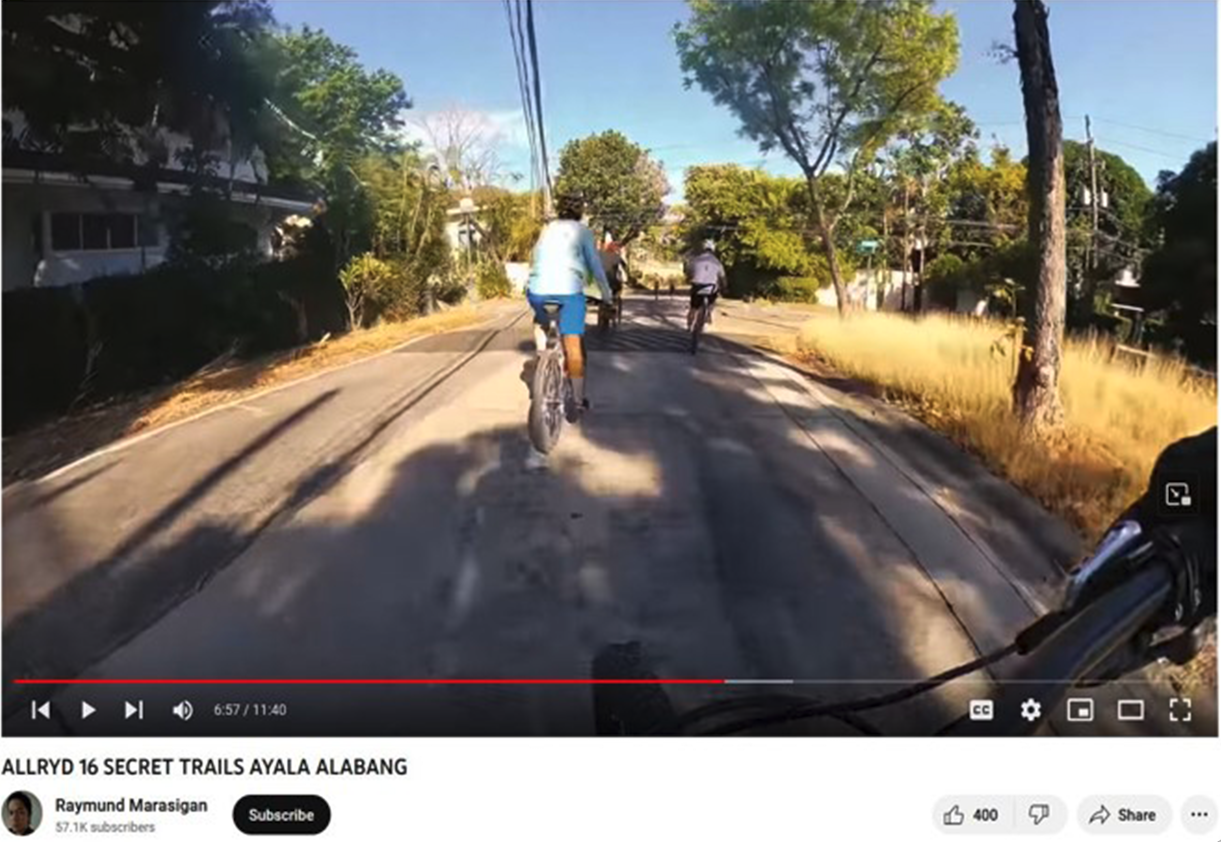
FIGURE 1. Screenshot from Allryd vlog #16 “ALLRYD #16 Secret Trails Ayala Alabang” by Raymund Marasigan on 1 July 2021 (11:40 min.).
Watching Allryd vlogs lets me experience common landmarks not as a detached observer, but as a virtual participant seeing familiar places through someone else’s eyes. The context in which these videos are encountered shapes their meanings, especially for those who live away from home. The vlogger’s selected platform, YouTube, proves to be even more effective because of its robust infrastructure and capacity to enable “cultural memories and captured moments” (Hodgson), activating the power of everyday rhetorics (Sundvall 10). Gregory Clark talks about the American national landscape and symbolic experiences for the traveler from the lens of Kenneth Burke’s identification theory: “[T]his rhetorical work [is] done not so much by words as by sights, sounds, smells, feelings—by the experience of actual presence in a place” (4). Because cultural identification occurs in moments of communication using verbal and non-verbal symbols, the discussion of landscapes evokes a sense of collective identity (Clark 3-5). I venture to say that applying this same approach to new media practices, such as vlogging about physical activities on local terrains, constellates a shared sense of community because rhetorical experiences are constructed with common landmarks. Additionally, vloggers who use storytelling are doing important identity work, especially for building solidarity (Ledbetter 296). This adaptation transcends talk/symbols through collective recognition of familiar places within a digital cultural ecosystem.
To illustrate the concept of cultural identification in practice, consider the following example. Figure 2 (“ALLRYD #17 Will I Regret Riding BOSOBOSO?” published on 9 July 2021) captures a constellation of group rides, public landscapes, and cultural narration, showing comforting rituals for the group with unspoken references known to Filipinos abroad. By documenting a group ride to Bosoboso in Antipolo, Rizal, this vlog demonstrates how local infrastructures form when off-platform experiences trigger collective memories. The vlogger’s verbal narrations of cyclists who avoided toxic smoke or endured engine noise as constant soundtrack reveal spatial and auditory awareness familiar to nearby residents. These descriptions constellate unique, interconnected conditions and shared recollections of homeland geography. As a result, I empathized with the crew who had a clear goal at 5:30 a.m. and celebrated with photos after reaching the summit. Taking photos afterwards is not only a traditional enactment but also a communal rite: “The south squad wanted to ride Bosoboso, a popular destination in Rizal, roughly 17 kilometers [10.6 miles] of gradual uphill roads from Masinag in Marcos highway […] it’s like a game of asteroids out here […] we congratulate and cheer everyone arriving at the Shell station [and] take obligatory pictures of the cotton candy clouds.” This process is clear and relational for viewers like me who understand the vlog’s site-specific markers. As Yi-Fu Tuan claims, space becomes place as individuals invest it with memory, emotion, and significance (6).
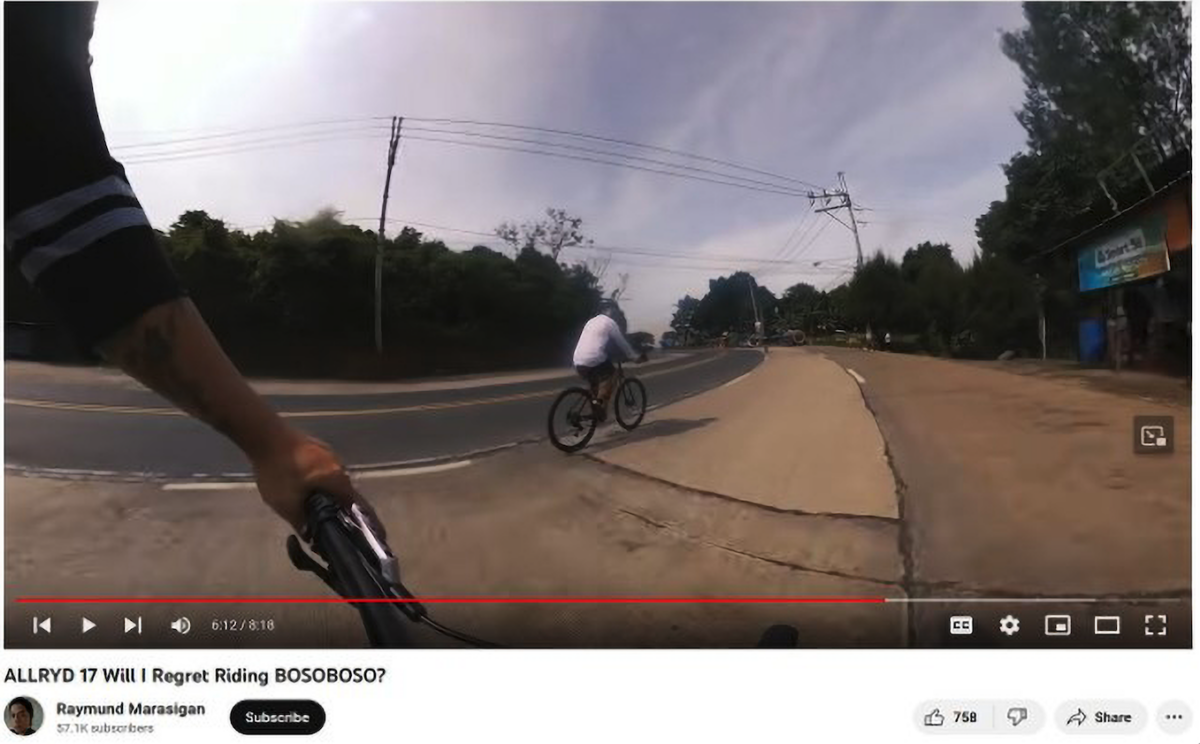
Figure 2. Screenshots from Allryd vlog #17 “ALLRYD #17 Will I Regret Riding BOSOBOSO?” by Raymund Marasigan on 9 July 2021 (8:18 min.)
2. Shared Experiences
Influenced by the vlogger-viewer shared experiences, vlogs disseminate the knowledge, information, and other forms of expression of a networked system onto the “small screen” (Hodgson). Because of this, vloggers have leveraged YouTube’s accessible structures by engaging subscribers in community-grounded discourse. To this end, I identify curated Allryd vlogs and examine evidence of shared experiences and common interests between vlogger and viewer. Because of the participatory culture of vlogs (Carter and Arroyo), viewers can freely validate each other’s experiences online, transforming a solitary watching experience into group activity with comment threads forging online connections. To borrow Daniel Hocutt’s “nuanced depiction of (rhetorical) agency” as regards online searches with algorithms and search results, I posit instead that viewers exercise mediated agency by responding to vlogs about rhetorical experiences that resonate with them. These affordances present more possibilities for interactivity on screen; rather than just navigating web interfaces without instructions (Eyman 125), viewers now connect or reconnect with the vlogger on YouTube at any time to strengthen a sense of collective identity.
In particular, Figure 3 contains snippets of viewers interacting with the vlogger to show how common landmarks are perceived: the first screenshot connotes validation of shared experiences on Lamesa Nature Reserve, the second recognizes a mutual understanding of RevPal’s challenging terrains, and the third rhetorically affirms the vlogger’s Bosoboso episode. In all these, we can see the uniqueness of Raymund’s place-based reciprocity in that his movement depends on landmarks the viewer already knows, and the viewers’ engagement depends on his fresh navigation of those spaces. Such connections are distinct from social media’s generic interactivity of likes, shares, or comments. Here, the vlogger gains influence not by generating novel or shocking content, but by re-narrating shared, ordinary spaces that resonate with Filipinos, transforming passive recognition into active rhetorical participation especially with viewers from afar.
What makes the vlog particularly effective is the way recognition invites response in the comment threads. Seeing a familiar street prompts viewers to write, and each comment invites others to recognize themselves in the same exchange, sustaining a community of distant viewers through accumulated acts of participation. Note for example the online exchange below about the traffic in Lamesa (first screenshot), or the difficulty of RevPal (second screenshot), or the quality of the vlog (third screenshot). Gregory Clark argues that communicative interaction enables individuals to select whom they want to identify with and make sense of the world they share (14). When viewers watch and comment on each vlog, they are not passively consuming content but are actively co-constructing cultural perceptions depicted on screen. The interactions between Raymund and his Allryd viewers reinforce their shared experiences about physical landscapes and turn those experiences into a communicative moment of collective recognition and belonging. Such public discourse unfolds not in print media or social events but within the comment sections, shared videos, and ongoing conversations that surround vlogs about familiar places.
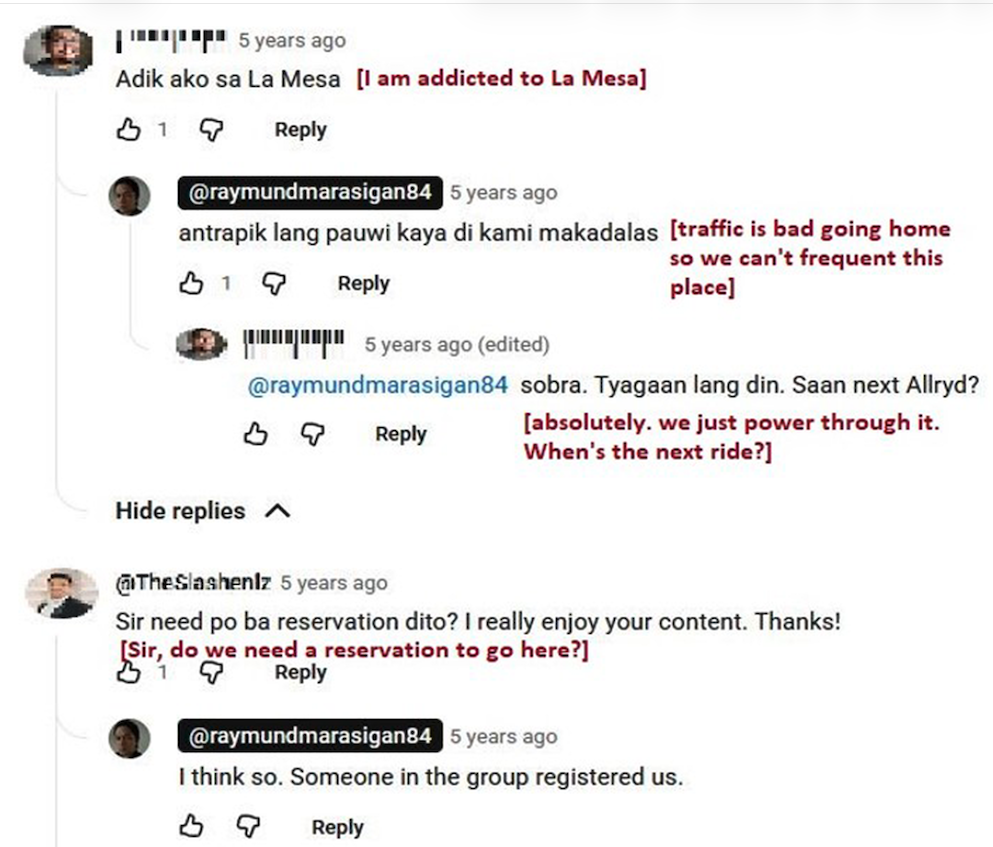
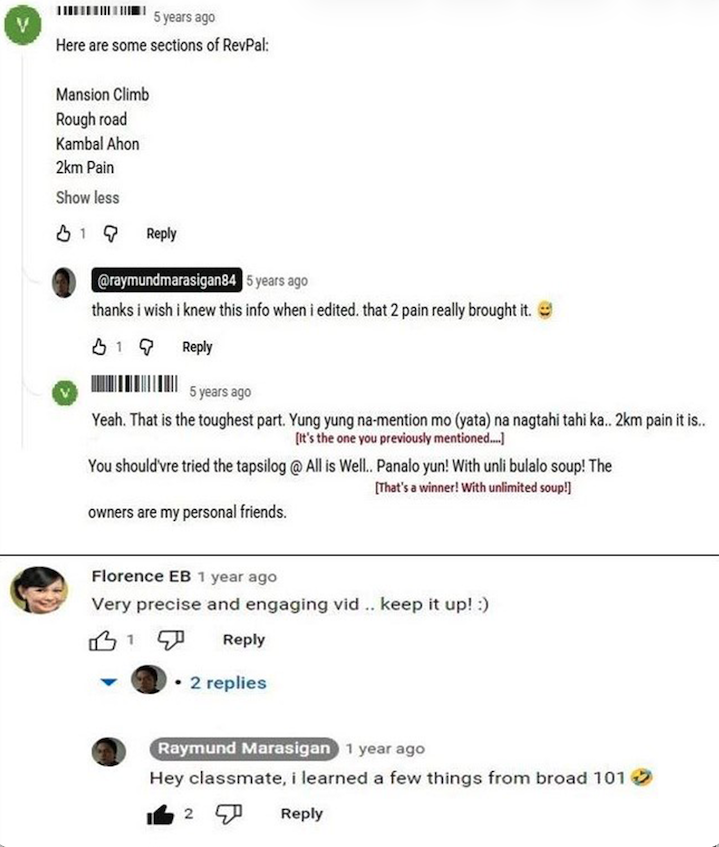
Figure 3. Screenshots of comment threads 3 showing reciprocity from Raymund Marasigan’s Allryd vlogs.
Beyond this, vlogs can also promote emotional resonance and empathy through personal reflections and, as in this case, captured responses and authentic in-the-moment expressions (Brott and Willis 2). These opportunities for contextually situated reflections may be comparable to kairos’ dependence on rhetorical situations (Sundvall 7), making sure the timing of reactions work on screen. In Allryd content, we see the persistent use of the agent’s voice as a characteristic of vlogging with forceful narrations and auditory cues. This dynamic is evident in Figure 4 (“Minsan Gusto Ko Lang Sumigaw” [“Sometimes I Just Want to Scream”] published on 11 Jan. 2022) that exemplifies introspection through the vlogger’s reflective musings and cathartic shouts in Tagalog (Taho!) and Nihongo (Asa!). Here, the subject (Raymund) begins his narration with a personal stream of consciousness, shuffling between frustration and longing during the pandemic’s final stages. He voices his personal struggles as he rides his bike along Marikina’s residential streets to free his mind. In doing so, he does more than narrate; he grants viewers permission to recall their own emotions in similar contexts (e.g., positive COVID tests of family and friends, endless Mercury Drug Store lines, limited Biogesic [paracetamol/acetaminophen] supplies, air purifiers and antigen tests at home, taho local vendors). His intimate revelations over a recognizable setting bring an atmosphere of mutual understanding, where viewers feel validated and connected to the people on screen and the places they shared. Under pressure, the vlogger pragmatically adapts to shifting scenes and spaces, culminating in a moment of catharsis with another rider. This authentic internal reference fuels the vlogger’s rhetorical appeal for empathy, not just a one-way performance.
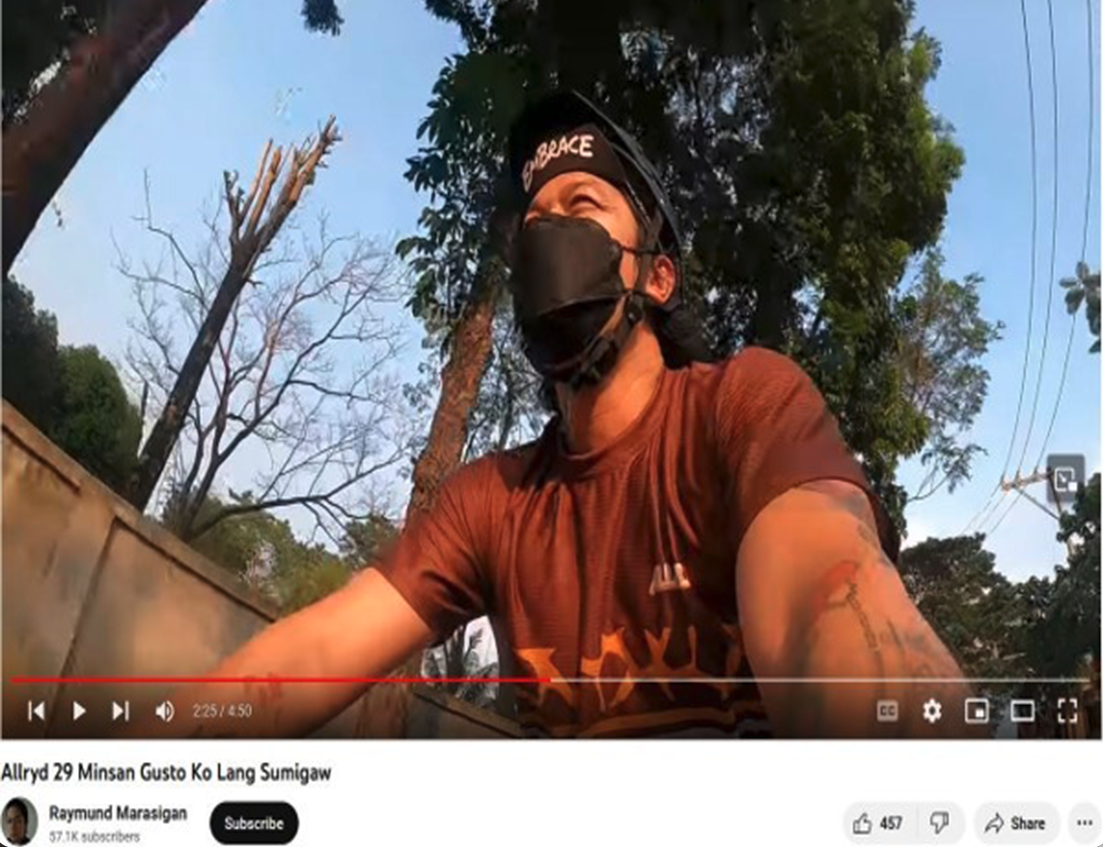

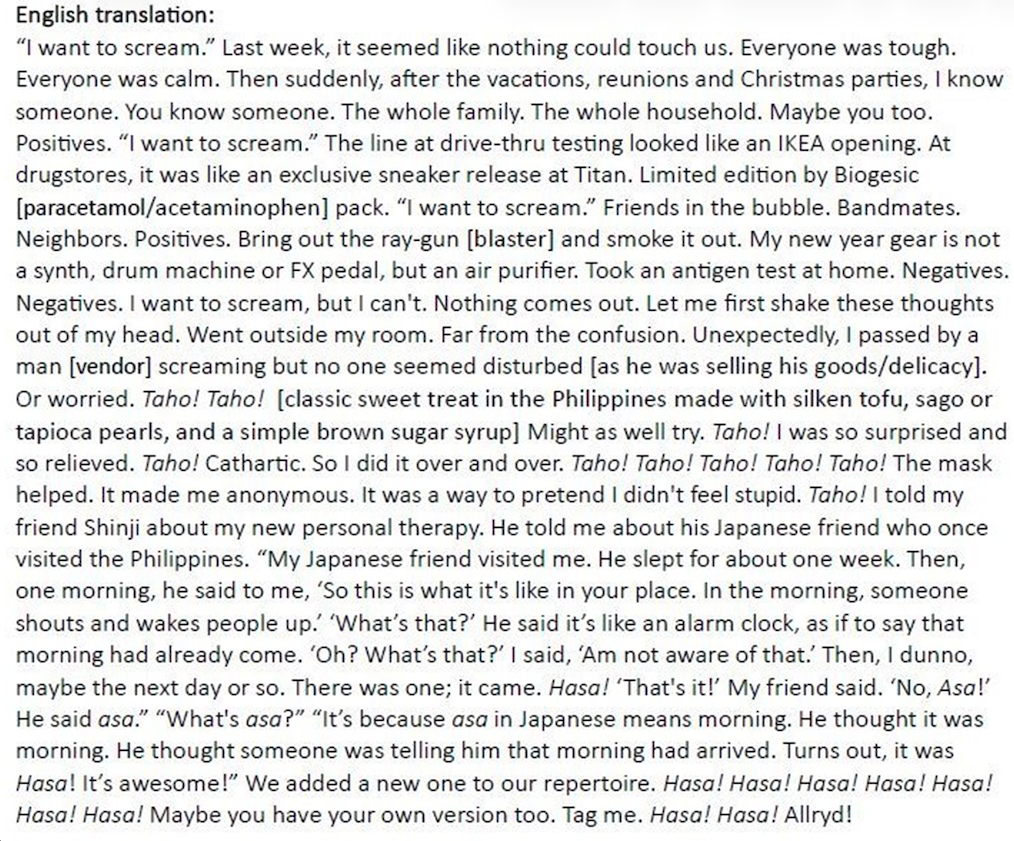
Figure 4. Screenshot from Allryd vlog #29 “Minsan Gusto Ko Lang Sumigaw” [“Sometimes I Just Want to Scream”] by Raymund Marasigan on 11 Jan. 2022 (4:50 min., left) with direct quotations from the text and their translation (bottom).
Additionally, the shared experiences that draw viewers into a vlogger’s world can create ideal conditions for promotion, since audience loyalty and trust lower resistance to commercial messaging. Granted, using YouTube to promote products has become a familiar marketing strategy for business ventures because of its capacity to share information, branding, and entertainment, but the platform has also started gaining more traction in sharing product experiences through vlogs or “digital diaries” (Jiang and Kodono 542). Even responding to audiences through performance analytics has become commonplace and agents have taken advantage of video content forms for digital marketing and social communication (Deng et al. 1-4). What distinguishes Raymund’s approach from traditional advertising, however, is not secrecy but transparency combined with continuity, where he reverts to the same unpolished place-based or embodied experiences that define his vlogging persona (e.g., whether out on the pavement or across his musical career).
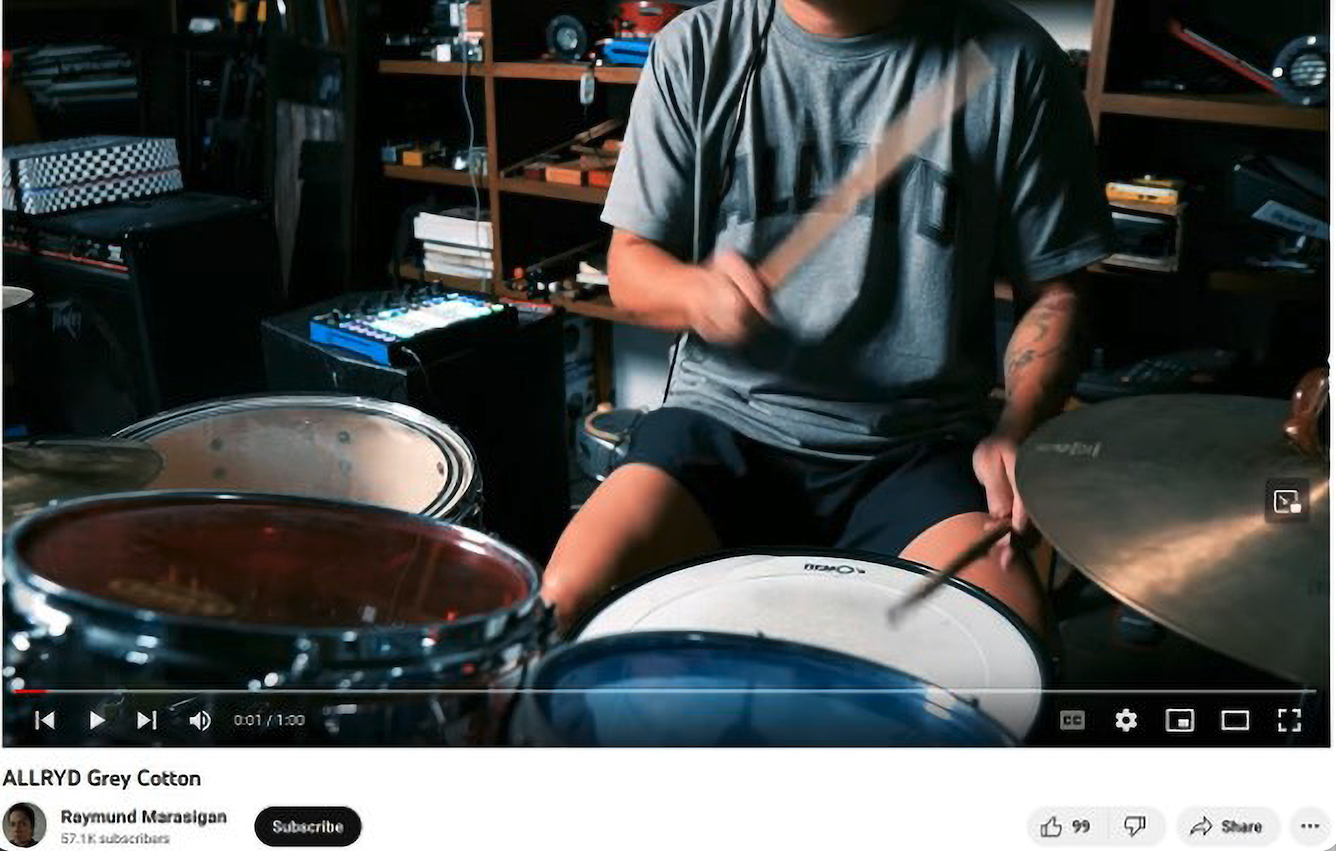
To illustrate, Figure 5 compiles his Allryd merch promotions for a store in Marikina and two products showcasing the vlogger-musician’s instruments. Unlike a television commercial that halts a program or a sponsored Instagram post that sits outside a narrative, his announcements unfold while he is cycling through familiar streets in Manila, tinkering with a gear, or offering candid reflections. These natural moments strengthen the empathetic effects of vlogging in that viewers get to experience products as part of the vlogger’s creative journey. The very authenticity that allows viewers to feel connected to a shared landmark also allows them to receive a product placement as a trusted recommendation from a peer, not a command from a corporation. The original titles of the vlogs themselves suggest content created explicitly to advertise products, announcing their commercial intent upfront: for example, the first 27-second pop-up vlog (“Allryd Pop Up Announcement” published on 28 Apr. 2023) features Raymund cycling in a local neighborhood to hype an event while capitalizing on publicity value; even subtle details—like retrieving a guitar pick from an Allryd hat before a 1:06 min. performance on the second vlog (“ALLRYD Big Bucket Hat with Pick Pocket” published on 29 Sept. 2021) or lingering on an Allryd cotton shirt during a 1:00 min. drum sequence on the third vlog (“ALLRYD Grey Cotton” published on 25 Nov. 2021)—effectively grant this vlogger the agency to promote his merchandise while creating a sense of “going through it together.” 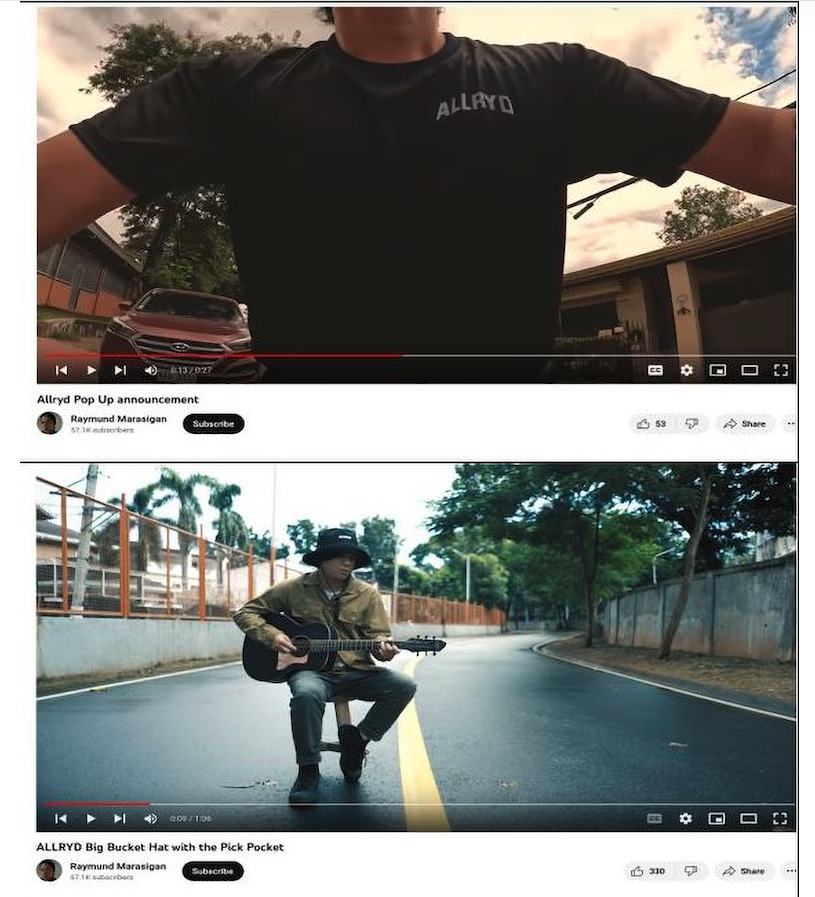
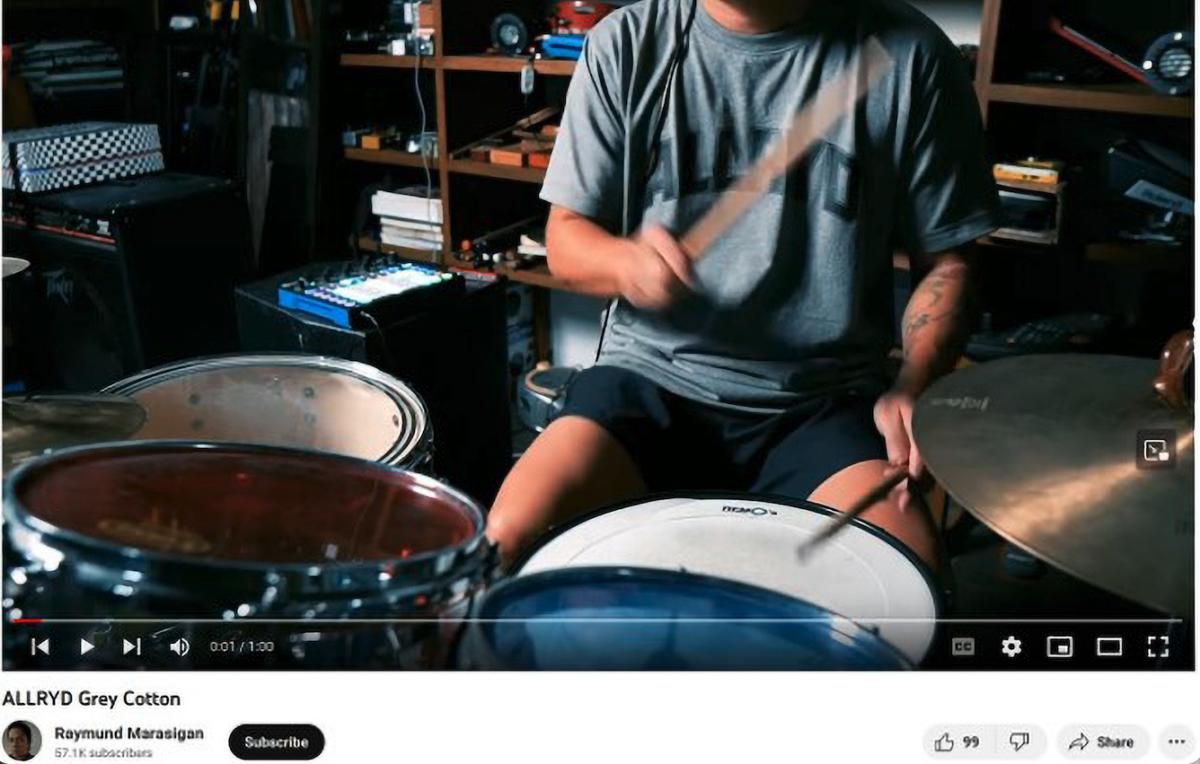
Figure 5. Screenshots from Allryd vlogs by Raymund Marasigan (top to bottom): “Allryd Pop Up Announcement” on 28 Apr. 2023 (0:27 sec), “ALLRYD Big Bucket Hat with Pick Pocket” on 29 Sept. 2021 (1:06 min.), and “ALLRYD Grey Cotton” on 25 Nov. 2021 (1:00 min.).
The rhetorical goal, therefore, isn’t just about pushing third-party sponsorships; it is about inviting viewers to share in the creative journey and offering trusted product/event recommendations to those who have nowhere else to turn during isolating lockdowns (e.g., pandemic). These vlogs link viewers to product choices and group promotions that are dependable precisely because the vlogger’s rhetorical authority is not tied to any third-party brand or sponsorship fee. He is not an influencer marketing in the conventional sense, where creators lend their authenticity to an outside company’s product, but a vlogger whose personal brand and product brand are one and the same. This distinction matters because the trust viewers place in him as a person extends directly to the Allryd label.
There is no intermediary nor any suspicion that he is being paid to say something he does not believe in; instead, his words are entirely his own—akin to a potter selling a mug at a local fair or tiyangge [bazaar/flea market], not a celebrity endorsing an unused perfume. With this distinction in place, I argue that the upfront marketability of the vlog titles does not negate the vlogger’s approach but rather strengthens it. The vlogger’s titled announcements are honest and transparent. The viewer knows before watching the promotional vlog that a product will be pitched, that it is created by the vlogger, and that the vlogger’s experience can vouch for its integrity. Because that trust now extends to the Allryd label, the announcement feels like a natural extension of a creator sharing what he is making, wearing, selling, or attending (for event promos). The viewers’ recognition lends a kind of local authenticity, a sense that something belongs on these streets, worn by this person, shared with this community, and made by the very person pedaling through it all.
3. Viewer Participation
The constellative practice of vlogging opens many opportunities for viewer participation to form relationships, exchange ideas, and strengthen cultures “within and across particular systems of shared belief” (Bratta and Powell). While Phil Bratta and Malea Powell view constellating as a collective discourse, Douglas Eyman’s ecologies of “relationships, interaction, complexity, and community” (84-85) govern its digital circulation. In this respect, Raymund’s Allryd vlogs about bicycle rides, group meet-ups, and merch promos teem with symbolic meanings transcending borders that engage people in an ongoing rhetorical process. YouTube’s infrastructure, its platform architecture and design, enables the participatory culture (Carter and Arroyo) that sustains such constellation, honoring distinct expressions in various forms. Similarly, the platform’s interactivity frames vloggers as performers and viewers as responders to relatable content (viz. “if you know, you know”). Both the viewers/responders and vlogger express their rapport in comment threads by sharing ideas, questions, or answers based on common ground. These interpretive activities expand into visible, shareable, and consequential action which, in turn, strengthens the bond between them.
For example, the appearance of familiar sites in Allryd invites its audience to move from passive observation to active recollection. Multiple comments about shared interests or memories populate the threads where viewers seem to affirm the vlogger’s route choices as an extension of their own physical world. Figure 6 below is composed of snippets of comments about how they spotted familiar places or how they felt genuinely known by the vlogger: the first three threads were taken from the Bohol bicycle ride, the fourth and fifth threads from the Lamesa Nature Reserve ride, and the last thread from the Caliraya ride. In each example, viewers communicate easily with the vlogger through shared affiliations in Bohol, Bacolod, Balicasag island or Lamesa, or even the various routes Raymund took on his bike (e.g., Antipolo, Teresa, Baras, Tanay, Pililia, Pangil, Pakil, Lumban, Caliraya). But one comment really stood out to me that captured what most viewers might have felt after watching each vlog: “I felt like I’m already part of the ride” (cf. 5th thread below). This observation seems to extend beyond digital interaction as viewers who watched a vlogger navigate local places may also mentally map the route or anticipate turns or recall embodied memories of those same locations. Thus, participants appear excited to communicate online in order to surpass their sense of isolation or exact some type of commonality with the vlogger. In that realm, the rhetorical power of an experience goes beyond words, transforming Allryd vlogs into a site where community participants can engage in a feedback loop and identify with the vlogger.
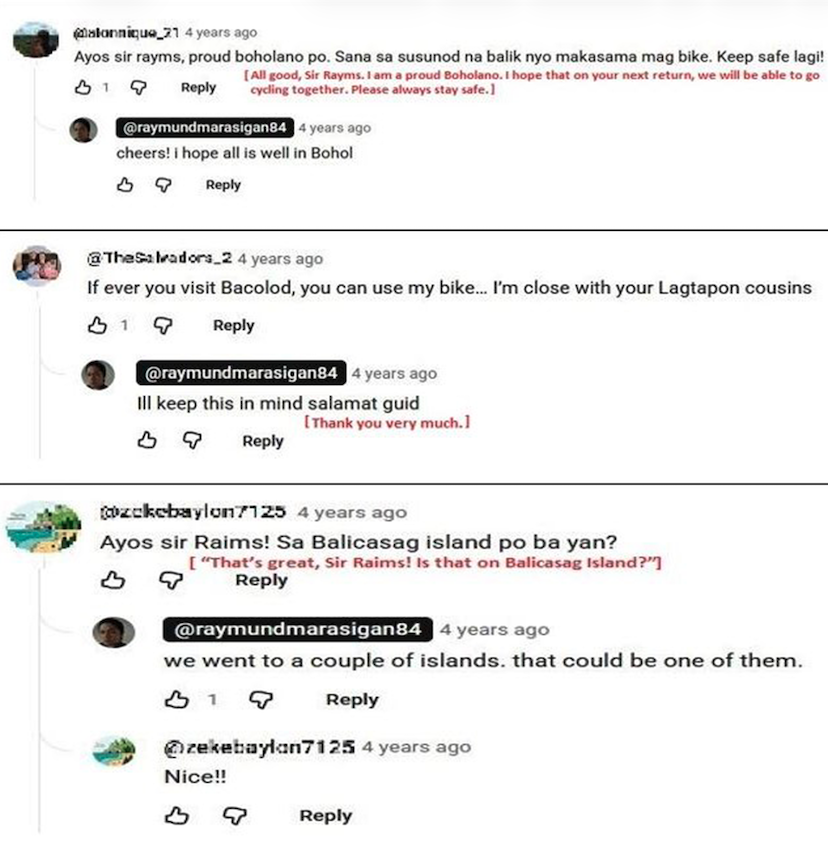
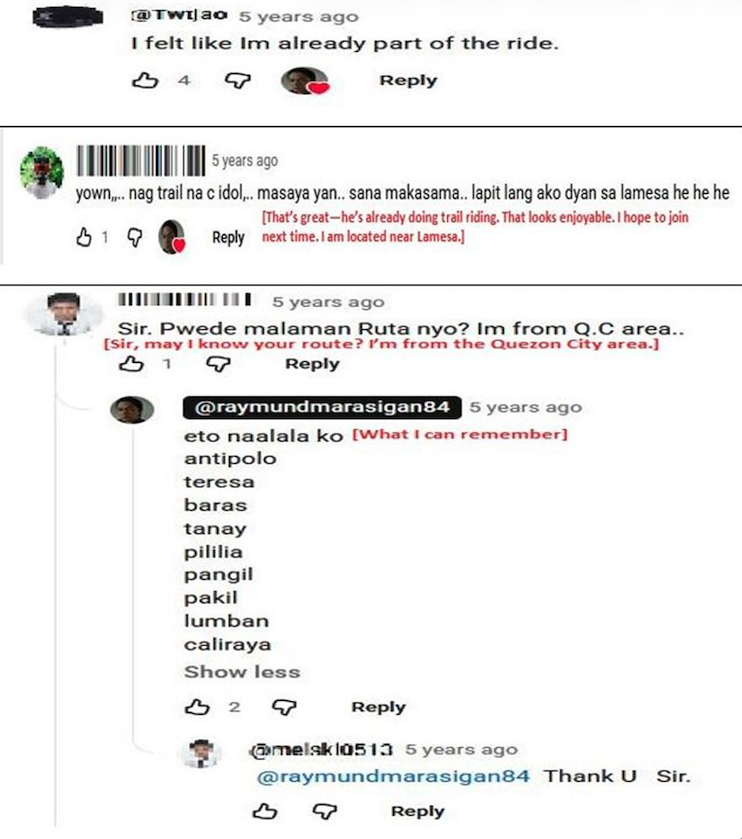
Figure 6. Screenshots of comment threads showing viewer participation about common landmarks from Raymund Marasigan’s Allryd vlogs.
Lastly, the Allryd comment threads go beyond online interactions to promote community building. What should have been a monologic broadcast of the vlogger transformed into a dialogic exchange with viewers where they were asked to either identify Easter eggs from previous vlogs, or suggest ideas for future content, or even pose interest-related questions, etc. At its core, viewer participation deepens the bond with the vlogger, sustained through each vlog’s ongoing descriptions and narratives toward a shared sense of ownership. In line with this, Figure 7 depicts conversations between parties across several registers: the first two threads taken from the RevPal ride and Maarat-Sandugo ride refer to Easter eggs from previous vlogs; the next two threads also from RevPal and Maarat-Sandugo rides suggest future vlog contents for Allryd; and the last three threads from the Lamesa Nature Reserve ride, Tukadon Night ride, and RevPal ride pose random queries about mountain bikes, camera/settings, and font styles, respectively.
Recurring engagement with vlog contents like these creates a rhetorical community bound by intimate references, inside jokes, and collective memory of significant places. In these examples, I notice an ongoing negotiation of who belongs and what matters while participants respond to trivia questions (e.g., “Chick Corea’s Spain” from the RevPal ride or “Saguijo” from the Maarat-Sandugo ride), propose future episodes that involve collaborating with Gary Valenciano (Filipino singer and actor) and riding Masalukot 4, and ask questions about equipment or typography inspired by signs on the jeepney (a popular Philippine public transportation from repurposed post-WW2 U.S. military jeeps). Because viewers recognize certain elements identified by the vlogger, they feel empowered to engage or respond in ways that foster a sense of belonging. What makes this type of community building unique is the transformative personal encounters in each episode, through which viewers collectively make sense of local symbols shaped by the vlogger’s ongoing use of recognizable themes, sensibilities, and interactions.
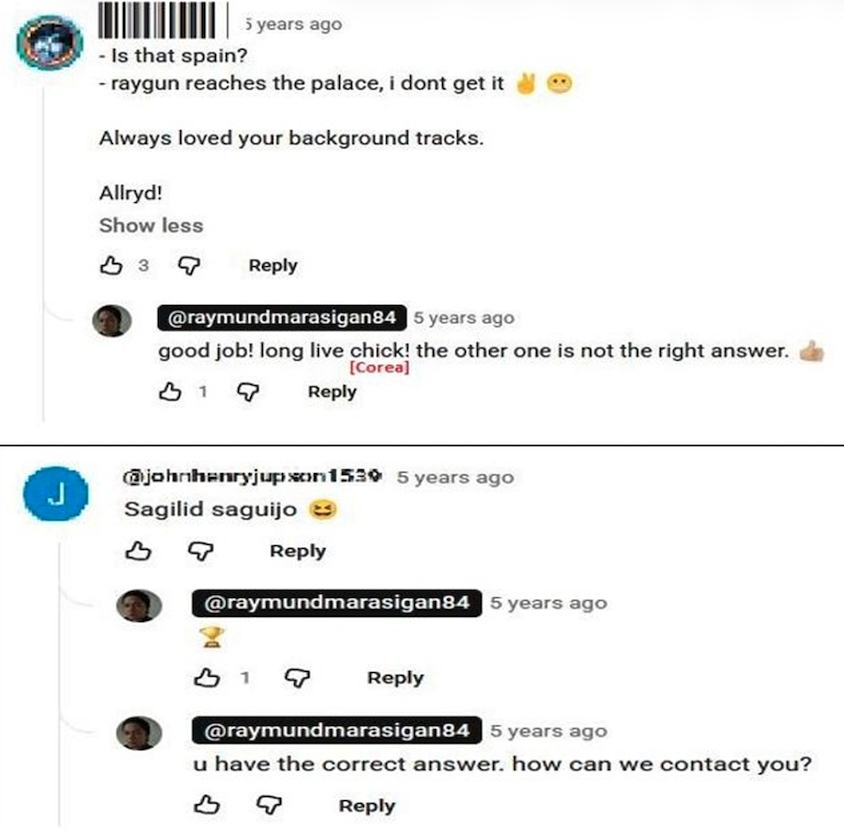
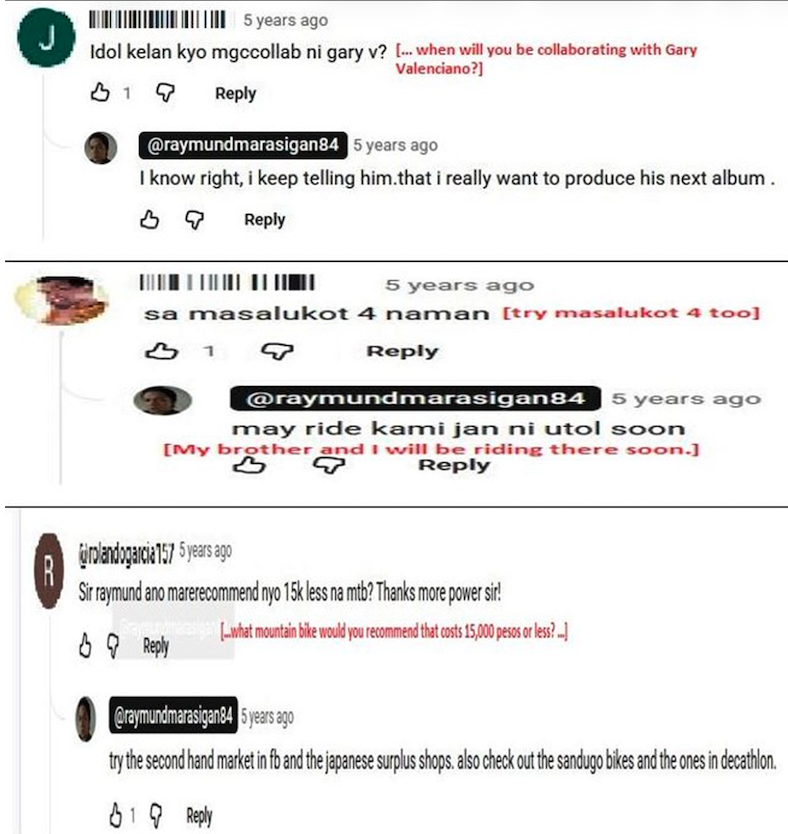
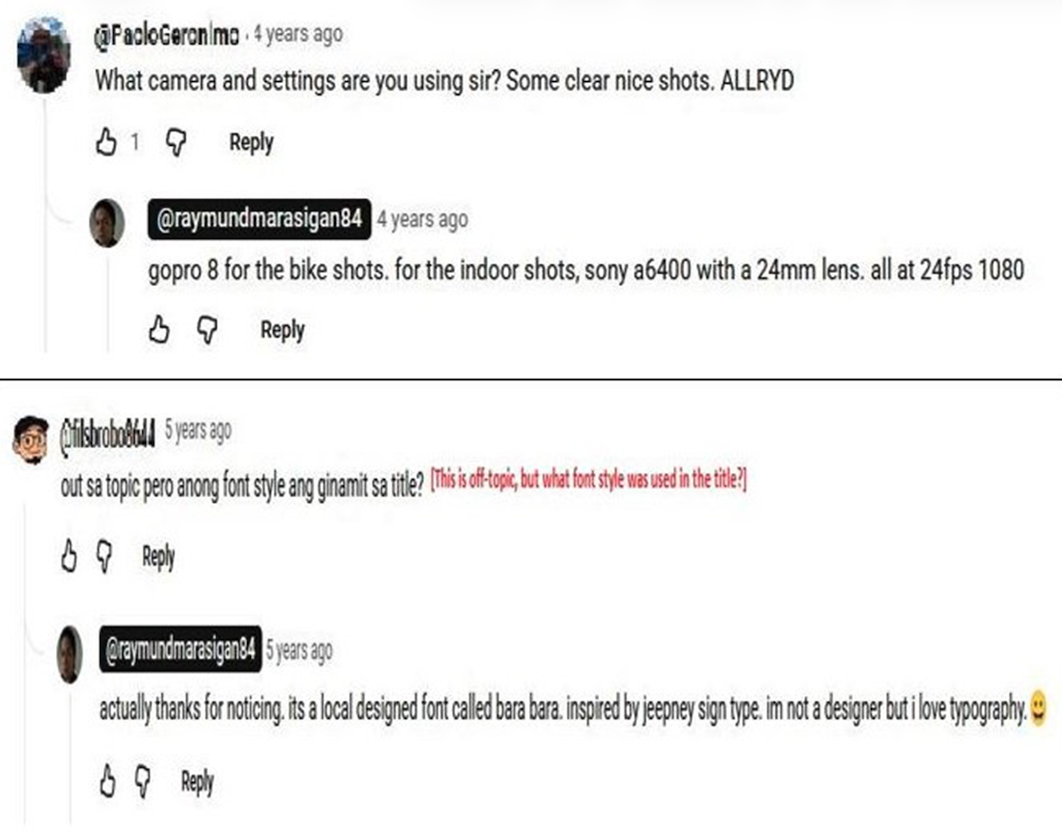
Figure 7. Screenshots of comment threads showing viewer participation for community building from Raymund Marasigan’s Allryd vlogs.
Emerging Perspectives
In sum, I affirm the capacity of Allryd vlogs to move viewers toward identification, trust, and community through their portrayal of familiar landscapes, ordinary actions, and the participatory space of the comments section, expanding how we understand digital cultural rhetorics. My content analysis has traced how the seemingly mundane act of cycling is transformed into a rich site of collective meaning-making and rhetorical identification. Three interconnected strands have emerged. First, common landmarks (e.g., neighborhood parks, rural trails, urban roads) that punctuate the vlogger’s rides function as anchors of recognition, grounding the viewers’ attention in a shared geography that transcends the screen. These are not mere backdrops but active rhetorical tools (though unpolished/unfiltered) that seem to say, you know this place. Second, shared experiences arise from the vlogger’s individual journey into a collective memory, validating the viewers’ experiences, reflections, and trust. These rhetorical experiences are constructed through shared reference points that anchor the vlogger’s narrative to the viewers’ own embodied histories/realities. Finally, viewer participation, which is explicit in the comments section, completes the circuit. When a viewer types, “I felt like I’m already part of the ride,” s/he moved from being a passive observer to an active participant, exercising a rhetorical agency within a digital sphere. Together, these three strands do not simply describe what vlogs do; they explain how vlogs build community, one landmark, one shared breath, one acknowledging comment at a time. In an age of algorithmic fragmentation, the humble bicycle ride down a familiar route turns out to be a quiet act of gathering.
Why, then, does any of this matter beyond the narrow confines of Raymund Marasigan’s YouTube channel? The answer lies in what the comments reveal: how shared recognition becomes a public, participatory act rather than a private one. For an Overseas Filipino Worker (OFW) like me, the Allryd video blogs offer a vital, low-stakes form of going home… a way to hear the sounds of Manila, to watch a familiar intersection unfold in real time, to pick up practical tips on how to unpack a bike or what gear to wear, and to feel, even for a few minutes, less distant from home. What matters here is not merely comfort but connection; the vlog’s portrayal of familiar landscapes and ordinary actions gives viewers something to identify with, respond to, and build community around. They allow viewers to inhabit, however virtually, a shared space even when the physical world is inaccessible. More broadly, this analysis suggests that YouTube vlogs are not trivial distractions but significant tools for maintaining community in moments of crisis, displacement, or simply the ordinary loneliness of living far from where one grew up.
The findings of this study reveal broader implications for how we understand digital media’s role in meaning-making, community formation, and collective identity, particularly for transnational viewers who turn to vlogs as effective bridges to home. It links vlogging to new media practices that transform the ways we produce, circulate, and consume texts in digital spaces (Wysocki 430; Hess 9). I recommend more investigations of vlogs as cultural intermediaries. Vlog articulations on YouTube are designed with specific values, incentives, and constraints (Gruwell; Hassan 1), such as visibility algorithms, ad revenues, and community guidelines, but their content analyses can promote deeper understanding of cultural and social representations (Pierroux and Skjulstad 213) that go beyond personal journaling (Sharma 301). In fact, YouTube, TikTok, and other media networks function as channels of everyday rhetoric, foregrounding the complex ways meanings are made through content, relationships, and other intertextual factors. I believe we should continue to share cultural knowledge or study cultural identities on digital platforms to embody a global village across borders, where members participate in a “digitally networked ecology of overlapping (and networked) ecosystems” (Eyman 85).
I conclude that one of the ways to approach these online platforms is by examining the complexities between the rhetorical intent of the vlogger and the persuasive effects on the viewer/audience. A rhetorical approach to data analysis positions vlog episodes as dynamic elements of digital and cultural rhetorics, promoting interconnectedness, transnational relations, and communal meaning-making processes. Particularly, vlogs as digital data are plural arguments that impact both the vlogger and viewers alike and, depending on the structures of metadata surrounding a vlog content (e.g., viewer’s geolocation, device, time of access), may be processed rhetorically in multiple and diverse ways. These rhetorical formulations should highlight the expansion of digital practices as avenues that build globally impactful communities.
Notes
1 For accuracy, all titles were copied verbatim from the original YouTube videos.
2 All YouTube videos mentioned in this text are publicly available as of this writing.
Works Cited
Bratta, Phil, and Malea Powell. “Introduction to the Special Issue: Entering the Cultural Rhetorics Conversations.” Enculturation: A Journal of Rhetoric, Writing, and Culture, vol. 21, Apr. 2016, enculturation.net/entering-the-cultural-rhetorics-conversations.
Brott, Pamelia E., and David A. Willis. “Vlogging as a Tool in the Self-Reflective Journey: Professional Identity Development as a Space Between.” SAGE Open, vol. 11, no. 4, Dec. 2021, pp. 1-13. Academic Search Premier, doi.org/10.1177/21582440211061526.
Carter, Geoffrey V., and Sarah J. Arroyo. “Video and Participatory Cultures: Rhetoric, Writing, Performance, and the Tube.” Enculturation: A Journal of Rhetoric, Writing, and Culture, vol. 8, 2010, enculturation.net/video-and-participatory-cultures.
Clark, Gregory. Rhetorical Landscapes in America: Variations on a Theme from Kenneth Burke. University of South Carolina Press, 2004.
Deng, Qi, et al. “What Makes Brand Social Media Posts Engaging? An Integrative Framework and Future Research Agenda.” Journal of Internet Commerce, vol. 22, no. 1, Dec. 2021, pp. 1-39. Academic Search Premier, doi.org/10.1080/15332861.2021.2011599.
Eyman, Douglas. Digital Rhetoric: Theory, Method, Practice. University of Michigan Press, 2015.
Gruwell, Leigh. “Constructing Research, Constructing the Platform: Algorithms and the Rhetoricity of Social Media Research.” Present Tense: A Journal in Rhetoric and Society, vol. 6, no. 3, Jan. 2018, presenttensejournal.org/volume-6/constructing-research-constructing-the-platform-algorithms-and-the-rhetoricity-of-social-media-research/.
Hassan, Ragia H. “Educational Vlogs: A Systematic Review.” SAGE Open, vol. 13, no. 1, Feb. 2023, pp. 1-12. Academic Search Premier, doi.org/10.1177/21582440231152403.
Hess, Aaron. “Introduction.” Theorizing Digital Rhetoric, edited by Aaron Hess and Amber Davisson, Routledge, 2018, pp. 1-15.
Hocutt, Daniel. “Algorithms as Information Brokers: Visualizing Rhetorical Agency in Platform Activities.” Present Tense: A Journal in Rhetoric and Society, vol. 6, no. 3, Jan. 2018, presenttensejournal.org/volume-6/algorithms-as-information-brokers-visualizing-rhetorical-agency-in-platform-activities/.
Hodgson, Justin. “Reculturations: ‘Small Screen’ Culture, Pedagogy, and YouTube.” Enculturation: A Journal of Rhetoric, Writing, and Culture, vol. 8, 2010, enculturation.net/reculturalizations.
Jiang, Lu, and Yukio Kodono. “Interrelationships Among Consumer Attitudes Toward Vlog Promotion.” Journal of Advanced Computational Intelligence and Intelligent Informatics, vol. 26, no. 4, March 2022, pp. 542-48. ProQuest, doi.org/10.20965/jaciii.2022.p0542.
Ledbetter, Lehua. “The Rhetorical Work of YouTube’s Beauty Community: Relationship- and Identity-Building in User-Created Procedural Discourse.” Technical Communication Quarterly, vol. 27, no. 4, Oct. 2018, pp. 287-299. Academic Search Premier, doi.org/10.1080/10572252.2018.151895.
Malone, Meagan E. “Expression of the Embodiment Contraction in Natalie Wynn’s ContraPoints Video, Beauty.” Computers and Composition: An International Journal, vol. 63, Jan. 2022, pp. 1-17. ScienceDirect, doi.org/10.1016/j.compcom.2022.102696.
Moreland, Kelly A. “Toward a Rhetoric of Body as Space.” Peitho: Journal of the Coalition of Feminist Scholars in the History of Rhetoric and Composition, vol. 21, no. 2, Spring 2019, pp. 404-425.
Perelman, Chaïm, and Lucie Olbrechts-Tyteca. “From The New Rhetoric.” The Rhetorical Tradition: Readings from Classical Times to the Present, 3rd ed., edited by Patricia Bizzell, et al., Bedford/St. Martin’s, 2020, pp. 1323-1346.
Pierroux, Palmyre, and Synne Skjulstad. “Composing a Public Image Online: Art Museums and Narratives of Architecture in Web Mediation.” Computers and Composition: An International Journal, vol. 28, no. 3, Sept. 2011, pp. 205-2014. ScienceDirect, doi.org/10.1016/j.compcom.2011.07.005.
Sharma, Daneshwar. “Making Meaningful Connections and Learning Workplace-Like Business Writing Through LinkedIn and Blogging.” Business and Professional Communication Quarterly, vol. 85, no. 3, Sept. 2022, pp. 298-318. Web of Science, doi.org/10.1177/23294906221109188.
Sundvall, Scott. “Everything Is (Not So) Terrible!: Heuretic Glitchicism as Method for Electrate (Re)composing.” Computers and Composition: An International Journal, vol. 56, May 2020, pp. 1-15. ScienceDirect, doi.org/10.1016/j.compcom.2020.102575.
Tuan, Yi-Fu. Space and Place: The Perspective of Experience. Univ. of Minnesota Press, 1977.
Wysocki, Anne Frances. “What Do Technical Communicators Need to Know about New Media?” Solving Problems in Technical Communication, edited by Johndan Johnson-Eilola and Stuart A. Selber, University of Chicago Press, 2013, pp. 428-453.
About the Author
Florence Elizabeth Bacabac, PhD is professor of professional/technical writing and digital rhetoric and coordinator of the English composition program at Utah Tech University in St. George, Utah (United States). Her articles appeared in Journal of Multimodal Rhetorics, Computers and Composition Online, Peitho, and Journal of Business and Technical Communication, among others. For more information, visit her website at https://florenb07eportfolio.weebly.com/.
Production Credits
Copy Editors: Gissell Del Castillo and Alexandra Hidalgo
Posted by: Gissell Del Castillo
Editorial Assistant: Gissell Del Castillo
Managing Editor: Ana Milena Ribero
Editor-in-Chief: Alexandra Hidalgo
Related posts:
 Truth Beyond Reason: Speculative Fictions and the Mad Imagination
 Cultivating Solidarity through Radical Subjectivity: A Review of Noor Ghazal Aswad’s Searching for Solidarity: Revolutionary Dreams and Radical Social Movements
 Reproductive Liberation Requires Dismantling the Gender Binary: A Review of Doing Gender Justice: Queering Reproduction, Kin and Care by Shui-yin Sharon Yam and Natalie Fixmer- Oraiz
 Constellating Stories and Counterstories: Cultural Rhetorics Scholarship Principles
 Accent as a Border: Storytelling of Linguistic Borders in Different Transnational Academic Spaces
 Countering Racial Enthymemes: What We Can Learn About Race from Donald J. Trump