

Stephen Dadugblor, University of British Columbia
Hazel Elif Guler, consultant and independent scholar
Gale Franklin, Carleton University
Sharon Yam, University of Kentucky
Moderated by Xiqiao Wang and Andrés C. Lopez
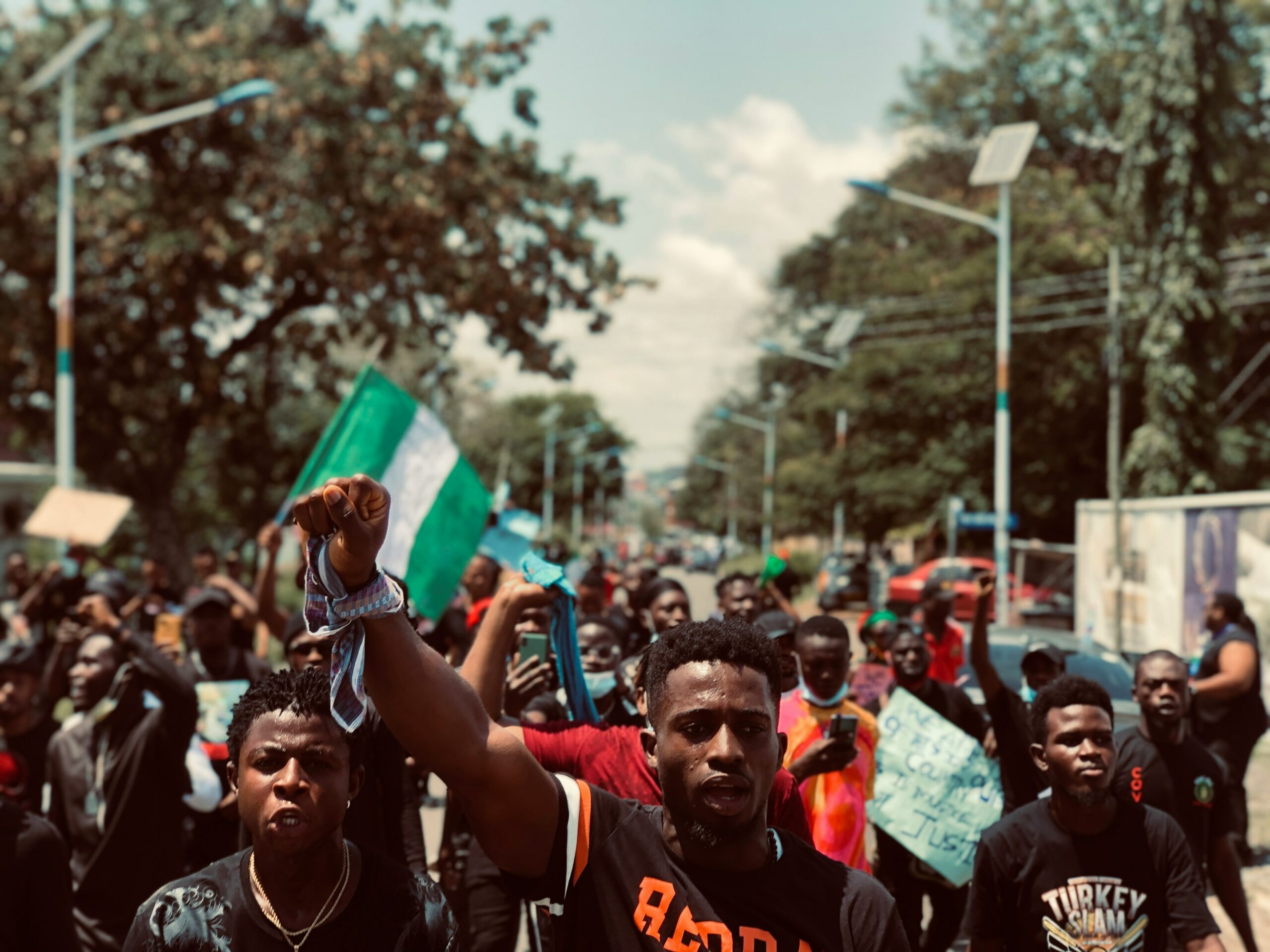
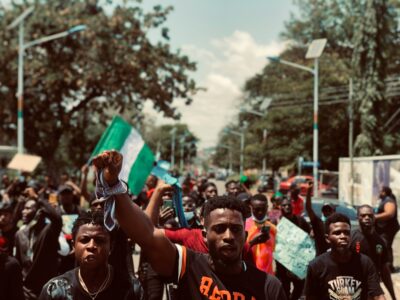
#SARS protest in Ghana.
Introduction
At one of our editorial meetings last fall, we were discussing our progress on what would become the conversation titled “Stories that Lead to Action: An Exploration of US Political Rhetorics,” which was moderated by our fellow managing editors José Luis Cano Jr. and Daisy Levy. I, Andrés, asked if within that conversation there was any mention of how US political rhetorics travel across national borders. I’m a US citizen who lives in Canada and grew up going back and forth between the US and Guatemala. Watching Canadians navigate blatant displays of white supremacy during the 2022 Convoy Occupation presented a compelling opportunity for contemplation. I couldn’t help but notice that the rhetorics used by Convoy attendees were almost verbatim the phrases I’d heard January 6 US insurrection participants use to justify their occupation of government spaces and their entitlement as white subjects to take over the US Capitol without much resistance from police. How were US-framed discourses affecting the political rhetorics within the Canadian state I found myself living and teaching in?
These questions resonated with me, Xiqiao, as my research into Chinese international students’ literacies has shown me the creative, expressive, and political affordance of memes, which are used to raise concerns about social issues, develop cultural affiliations, and advance political arguments. In particular, I became interested in how Chinese Internet users routinely weaponize memes to participate in grassroot nationalism. While memes largely embrace an ethos of irreverence, when faces of celebrities and political leaders are remixed and parodied to the point of indignity, the disruptive energies they embody are often harnessed to advance indoctrinated political messaging, especially with regards to rising geo-political tensions between China and the United States. As the political discourse in the United States has been dominated by controversies around borders, such as border walls, immigration policies, and initiatives to protect technology advantages, I became even more curious about how border-enforcing practices are succeeding or failing to limit the transnational movements of viral memes and the political tactics they embody. During our meeting, when the editorial board showed interest in pairing the US political rhetorics conversation with an international political rhetorics conversation, I volunteered to moderate it with Andrés.
Recognizing that rhetorical tactics and discourses can permeate, spill over, and reinforce borders, we invited participants to give readers a look at how their curiosities into and in pursuit of international political rhetorics, as locally embedded, transnationally mobilized, and globally impactful practices, could open up a space to contemplate and problematize the manifold political realities of the world. We thank our participants for sharing aspects of their professional journeys, which are beautifully entangled with their personal journeys of moving back and forth in between places, languages, and disciplines:
- Stephen Dadugblor, Assistant Professor of Journalism, Writing and Media at the University of British Columbia
- Hazel Elif Guler, consultant and independent scholar
- Gale Franklin, PhD candidate in Canadian Studies at Carleton University
- Sharon Yam, Associate Professor of Writing, Rhetoric, and Digital Studies at the University of Kentucky
From the beginning of the conversation, folks were eager to discuss the landscape of international political rhetorics—to offer their insights, but especially to connect with their colleagues on these same issues. Our participants point to the fluidity with which rhetorical tactics are mobilized, replicated, and repurposed by stakeholders at different scales. Sharon Yam observes the “strategic yet problematic” allyship between pro-democracy Hongkongers and right-wing Trumpist arguments in the US to denounce the Black Lives Matter movement despite shared struggles with police brutality. Stephen Dadugblor notes how the proliferation of digital media makes rhetorics used within one political context more accessible in transnational contexts. Such accessibility, as he argues, helps to hold powerful countries such as the United States accountable when they dictate how other countries are to “democratize […] according to US standards.”
Participants highlight the need to attend to multiple modes through which international political rhetorics materialize. Gale Franklin draws on her research to listen to the ways in which “power is geopolitically sounded.” She provides compelling examples of how sounds, such as the “constant and unending honking” during the Freedom Convoy contributed to the reconstruction of the Ottawan (and broader Canadian) political soundscape. Extending this observation, Hazel Elif Guler argues that strategic uses of artistic expressions encompassing music, painting, creative writing, and film are essential in creating a “relatively safer space to voice one’s plight” and to “gradually amplify the voices and concerns of minorities” within Turkey and in the broader Middle East region. These connections, resonating across different cultural, linguistic, and geopolitical contexts, highlight the need to expand the conceptual and methodological “tool kit” of political rhetorics.
Simultaneously, our participants point to the potential to build unexpected coalitions. Gale Franklin points to the importance of considering shared histories of British colonialism to examine how “practices of ethical and empathetic listening are necessary to create spaces of generative discomfort and solidarity.” This note, echoed by other participants, invites us to consider how listening and conversing across colonialism’s hierarchical structures can be an avenue to build coalitions.
In many ways, the conversation invites us to listen and dialogue across differences. As Stephen Dadugblor reminds us, this conversation is a space to appreciate how “local political rhetorics relate to, inform, and are informed by rhetorics and politics elsewhere.”
How do you define international political rhetorics as an area of scholarly inquiry?

Hazel Elif Guler in front of a LOVE sign in Virginia.
Sharon Yam: I consider it to be a form of rhetorical analysis that takes into account the interconnectedness of different actors and stakeholders across levels and scales–such as state governments, grassroots organizations and communities, intergovernmental organizations, transnational corporations, and everyday citizens. International political rhetorics invites us to examine not only the production and circulation of translocal and transnational political discourse, ideologies, values, and capital, but also how they are re-purposed and re-mediated by different actors to accomplish various goals. I think when we think of international politics, there is a tendency to focus on state actors, but I’d like to urge us to think of the ways in which local actors, especially those from marginalized positionalities, participate in rhetorical invention within this matrix of power.
Gale Franklin: Sharon, I really appreciate your point on the interconnectedness and movement of discourses and how they are intertwined in various matrices of power!
Stephen Dadugblor: Sharon, I really like the transnational dimension to rhetoric that you are teasing out. I think the connection between and across nations is important to emphasize in this kind of work. Otherwise, we retreat to a localism of sorts.
Stephen Dadugblor: I consider international political rhetorics as a study area that attends to the rhetorical processes, values, beliefs, and understandings guiding the practice of politics within specific cultural communities first, and then in relation to the wider world. I understand it also in terms of interrelationships in the sense in which local political rhetorics relate to, inform, and are informed by rhetorics and politics elsewhere. I believe this attention to the local is necessary because it is in the connection to elsewhere that we see the international dimension to this kind of work. For example, although rhetorical scholars often speak and write about democracy as a form and practice of government, it is only in the local instantiation of the concept that the practice comes alive and gains any kind of meaningful traction.
Andrés López: That’s an important point on the ways that local and global political rhetorics function together. It seems related to what Sharon is saying about grassroots organizations.
Hazel Elif Guler: International political rhetorics might involve the use of persuasive techniques, diplomacy, or propaganda to influence and shape opinions, policies, or actions at an international level, or the use of language with a global impact. As an area of scholarly inquiry, it might entail the study of speeches, public addresses, diplomatic statements, or any form of communication that aims to address global exigencies, international conflicts, or negotiations between countries or multinational organizations. A major purpose of such inquiry might be to challenge dominant narratives in a given ethnic or national context, and the recognition that such scholarship can contribute to a globally diverse and inclusive field of rhetorical studies (something that we also try to promote in various types of global non-Western rhetorical studies).
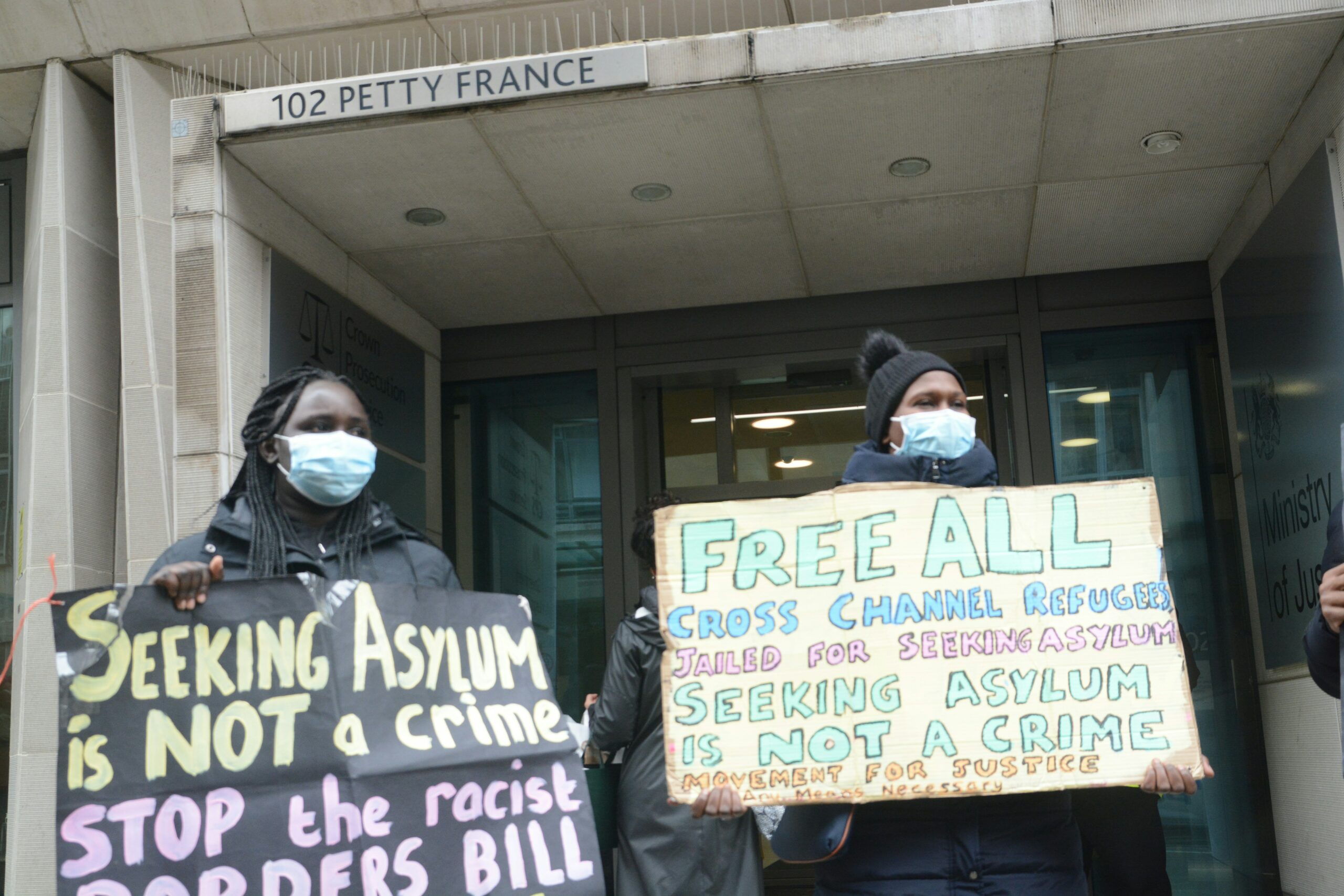
Grass root activists protesting the justice department in the united kingdom over the treatment of the human beings who have risked dangerous migration and exploitation to find no justice in France.
Xiqiao Wang: I am struck by the motion of documents and genres and ways these things assume agency at different scales.
Gale Franklin: As someone new to the field of cultural rhetorics generally, I understand international political rhetorics through my training in music and sound studies, as a way that power is geopolitically sounded. For me, sound functions as a rhetoric for political means used to facilitate a specific political climate. Through the frames of sound and music, I am able to employ a holistic understanding of the term–international politics rhetorics–that expands on the visual. I often ask: How is sound used by individuals, collectives, and institutions to create meaning, tell stories, or move towards an objective? What does power sound like? And how do people in and outside of Canada listen to the multiple strands of power that flow through the tumultuous soundscape of the current political moment? These questions guide my work.
Xiqiao Wang: I am also interested in understanding the rhetorical affordances of other modes. What does it mean to talk about the “grammar” of sounds, for example, and how do rhetors creatively orchestrate the symbols and sounds of music to achieve rhetorical purposes.
Stephen Dadugblor: Gale, that’s such a generative angle to bring to the study area. So much of our focus is often on the textual and alphabetic, and I think there’s much in other modes that expands our understanding of rhetorical activity. I’m guided by similar thinking as yours when I teach multimodality in my classes.
Hazel Elif Guler: Gale, what a novel way to consider international political rhetorics! I am often fascinated by the power of sonic rhetoric, as I especially consume it through mediated popular culture texts. The geopolitical connections you are making sound very unique and intriguing, something I have never considered before.
What sparked your interests in international political rhetorics and what role does it play in your work?
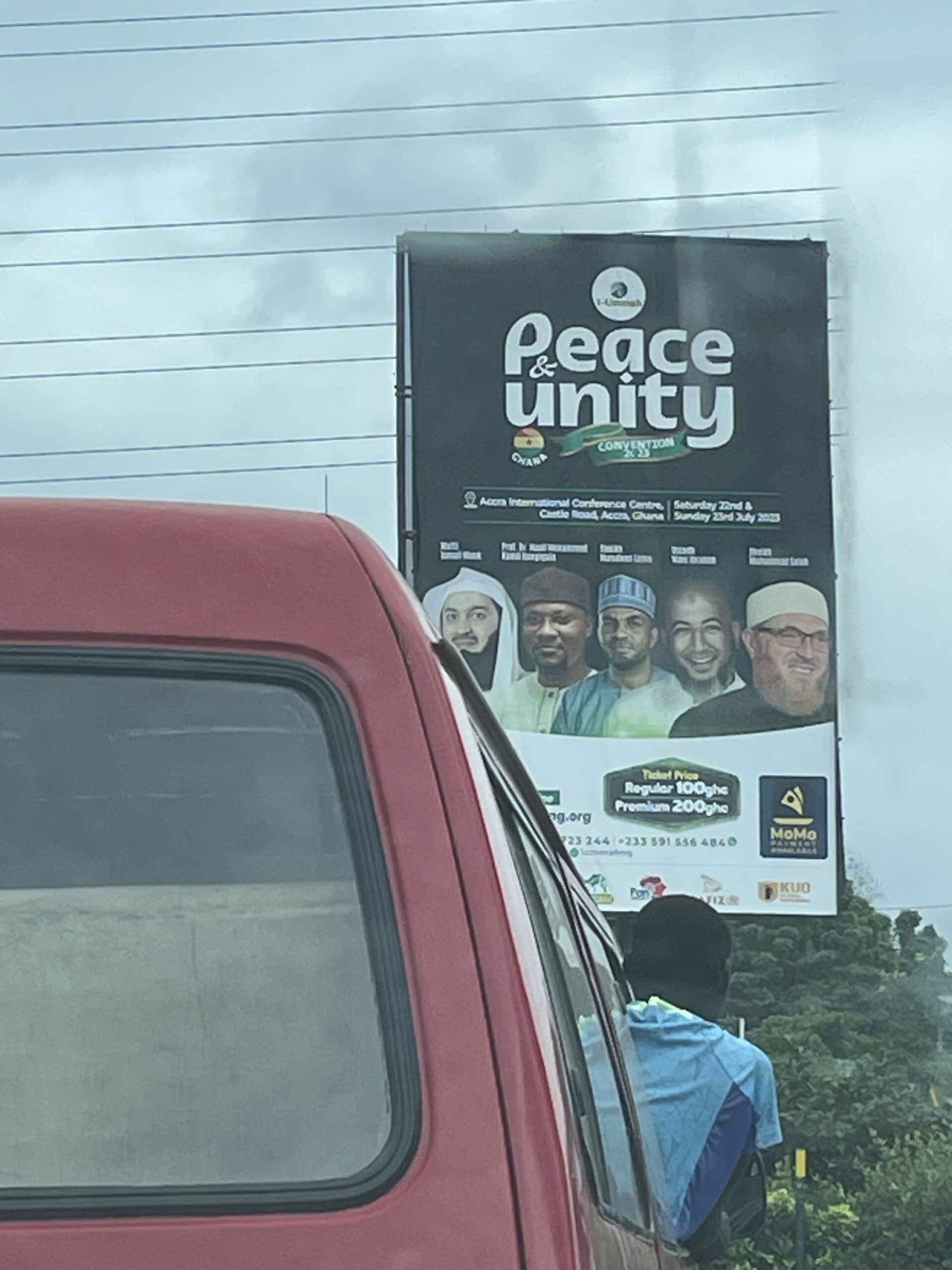
Photo of peace and unity billboard in Ghana. (Phto by Stephen Dadugblor).
Sharon Yam: I am a diasporic Hongkonger. As a former British colony and currently a Special Administrative Region of China, Hong Kong has always occupied a complex geopolitical, cultural, and historical position. While studying the interplay between citizenship and race in Hong Kong in graduate school, I realized that I would be remiss if I did not pay keen attention to the ways in which geopolitical discourse and international politics shaped local understandings and performances of identities. In my book, Inconvenient Strangers, I examined how three racialized communities–Southeast Asian migrant women, South Asian Hongkongers, and mainland Chinese maternal tourists–articulated their identity as citizens. My analysis would be incomplete at best if I did not take into account how the British colonial government created racial hierarchies across different colonies, and how that history affected the ways Hongkongers understood their relationship to mainland Chinese people.
While I was studying the Anti-Extradition Bill Protest in Hong Kong in 2019-2020, international political rhetorics came to the fore again as I examined how and why many pro-democracy Hongkongers found right-wing Trumpist arguments in the U.S. alluring, and how this strategic yet problematic allyship networked with anti-Blackness and what Yao Lin calls U.S. beaconism, which refers to neoliberal affinity and belief that the West–specifically the U.S.–is politically perfect and just. While one might expect pro-democracy Hongkongers to demonstrate solidarities with Black activists through shared struggles against police brutality, drawn to Trump’s anti-China discourse, many Hong Kong movement supporters chose to ally with the Trump administration and denounced the Black Lives Matter movement that was unfolding at around the same time. Meanwhile, while deploying immense state violence to suppress the Hong Kong movement, the Chinese government repeatedly announced its support for the BLM movement. China’s support for BLM, however, must be understood in the context of tit-for-tat nationalist discourse between the U.S. and China, specifically about the latter’s violations of human rights. To understand rhetorical performances, solidarities, and denouncement, hence, requires a deep understanding of geopolitics, state nationalist discourse, and foreign policy. Understanding Sino-U.S. geopolitical and human rights discourse, along with the rhetorical constructions of race in the U.S. and Hong Kong, became paramount to my analysis of such transnational cross-movement solidarities and fissures. This article is forthcoming in Rhetorics, Politics, & Culture!
Xiqiao Wang: Indeed cross-strait tensions are looming large in both regional and international political discourses in the past few months. How political messaging is mobilized in the region to inform advocacy work and reverberating in expected and surprising ways is fascinating.
Gale Franklin: Sharon, I am so interested in your work! International political rhetorics is so useful for examining how ideologies and strategies move and flow across nations, and can be, as you mentioned earlier, re-purposed for local political means.
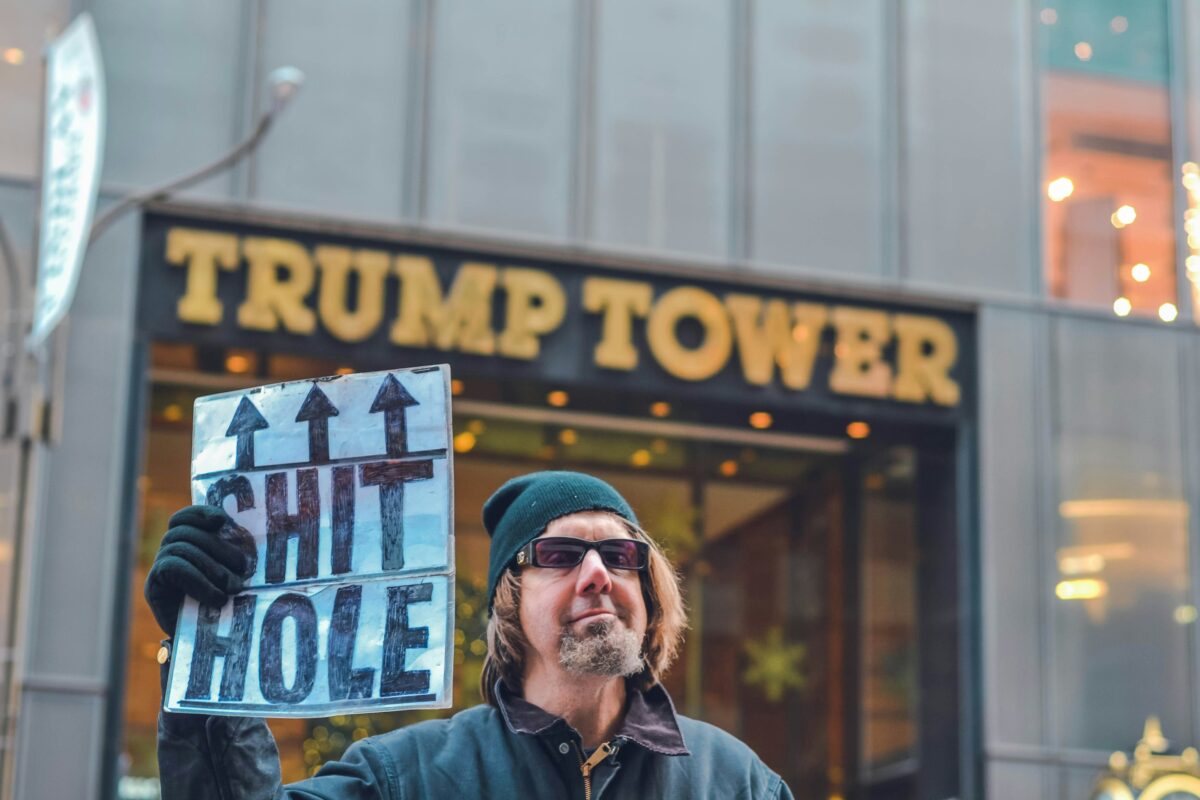
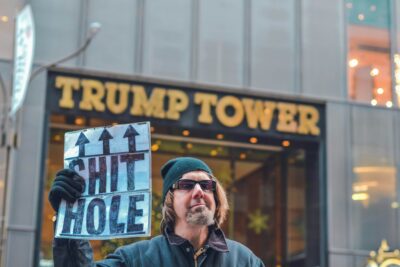
Anti-Trump protester in front of Trump Tower in New York City.
Andrés López: I’m struck by how you are also bringing up the ways colonialism has been played out in Hong Kong too. Reminds me of Gale’s point about following the currents of whiteness, or power.
Stephen Dadugblor: I would pay attention to my local context in Ghana. Growing up, my immediate community was alive with intense political debates, and these debates often extended to national politics. Beyond this immediate community, my orientation to political rhetorics came to be shaped by my observation of politics and democracy in Ghana and the ways that they were intertwined with regional, continental, and global politics. For example, on some level, there is a long tradition in Ghana–and to some extent other African countries– of linking discussions of national belonging, freedom, and self-determination to similar ideas on the continent. This is not by accident. In the second half of the twentieth century, when most African countries were gaining political independence, several African nationalist leaders made considerable efforts to consider the interconnectedness of nation-states, given the shared history with colonialism. In a sense, this kind of interrelationship within and across boundaries and between the local and global still reverberates in continental discourses. Insights about such relationships partly guide my work. In my current work on peace rhetorics as foundation for national belonging in Ghana, I see some of this thinking in terms of strong attention to local political and historical dynamics as well as a keen sense of continental political realities about the place of peace in nation-building. The relationship between the local and global seems to be ever-present.
Xiqiao Wang: Stephen, this notion of peace, rhetorically rendered, as part of nation-building is so critical as much of nation-building efforts often entail violence to certain people.
Hazel Elif Guler: What sparked my interest in international political rhetorics was my initial enchantment fascination with rhetorical studies and how rhetoric resonated with my experiences, particularly considering my international background. Much like many scholars entering the field of rhetorical studies, my fascination with rhetoric blossomed during foundational courses in rhetorical theory; for me, this was early in my graduate studies. It became immediately evident to me that rhetoric played a dominant role in the political arena. As a native of Turkey, I promptly directed my early textual case studies for my graduate rhetoric courses toward international political rhetorics concerning my home country. This included exploring Western perceptions of Turkey’s European Union bid at the time (which gradually faded away in recent years) and the Orientalist rhetoric surrounding Turkey’s historical and contemporary representation in Western contexts.
Xiqiao Wang: This juxtaposition of Western and Oriental lenses is interesting. As a scholar from bicultural and multilingual background myself, I have often wondered how a “bi-focal” lens allows me to see and theorize things that might otherwise remain obscured.
Sharon Yam: Xiqiao, being simultaneously an insider and outsider across contexts is an interesting positionality because it entails a certain degree of liminality, which I think can be very generative.
Xiqiao Wang: Yes, learning to defamiliarize the familiar might be one conceptual move entailed in such work.
Hazel Elif Guler: Yes, Xiqiao! That’s a very insightful point about the process of engaging in one’s native rhetorics.
Stephen Dadugblor: Hazel, I’d say the same in terms of my own training in rhetorical studies. The feeling of straddling two worlds is apparent: my Ghanaian experiences and my training in rhetorical studies in the United States. In my case, I found it necessary to direct attention to politics in Ghana while thinking about ways that it does or does not resonate internationally.
Hazel Elif Guler: Xiqiao, Sharon, and Stephen, I think it can both be invaluable to bring a native lens to how political or other rhetorics play out in our given cultural contexts, but (as you already seem to have noted) it can also be challenging to look at it from a native perspective. I often get concerned about the possible bias that might shape our views as we engage in our cultural rhetorical studies–something that I try to avoid by reading widely and deeply and by considering various viewpoints, being willing to change my own as I find out more.
The turning point for my interest in international political rhetorics arrived with my dissertation, a more substantial undertaking compared to course papers. Balancing the desire to continue exploring topics related to my national context with the challenges of a politically sensitive rhetorical background proved to be a significant hurdle. Political rhetoric in Turkey has been diverse, reflecting a wide range of ideologies, historical events, and political movements. Many Turkish leaders and political figures use strong nationalist rhetoric, emphasizing a sense of national unity and loyalty to the state. Also, Turkey has a history of secularism, but there has been a significant shift towards more conservative and religious rhetoric in recent years.
Politicians sometimes employ religious language and values to appeal to religiously conservative voters, while others advocate for secular principles. In this context, determining a suitable topic for a serious piece of scholarship like a dissertation was no easy task. I needed to ensure that I respected my cultural context while doing my due diligence on the selected topic. Despite the struggle, my focus consistently returned to culturally significant texts of Turkey that remained underexplored—such as Ataturk’s Great Speech (or Nutuk), an authoritative text for defining contemporary Turkish national identity. Believing that these texts still held untapped insights into the foundational ideologies of my nation of origin, I decided to analyze national identity within the controversies surrounding this authoritative cultural text. By delving into parliamentary speeches and online forum postings related to the text, my analysis aimed to uncover the discrepancies between the political and public visions of national identity. In retrospect, I believe I effectively navigated the complexities of my dissertation’s sensitive cultural context, offering a nuanced exploration of the differing perceptions of national identity.
I later utilized similar texts to help my students enhance their cultural rhetoric competence by delving into international political rhetorics. Simultaneously, I conducted a classroom study on the pedagogical implications of these efforts, which was eventually published in Reflections: A Journal Public Rhetoric, Civic Writing, and Service Learning. It was during this period that things began to come in full circle for me, as I then realized the value of pursuing this field, irrespective of any personal struggles with the cultural context of the related texts’ origins.
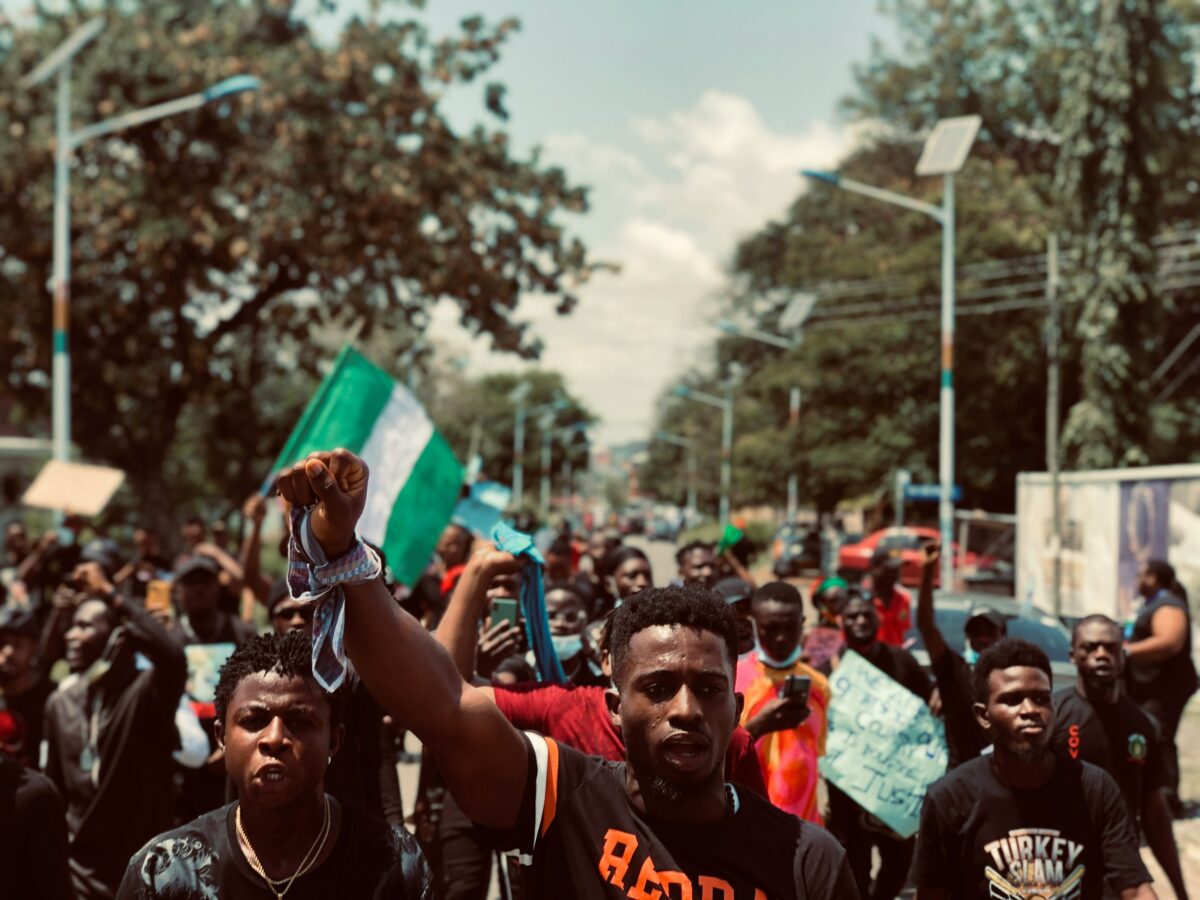
Protesters at a SARS protest in Ghana.
Gale Franklin: Hazel, I am struck by the phrase “to uncover the discrepancies between the political and public visions of national identity” – the nuances of perception are so important to uncovering the complexities of power from local and global perspectives.
Hazel Elif Guler: Gale, I agree. Until engaging in the research and writing process of my dissertation, I felt like this was an underexplored area, possibly due to an overemphasis on trying to understand primarily the dominant narratives of national identity. The public perceptions about the characteristics or meanings of this communal identity can often go unacknowledged.
Gale Franklin: I am currently living and working on unceded and unsurrendered Algonquin Anishinaabe territory, colonially known as Ottawa, Canada’s capital city, as a white settler from Treaty 1 Territory. Ottawa is a city marked by the national, international and local politics of Nationhood. My specific interest in international political rhetorics stems from my doctoral research on the sounds of white supremacy in Ottawa, where I consider the spatial, sounded, and embodied dimensions of white supremacy at national events such as Canada Day and the National Day for Truth and Reconciliation, as well as grassroots demonstrations including the 2022 “Freedom” Convoy and the recent “1 Million March 4 Children” on Parliament Hill. In the context of my research, looking at sound through the frame of international political rhetorics allows me to trace the resonances of whiteness as it shifts and circulates from the implicit background hum or “white noise” of white supremacy to the explicit thunderous roars of whiteness that demands attention. As a field of inquiry, international political rhetorics allows me to follow the currents of whiteness across borders, nation states, and collectives.
Andrés Lopez: Your point on following the currents of whiteness, and I’d maybe say power too, is important in helping us to start thinking about how organizing for freedom and self-actualization, as Stephen is pointing to, can be achieved. Or at least how power has mobilized itself so organizing can hopefully be more effective.
Stories and metaphors are often leveraged to serve political purposes—to differently depict border-crossing migrants, to enact nationalist agendas, or to encourage participation in the political processes. Can you share a story—by politicians, the media, individuals, and/or activists—that has struck you as particularly compelling at the international level?

Poster created by Hazel Elif Guler showcasing her research on the Orientalism in Turkey for the 2007 ODE Research Expo.
Hazel Elif Guler: Governments and political factions frequently leverage storytelling as a powerful tool to maintain political legitimacy, shape public opinion, and garner support for policies and leadership. We are used to seeing these carefully crafted narratives in speeches, official statements, state-controlled media, public events, and educational curricula. However, an intriguing international phenomenon, also explored in my previous rhetorical studies, involves stories disseminated through Turkish popular culture texts. In the past decade, Turkish television dramas have propelled Turkey into a significant role in global television production, captivating audiences worldwide. Initially aired on Turkish state television, these shows, like Resurrection: Ertugrul (Dirilis: Ertugrul) based on the life of a 13th-century Turkish tribal leader who fathered the founder of the Ottoman Empire, aim to influence public opinion, shape perceptions, and garner support for international policies. This show not only promoted Turkey’s cultural heritage domestically but also fostered solidarity in regions like the Middle East and Central Asia. My study of Resurrection: Ertugrul highlighted how the historical drama aimed to create a shared cultural identity and pride among citizens. I was particularly intrigued by the portrayal of strong women in these dramas, which symbolically redefined women’s roles in Turkish society, influencing perceptions not only in Turkey but also in Middle Eastern countries.
The global impact of such shows is evident in my firsthand observations of international audiences (including my friends and colleagues from the Balkans and the Middle East), who initially harbored negative perceptions of Turks but experienced a positive transformation after exposure to these dramas. Influenced by historical stereotypes and Turkophobia, their views changed significantly due to Turkish dramas like “Dirilis Ertugrul,” and they are now celebrating Turkish culture and its roots in Ottoman history. These dramas showcase how content can transcend borders and reach diverse audiences, with Turkey standing out as the first Muslim-majority country to achieve such global recognition. This leads me to argue that producers of these dramas use storytelling not only to promote nationalist agendas within national contexts but also to counter opposition narratives and dissenting voices on an international scale. As these popular culture texts challenge the credibility of opposing viewpoints, they contribute to the shaping of alternative narratives about individuals and ethnic groups.
Andrés López: I love how you’re framing how stories and storytelling can work for building solidarities abroad. I somehow always tend to think of stories as working to support the state, but this is a good reminder of how storytelling can be used in a different way.
Sharon Yam: One of the most powerful, and also in some ways insidious, narratives that state actors tell is one of victimization. For instance, Chinese state nationalist discourse depicts China as a victim of Western imperialism and oppression. While this narrative of victimization and oppression is true to an extent, it has been wielded by the ruling party to consolidate power and promote state nationalism through an us-vs-them framework. China is not the only rhetorical actor in international politics that relies on the narrative or story of victimization. This story is powerful because it justifies subsequent acts of state violence as righteous self-defense and/or acts of self-determination.
The story of a nation or people under threat has been used to justify the systemic state killing and oppression of others. For instance, the Chinese state justifies ongoing oppression and dispossession of Muslim Uyghur people by representing them as a “terrorist threat” to the Han majority nation-state. Thinking of 9/11 and the ongoing conflict between Israel and Palestine, I see the narrative of terrorist threats as a very salient one that has been used by state actors to justify violent acts against Muslims and other marginalized groups. I think, as rhetoricians who study international politics, we can help contextualize and disentangle these complicated histories, power relations, and identities, and shed light on how actors who have been oppressed in some contexts may very well be acting as the oppressor in another.
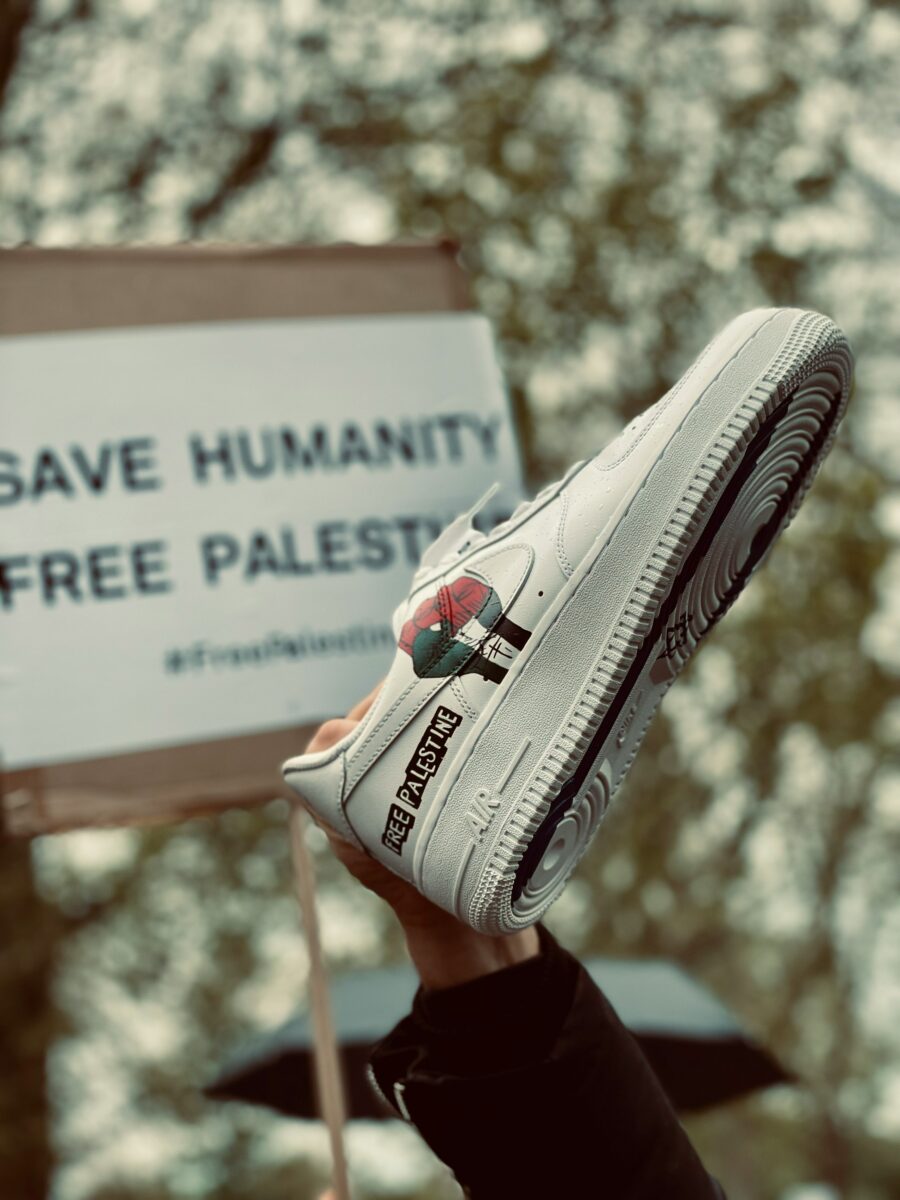
A Palestine Protest.
Hazel Elif Guler: Sharon, those are such profound examples. Governing a country is probably no easy feat, and fears about national security threats are understandable. However, using the discourse of national security as a manipulative governing tactic is very dangerous, not only for a given people but for humanity as a whole. Also, your points bring to my mind the term ‘Occidentalism’–-the construction of stereotypes and perceptions of the Western world, shaped by non-Western perspectives and influenced by cultural, political, or historical factors, paralleling the concept of Orientalism. While such an approach is understandable in ‘non-Western’ contexts, individuals in any cultural context should question biases, stereotypes, and power dynamics in the representation of different global regions.
Xiqiao Wang: I see in the responses from Sharon and Hazel this idea that stories are being used to reshape our imaginaries of the pasts, presents, and futures of nations and to map individual aspirations and sacrifices onto such collective imaginaries.
Gale Franklin: Sharon and Xiqiao, these are such important points that are often missing from media literacy. I’m thinking specifically of students who are deeply invested in politics and bombarded by various media that operationalize the “terrorist” narratives. How can we, as rhetoricians, work towards, as you say Shanon, “disentangling” deeply complex stories?
Stephen Dadugblor: I find cultural rhetoric scholars’ attention to stories as a generative lens to think about politics all the time. Who says what, how they say it, when, and to whom opens crucial vistas into thinking about politics. Let me return to the point about peace one more time. Most people would think of the idea of peace as a democratic good, something everyone should aspire to for harmonious living in community, especially with respect to differences of any kind. In Ghanaian political rhetorics, the idea of peace takes on a compelling resonance for a lot of people. Politicians, ordinary citizens, journalists, and just about everyone speaks about “the peace-loving Ghanaian.” This trope is an archetype of the ideal citizen, the kind of person who doesn’t cause mayhem, the kind of person who ensures group survival. Deviation from the archetype can have very serious consequences. Thus, this sense of Ghana as a peaceful country (and Ghanaians as peace-loving) has important rhetorical value and resonance, and it’s the stories around peace that I find illuminating for how they enable the construction of community, include some people, and then in turn exclude others, all at the same time.
Hazel Elif Guler: Stephen, “Who says what, how they say it, when and to whom.” Indeed, those are the questions that are the primary focus of our generative lenses as rhetoricians, aren’t they? Your description of the discourse of peace-loving Ghanaians resonates with my observations of how some Turkish politicians aim to portray Turkish citizens. However, this portrayal can sometimes lead to manipulative rhetoric under the guise of promoting peace. Citizens of a nation should have the peace of mind to voice concerns that impact their livelihood and well-being without fear of backlash and retaliation from the authorities.
Xiqiao Wang: In connection to the ideas above, I wonder about the voices and stories of the everyday individual. To what extent do they enter into dialogue with centrally constructed, and often indoctrinated ones, to disruptive ends.
Gale Franklin: The story that has been most compelling for me, my work, and many Canadians and folks around the world, has been the 2022 “Freedom” Convoy. Coming to Ottawa from across the country, big-rig, pick-up trucks, and numerous vehicles took over Ottawa’s downtown core, occupying Ottawa from January 22nd to February 23, 2022, overwhelming the soundscape with horn honking and displays of far-right imagery and racist symbols, largely borrowed from the United States. Initially motivated by opposition to the COVID-19 vaccine mandate for commercial truckers crossing from Canada to the U.S., the Convoy represented a variety of viewpoints, political motivations, and objectives, stemming from public health measures to broader economic insecurity. The stories told by Convoy organizers and participants were marked by ideals of “unity,” “freedom,” and “Canadian values.” These stories were very compelling for many due to the climate of isolation and polarization heightened by the COVID-19 pandemic. What is pertinent about this story for my research is the constant and unending honking during the occupation that re-constructed thOttawan, and broader Canadian, political soundscape. The honking became a symbol of resistance for the occupiers and one of fear, terror and agony for many Ottawa residents. The sounds of honking, amongst other rhetorical strategies employed by the Convoy, are emblematic of white supremacy in Canada.
The “Freedom” Convoy also presents an interesting story because the scale and loudness of the Convoy quickly caught the attention of American media and other countries, including France, Australia, and New Zealand, where other convoys were launched. “The People’s Convoy” in the United States was similarly established in response to the Canadian “Freedom Convoy,” explicitly stating: “Our brothers and sisters of the highway succeeded in opening Canadian’s eyes about the unconstitutional mandates and hardships forced onto their people and now it’s time for the citizens of the United States of America to be united and demand restoration of our constitutional rights” (From The People’s Convoy, Facebook, Feb 9, 2022). The story of the Convoy is particularly compelling because of the circulation of rhetorics of “freedom” internationally and the multiple angles and agendas that were emplaced and displaced during the occupation.
Xiqiao Wang: I like to think about horn honking and visuals as ways of complicating, undermining, or enriching stories told through languages.
Sharon Yam: Gale, your example illustrates how ideographs that seem universally positive can be used in harmful and insidious ways.
Stephen Dadugblor: Gale, what I’m noticing with the circulation of freedom here is a similarity to the idea of peace. Both are generally considered by most people to be a god term, to borrow Richard Weaver’s terminology. They have some positive valence that is not easily denied, and it is precisely because of this positive valence that they hold so much rhetorical power. As rhetoricians, it’s important for us to consider what specific work these kinds of rhetorics perform and for whom. You are teasing out that work in a way that I find useful.
Gale Franklin: Stephen, that is such a great point! Freedom and peace are so complicated and are specifically employed because being “against freedom” communicates disparate values, for those in Canada, outside of the realm of what is considered truly or authentically “Canadian.”
I, Andrés, live in Ottawa, the Canadian capital, and a lot of folks here are keeping an eye on the US election. Have you noticed rhetorical strategies used in US politics reverberating in other national and cultural contexts? How can international rhetorics be useful for holding the US accountable for its ongoing imperialism? And as I’m reading you all’s responses today I think we can also expand this to think about other imperial powers too (i.e. China as Sharon is pointing out).
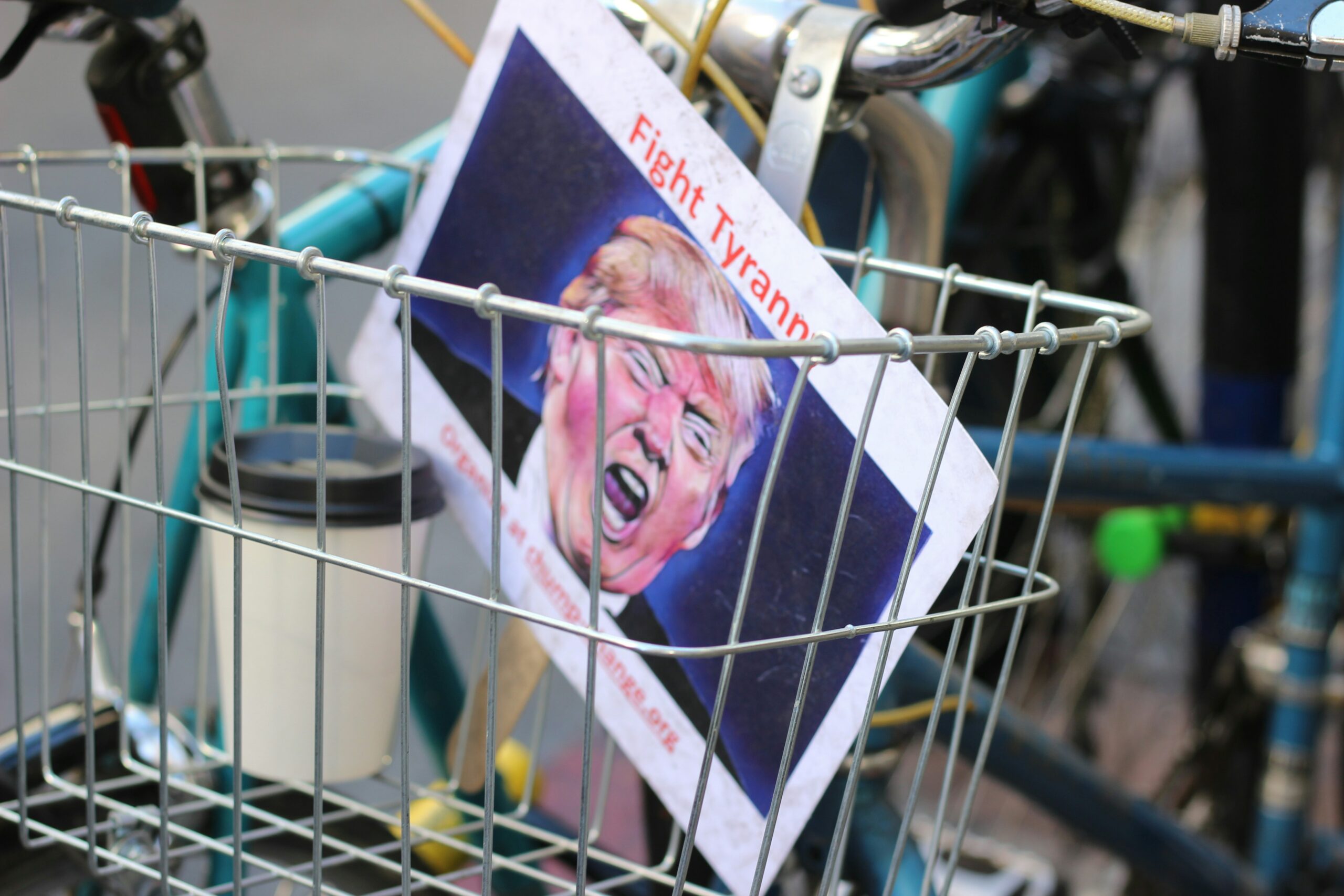
A Poster at the Los Angeles Women’s March.
Hazel Elif Guler: Speaking of the parallels between U.S. and Turkish politics, the excessive use of populist rhetoric is a common thread. Political leaders in both countries employ this rhetoric to connect with the general population by emphasizing nationalistic sentiments and making economic promises. This often results in the creation of an “us-vs-them” narrative and the utilization of media control. While cultural appeals and positioning as champions of the common people are prevalent in shaping populist discourse, an intriguing phenomenon in Turkey involves some politicians marginalizing Turkish citizens under the pretext of supporting migrants or providing financial aid to other nations. Although international aid is commendable for fostering solidarity, many Turks resent the perceived lack of support for the citizens’ issues amid a struggling national economy, leading to repercussions like a rise in suicides among the youth and professionals.
Similarly, gender issues in U.S. politics resonate in Turkey, encompassing challenges that impact both women and men. Cultural norms often reinforce gender stereotypes, subjecting women to discriminatory practices in employment, education, and political representation. Despite surface-level improvements, disparities persist in wages, job opportunities, and decision-making positions for women. Issues such as domestic violence, sexual harassment, and child marriage remain significant concerns. While strides have been made in improving education for girls, challenges in access and retention persist, particularly in rural areas. Efforts to address gender inequality are ongoing, but there is still work to be done to achieve full gender equality and create a more inclusive and equitable society in Turkey.
Xiqiao Wang: This is really interesting. I also wonder how gender inequality will continue to unfold with global trends in depopulation in the next century, where much blame is being placed on women, who are aspiring for self-fulfillment rather than entrenched expectations for marriage and childrearing. Reading your response and Sharon’s, I am also thinking about the crumbling of the globalizing enterprise.
Sharon Yam: In my research on the surprising allyship between pro-democracy Hongkongers and the U.S. Trump administration, I noticed that far-right exclusionary arguments from the U.S. had a lot of purchase transnationally. For instance, anti-immigration and anti-Black discourse from the U.S. right resonated with Hongkongers, who were socialized into a white supremacist structure during the British colonial era; because Hongkongers were also incensed by the number of mainland Chinese immigrants and tourists in the city, anti-immigration narratives from the U.S. right were very attractive. During the last U.S. presidential election, far-right disinformation outlets such as Epoch Times and Breitbart had targeted anti-CCP (Chinese Community Party) diasporic Chinese and Hong Kong immigrant communities to rally their support for Trump. And they were quite successful in doing so. I think as transnational political rhetoricians, we need to examine how and why oppressive ideologies and narratives travel across state, political, and cultural borders.
Building upon my answer to the last question, a transnational orientation is necessary here because apparatuses for state violence are interconnected. For example, as Darren Byler points out, China’s anti-terrorism policy against Uyghur Muslims drew extensively from the U.S. post-9/11 national security law. Meanwhile, the Hong Kong police force, who had committed ample human rights violations and brutality during the Anti-ELAB Movement, had received training from the U.S. Department of State. These forces of state violence and oppression are, hence, interconnected. Rhetorical studies give us the tool to identify and unveil these connections.
Xiqiao Wang: Sharon, I am wondering about the methodological challenges of following such transnational movements of toolkits, policies, and narratives and ways to notice their manifestation in embodied practices.
Sharon Yam: Xiqiao, I think you just identified what makes the study of international political rhetorics challenging. It requires extensive knowledge and engagement not only across disciplines (e.g. anthropology, political science, and regional studies), but also the attunement towards how broader geopolitical, economic, and historical forces influence rhetorical performances at a local level.
Stephen Dadugblor: Sharon, I think you make a good point about how ideologies travel across cultural borders. Gale’s observation that Canada’s proximity to the US facilitates the easy permeation of rhetorics across borders is straightforward to conceptualize. Perhaps the more difficult task for us as rhetoricians is to look to those spaces where such circulation doesn’t seem immediately apparent. In thinking about the border transnationally as you are pointing out, I think we expand our understanding beyond the physical border to those places where borders may be conceptualized in the abstract but have concrete realities for people.
As a scholar of cultural rhetorics and democratic deliberation, one of the beneficial aspects of the proliferation of digital media, for me, has been the demystification of U.S. democracy and politics. Digital media makes rhetorics surrounding the U.S. presidential elections and politics more generally and easily accessible, and demonstrates similarities and differences to rhetorics and politics elsewhere. The issues candidates focus on, the polarization that drives politics, the strategies of demagoguery that are used-all of these are laid out in the open, thanks to the affordances of digital media. This way, U.S. electoral politics and democracy unfold in their limits and possibilities, and in contexts like Ghana, one can see how some of such strategies resonate in local politics. This is not to say that one is derivative of the other because all politics is local anyway and information flows in multiple directions, but the visibility of all of these strategies provides some kind of firm enough basis to hold the U.S. accountable and to point out U.S. government’s duplicity in its dealings with other countries, most especially when those countries are told to “democratize” and do politics according to U.S. standards.
Xiqiao Wang: Stephen, I am thinking about how memes are aiding the demystification of persons in positions of power. Celebrities, politicians, and (in)famous persons of all sorts are becoming the subjects of humorous jabs.
Andrés López: I appreciate you bringing up how information flows in multiple directions. I tend to think about how people, things, and ideas travel back and forth across borders all the time. And I feel like presumptions that this movement in unidirectional wind up reifying Western colonial frameworks to produce what you’re naming here as the need to do politics according to U.S. standards.
Gale Franklin: Stephen, the point of digital media is so crucial to undoing the dominance of certain political ideologies. As Xiqiao mentioned, memes as resistance! In the Canadian context, many, many, many rhetorical strategies from U.S. politics migrate to Canada. Canada is largely defined by its proximity and distance from the U.S. Because of Canada’s mythologies of innocence, benevolence, and humanitarian exceptionalism, many Canadians see themselves as distinct from the U.S. Yet, Canada participates in and reproduces the same injustices, and was equally established through settler colonial violence, Indigenous genocide, anti-Black racism, and the entanglement of other systems of power that have produced multiple violences that Canada as a nation has rendered invisible.
I think we can most easily see the reverberation of U.S. political strategies in Canada in the proliferation of discourses centering fear and nostalgia located primarily within white supremacist colonial strategies. In Canada, we see the flow of discourses across social media, live on Parliament Hill, and in news media. For example, the recently popular slogan and the organization “Save Canada” are clearly exported from Make America Great Again. The impact of rhetoric imported from the U.S. to Canada is clear. However, we less frequently discuss how political rhetorics in the U.S. are emboldened by the participation of Canadians and Canadian institutions in these movements. For example, the so-called Save Canada activist Josh Alexander was recently featured on Fox News with Tucker Carlson in August 2023 after making transphobic remarks, being arrested and expelled. r ol. Tucker Carlson begins the section by stating something along the lines of “not many Americans pay attention to Canada but….. how could such a nice country become totalitarian?” and the segment continues by discussing how anti-trans beliefs are key to Christian ideology. Here, there are connections to the broader transphobic and anti-2SLGBTQIA+ discourses and legislation happening in the U.S. and across various countries, and Canada’s involvement is used to justify them.
Andrés López: I really like this idea of nostalgia and fear you’re bringing up, Gale. I’m somehow thinking about this in relationship to Stephen’s point earlier about freedom and peace. These nationalistic words are used to mobilize white supremacist goals and in the interest of maintaining the state apparatus.
Gale Franklin: Exactly! I’m thinking also of the term “Trumpism” as Trumpian populism and how nostalgia is specifically employed for “the people,” the white, cis, het, abled, of a time when the colonial racial hierarchy was (for them) made invisiFFble.
Andrés López: Yes, totally! Going back to a time when you don’t have to be uncomfortable if you fit into dominant culture.
Our next question is in immediate response to some of the concerns surfing above. In a time of increasing disparity, division, and disruption partially enabled by globalizing processes, what thoughts or advice do you have for minoritized groups, whose voices are often muted by dominant structures of power, to champion for their own interests in this context of a dominant majority?
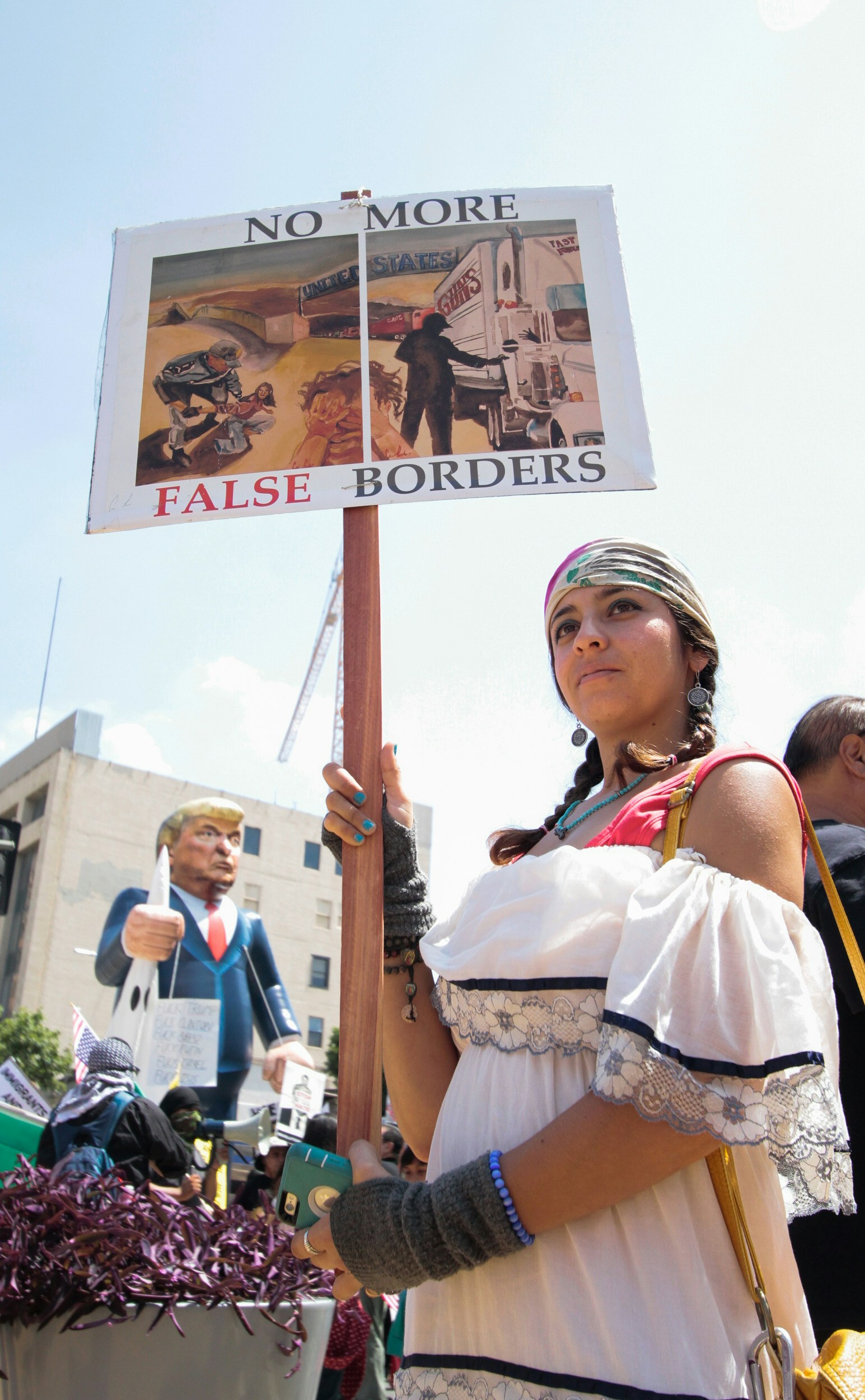
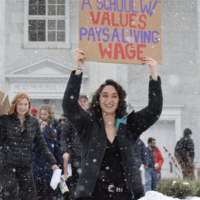
A protester asks for No More False Borders in Los Angeles, California.
Hazel Elif Guler: For minorities whose voices may be marginalized or muted, advocating for change and ensuring representation often involves strategic approaches. One strategy that immediately comes to my mind is the use of art (music, painting, creative writing, film, etc.) and other forms of self-expression. This might provide a relatively safer space to voice one’s plight. In my previous civic writing classes, I often incorporated examples of art as a persuasive tool. Judging by the engaged reactions of classroom members to such forms of presenting arguments, I believe art possesses significant rhetorical potential. Legal and policy engagement, coupled with the impactful use of storytelling to communicate challenges, can significantly contribute to raising awareness about minority issues. While change through art might not happen overnight, consistent efforts and collaboration in artistic endeavors can gradually amplify the voices and concerns of minorities. To effectively advocate for minority rights, community empowerment through strengthened ties and support networks can also be helpful. Engaging in advocacy efforts at various levels, utilizing digital platforms for outreach, and organizing education campaigns are powerful strategies, too. Collaborating with like-minded groups and pushing for representation in decision-making bodies enhance advocacy impact.

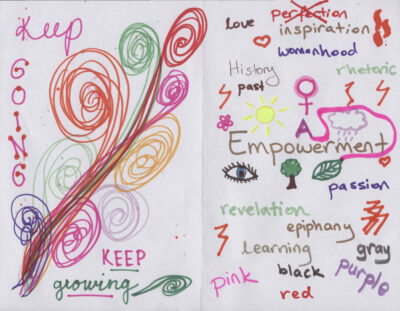
A page from a zine Hazel Elif Gruler made for 2019 Feminist and Rhetorics conference.
Gale Franklin: Hazel, I love the way you brought in art! Creative forms of expression are so powerful for not only personal expression, but for opening up conversations and giving people an “in” to discussions that might be difficult, discomforting, or painful.
Hazel Elif Guler: Gale, truly! As I wrote this answer, I couldn’t help but consider how artistic endeavors can also be oppressed to stifle free speech. This underscores the importance of careful expression through art, ensuring comfort and avoiding threats to one’s existence as a member of a minority group.
Sharon Yam: I am teaching a class on social movement rhetorics right now. One of the questions we’ve been grappling with is the use of digital technologies, especially in and against decentralized movements: on the one hand, social media and other digital technologies allow marginalized groups to craft their own narratives, build solidarities with one another (#MilkTeaAlliance is a great example of transnational grassroots solidarities cultivated on social media), and circulate it to a broad international audience; but on the other hand, oppressive state regimes and tech companies also deploy similar technologies to surveil, police, and censor activists. I think it is important for researchers to avoid technological determinism here.
In addition, outside of the usage of social media and digital technologies, like Gale, Hazel, and Stephen point out, marginalized and minoritized folks have long been using different artistic expressions and everyday practices to both overtly and covertly resist marginalization and erasure. During the Anti-ELAB movement in Hong Kong, for instance, artists and activists created a myriad of protest zines: some provide concrete tips on what to do if you get arrested, while others use creative writing, personal testimonies, and original artwork to portray and document the lived experiences of frontline protesters. When engaging with these artifacts and acts of resistance from minoritized groups, I want us to think not only of the political contributions they make to the movement, but also their affective value in uplifting the spirit of activists.
Xiqiao Wang: I am also thinking about how grassroot digital practices could be harnessed to advance nationalist agenda. Armies of patriotic trolls flooding the social media pages of organizations and individuals holding political views contravening those sanctioned by the nation state.
Gale Franklin: “Affective value”!!!!
Andrés Lopez: Sharon, that’s a great point that these technologies can be used for both organizing while simultaneously providing the state with surveillance toolshile also pointing to how resistance strategies continue to move and shift as systemic power adapts.
Stephen Dadugblor: I believe everyday practices of resistance are key to counteracting the effects of dominant power structures, and those practices come in various forms depending on local toolkits that resonate with particular cultures and contexts. But because the work of dismantling structures of power is so monumental, unending, and tiring, those everyday practices are only one part of the equation. Building coalitions and solidarities can be an essential part of the process as well. I see this in recent protests in Ghana coalescing around the hashtag #FixTheCountry. There is a lot of coalition building that is putting very important conversations on the national agenda. But it’s also important that we pay keen attention to the risks associated with building coalitions because digital media tools are not value-neutral technologies; there is both the issue of platform politics to consider and the need to remember that the tools used for building coalitions are the same used for governmental control and surveillance.
Gale Franklin: Stephen, everyday practices of resistance are so powerful not only for their impact, but for their affective power in helping individuals and communities to maintain hope. In thinking about the voices of minoritized groups, I do not have advice for what is being said, but rather, I question if and how it is being heard. At this point in time, I think my words may be best directed towards the dominant group, which in Canada refers largely to the heteronormative white Anglo settler majority. What does it mean to listen as a majority in a nation marked by the politics of inclusion and multiculturalism? What might it be like to listen outside the confines and comforts of the colonial racial hierarchy? How can we move beyond the incessant failure to hear and truly listen to the fact that white supremacy and other systems of power that govern access and opportunity in Canada, hurt us all? Practices of ethical and empathetic listening are necessary to create spaces of generative discomfort and solidarity. I am constantly moved by bell hooks’ quote that a “powerful way we connect with a diverse world is by listening to the different stories we are” (2010, 53). I’m curious how creative expression, digital media, and everyday practices of resistance like Hazel, Sharon and Stephen discuss can also move us towards alternative modes of listening.
Hazel Elif Guler: Stephen and Gale, great points! As I was thinking about the questions Andrés and Xiqiao posed for this conversation, I also tended to ponder how we are committed to encouraging and rewarding our students for their critical thinking in the classroom. In society, we might tend to criticize individuals who appear complacent and, in our view, fail to voice their concerns adequately. However, many individuals may not have the luxury of freely expressing their opinions.
Thank you all for these wonderful thoughts. Our last question invites you to voice an issue that haven’t come up but would be important for readers of this conversation to know in connection to international political rhetorics.
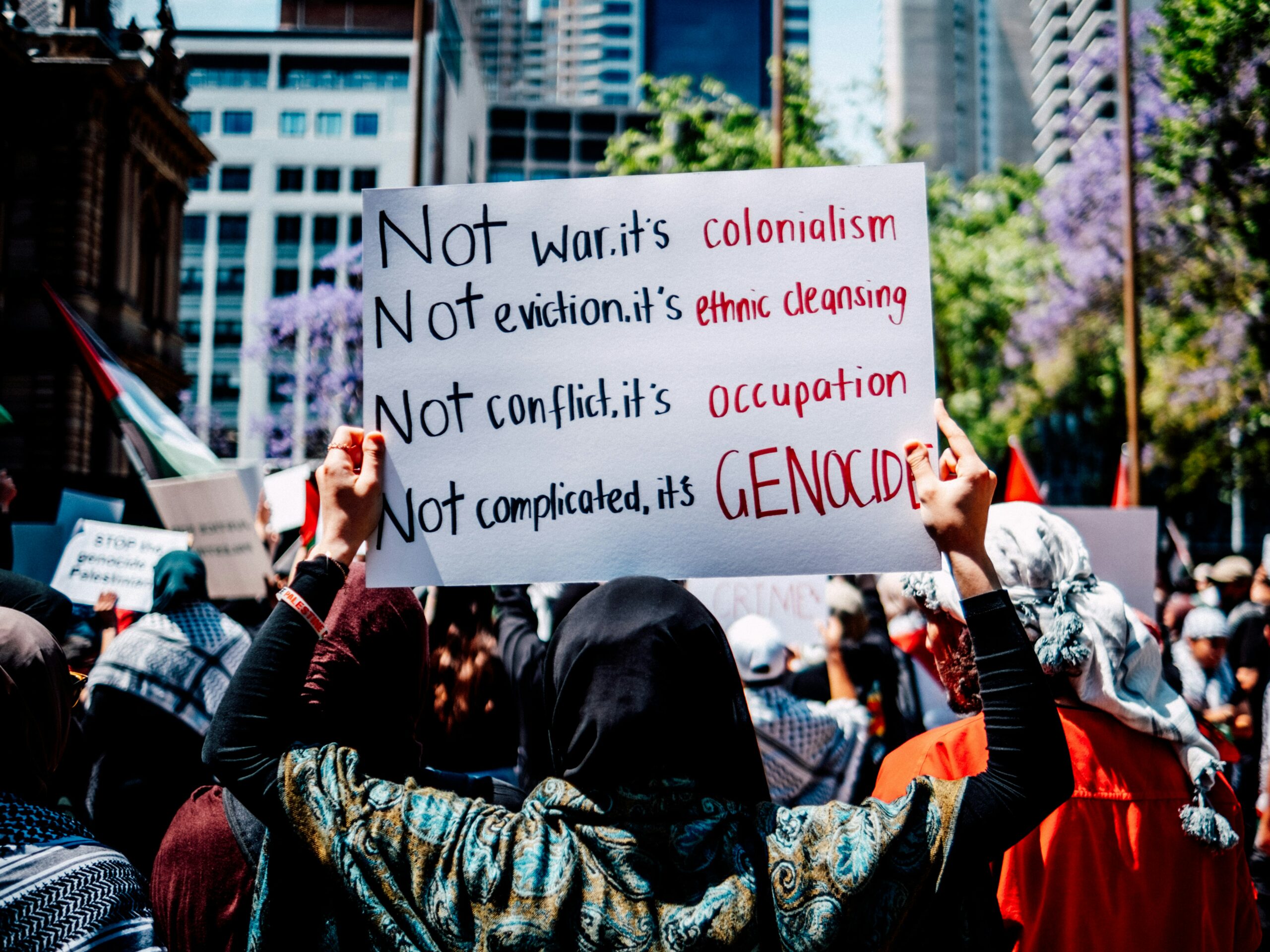
An October 2023 Free Palestine protest in Sydney, Australia.
Hazel Elif Guler: Two unusual suspects that come to my mind and might be impacting the landscape of international political rhetorics are the decreasing levels of empathy and love among humans, and the deterioration of interpersonal relationships. The relationship between love and political rhetoric is intricate and often implicit in political discourse. However, love can serve as a rhetorical device to elicit emotions, establish connections, and appeal to sentiments, fostering trust and unity. Politicians can employ the language of love to create a collective sense of belonging and shared purpose among diverse groups, promoting unity and solidarity. Love can also be utilized to emphasize moral and ethical imperatives, advocating for social justice, human rights, and equality in political rhetoric. Additionally, political leaders can employ the metaphor of love to endorse policies for societal well-being, such as social welfare programs, healthcare, education, and environmental conservation.
In international relations, love rhetoric is employed to describe relationships between nations, aiming to foster cooperation, peace, and harmony. However, love is not immune to critique and satire in political discourse, where it can be used ironically or sarcastically to highlight gaps between rhetorical constructions and reality. Building on a point previously made by Xiqiao about how memes aid in demystifying individuals in power and how politicians are others become the subject of humorous jabs: for example, in the Turkish context, popular memes were used to portray former German Prime Minister Angela Merkel in affectionate moments with Turkish President Recep Tayyip Erdogan. These memes would use visually manipulated moments, strategically clipped together, contrasting the reality of Europe’s often implicit or sometimes explicit opposition to Turkey’s bid to enter the European Union. While love in political rhetoric can be a persuasive tool, of course, discerning its sincerity and effectiveness requires critical analysis of context and intent, distinguishing between genuine care and strategic political maneuvers.
Regarding the deteriorating interpersonal relationships and its link with international political rhetorics in the 21st century: several factors might contribute to it, and these might directly or indirectly affect the general tone of international political rhetorics. Technological advancements, while connecting people globally, have led to an overreliance on digital communication, diminishing face-to-face interactions and fostering shallow engagements on social media. Busy and stressful modern lifestyles, characterized by long work hours and numerous commitments, leave little time for meaningful connections. Additionally, societal shifts towards individualism sometimes result in self-centered behavior, reducing empathy and consideration for others. The prevalence of mental health challenges, changing family structures, political polarization, a lack of communication skills, environmental stressors, information overexposure, and generational or cultural differences further strain relationships. Addressing this deterioration involves promoting healthy communication, encouraging genuine connections, prioritizing mental health, fostering empathy, and finding a balance between technology and face-to-face interactions to create a supportive and understanding social environment.
Xiqiao Wang: Yes. The willingness and capacity to listen and communication across lines of differences, linguistic, cultural, racial, religious, etc.
Sharon Yam: I think this has already come up, but I want to take this opportunity to emphasize the importance of studying rhetorical actors, agency, and performances across different scales. Put differently, rather than centering state actors and geopolitics, we need also to examine how such power structures influence the rhetorical performances of marginalized actors.
Paying attention to interconnectedness and circulation across scales and actors also prompts us to identify coalitional potential across movements on the one hand (e.g. Palestine-Ferguson solidarity), and insidious and oppressive alliances on the other (e.g. the connections across China, Israel, and the U.S.’s anti-terror policies and accompanying state violence).
Hazel Elif Guler: Such great connections, Sharon! These interplays in international political rhetorics are often overlooked. Thank you for bringing all of these to our attention!
Xiqiao Wang: Wow, this is truly amazing. I am thinking such scholarship has to actively engage in what Stephen calls “coalition-building” among scholars because of the demand on theoretical, linguistic, and methodological dexterity. And as Sharon mentioned earlier, the ability to cross disciplinary and geographic boundaries.
Stephen Dadugblor: I’ll expand here on the idea of coalition-building that I mentioned earlier. What I’m noticing in our conversations is a sort of interrelatedness of rhetorics across boundaries. So often, much of our work about international political rhetorics examines politics in terms of a North-South divide, but I think there is some potential and utility to thinking across South-South lines as well. There is a lot of important work coming out of rhetorical studies on, for example, decoloniality in relation to international political rhetorics, but I think there is some generative insight to be gained by focusing, for example, on comparative colonialisms and decolonialities as a practice of building coalitions across borders. What if, for example, we put in conversation the ways that British colonialism created hierarchical structures of power in Hong Kong (as Sharon has mentioned) and how British indirect rule created similar ethnic hierarchies and structures in places like Ghana?
Andrés López: Yes! That’s such a great question Stephen!
Gale Franklin: Stephen, that is such a good question—I might also add Canada to the mix to consider how British colonialism, and subsequent settler colonialism in Canada, are still impacting countries like Ghana through neo-colonial efforts. These coalitions are necessary.
While this is a thread that has been mentioned by everyone, I think it’s important to highlight the ways that various forms of extremism are circulating internationally and resulting in material, life, and death consequences. I think it is valuable for international political rhetorics, as a field of inquiry, to recognize the lived experiences and consequences of such rhetorics, for example, as Sharon mentioned, in Palestine.
Andrés López: Thank you everyone for your amazing contributions in this conversation on International Political Rhetorics. We appreciate you all taking the time to engage with one another and think through the various complex ways that Political rhetorics are being deployed for and against state apparatuses.
About the Authors
Gale Franklin (she/her) is a settler PhD Candidate in Canadian Studies at Carleton University. She holds an MA in Ethnomusicology from Memorial University of Newfoundland and a Bachelor of Music from Carleton University. Her research addresses the multiple violences Canada as a nation has rendered invisible by discussing the resonances of white supremacy through sound and music. Her dissertation, Listening to White Supremacy: Race, Space and Belonging in Ottawa, argues for the centering of sound and listening in approaches to race and difference in Canadian Studies, and for the reorientation of Sound Studies outside of whiteness. It seeks to encourage scholars across multiple fields to listen to the sensory, spatial, sounded, and embodied dimensions of white supremacy and develop strategies for listening toward more anti-racist futures. This work actively engages policy, national programming, and lived experiences to explore questions of belonging, nationalism, whiteness, and intersectionality in Canada.
Hazel Elif Guler currently serves as a caregiver, consultant, independent scholar, and Chair of the Global and Non-Western Rhetorics Standing Group at the Conference on College Composition and Communication. She holds a Ph.D. in Rhetoric and an M.A. in Professional Writing from Old Dominion University in Virginia, along with a B.A. in International Relations from Koç University in Istanbul, Turkey. Her research focuses on civic writing, Turkic/Turkish rhetoric, and women’s studies. Her cultural rhetorical scholarship has appeared in leading rhetoric journals and edited collections, and she is the recipient of multiple education and writing awards.
Shui-yin Sharon Yam is Associate Professor of Writing, Rhetoric, and Digital Studies and Director of the Committee and Graduate Certificate on Social Theory at the University of Kentucky. She is the author of the award-winning book Inconvenient Strangers: Transnational Subjects and the Politics of Citizenship. Her public scholarships have been published in outlets such as Foreign Policy, Hong Kong Free Press, and the New York Times.
Stephen Kwame Dadugblor is an assistant professor in the School of Journalism, Writing, and Media at the University of British Columbia, Canada, where he teaches courses in writing studies. His scholarship is concerned with cultural rhetorics, African rhetorics, comparative rhetorics, and democratic deliberations and has appeared, most recently, in such venues as College Composition and Communication, Praxis: A Writing Center Journal, and Discourse and Writing/Rédactologie. He is completing a book manuscript on deliberative practices in Ghana’s postcolonial democracy.
About the Moderators
Xiqiao Wang is an assistant professor in the Composition, Literacy, Pedagogy, and Rhetoric program at the University of Pittsburgh. Her research program is grounded in an interdisciplinary framework informed by socio-cultural theories of literacy, ecological studies, translingualism, and literacy mobility theories. Her research has examined the changing forms and functions of composition in the broader context of global migration, multilingual and multimodal writing processes across contexts, and best practices in designing translingual and multimodal pedagogy to support diverse learners. Her research has appeared in a co-authored book entitled Inventing the World Grant University: Chinese International Students’ Mobilities, Literacies and Identities, as well as professional journals such as Research in the Teaching of English, College Composition and Communication, Journal of Second Language Writing, Computers and Composition, Journal of Basic Writing, and Composition Studies among others. Her monograph project explores the conceptual affordances of ecological entanglement for examining the ephemeral, messy, indeterminate, and chronologically dispersed features of multilingual writing.
Andrés C. López (he/they) is an Afro-Indio-Jamaican-Guatemalan-Trans-Queer scholar. He is an assistant professor of Indigenous Studies in the Institute of Interdisciplinary Studies at Carleton University. Their interdisciplinary work centers Indigenous and Black feminist theorizing and methodologies, and encompasses historiography, cultural rhetorics, and queer Indigenous Two-Spirit studies. His research uses a Maya backstrap weaving methodology to rewrite active memory recouperations of the Guatemalan Civil War and bring Maya queer and trans ancestors who might be erased not just from physical archives, but also from larger collective memories, back into community.
Production Credits
Copy Editors: Alexandra Hidalgo and Alex Jennings
Photo Research: Alex Jennings
Posted by: Alex Jennings
Editorial Assistant: Alex Jennings
Social Media Manager: Evelynn Pugh
Editor-in-Chief: Alexandra Hidalgo
Related posts:
 Stories that Lead to Action: An Exploration of US Political Rhetorics
 Academic #BlackLivesMatter: Black Faculty and Graduate Students Tell Their Stories
 Recognizing New Styles: How Graduate Students Are Coping with COVID
 Care in Times of Crisis: How Faculty Are Managing COVID
 Storytelling and Relationality: Faculty Experiences During the Texas Winter Storm
 Constellating Stories and Counterstories: Cultural Rhetorics Scholarship Principles