
By Eric House, New Mexico State University
Introduction
I have to start this piece by shouting out Marlanna Evans, also known by her stage name “Rapsody,” for reinvigorating my affection for Hip-Hop and reminding me of the reasons why I was so closely connected with the culture back when I was a lost graduate student in the mid-2010’s (a connection that continues today). I was always the type of person who gravitated towards lyrical rap, eager to join rappers on their linguistic journeys as they provided steady cadences that I could float on, inspiring stories that I could sit with, and evolving worldviews that I could contemplate. That aspect of hip-hop never really left, but I remember being less and less interested in the conversations within mainstream hip-hop with the exception of a few favorite artists. Even then, my interests in some of those artists would drift as they began to take their artistry to spaces that I either didn’t understand or had no interests in following (I’m looking at you, Kanye). Part of that disinterest was the result of being exposed to theories, histories, and ideologies in graduate school that forced me (or, it might be better to say invited me) to think critically about my positionality as a Black man in America, all of which required me to question what I loved and what I believed to be true. I love hip-hop, so I’d use every opportunity possible to think through hip-hop in my graduate coursework as I wrestled with social theories, specifically those about race and gender, in order to question hip-hop’s effects both personally and socially. Often times it would lead to interesting conversations about the histories of Black rhetorical practices and their future potentials. But sometimes, I’d be left with questions of what I would call empty effects, or moments when the artistry didn’t speak to me in the same ways it did when I was in my late-teens and early-twenties.
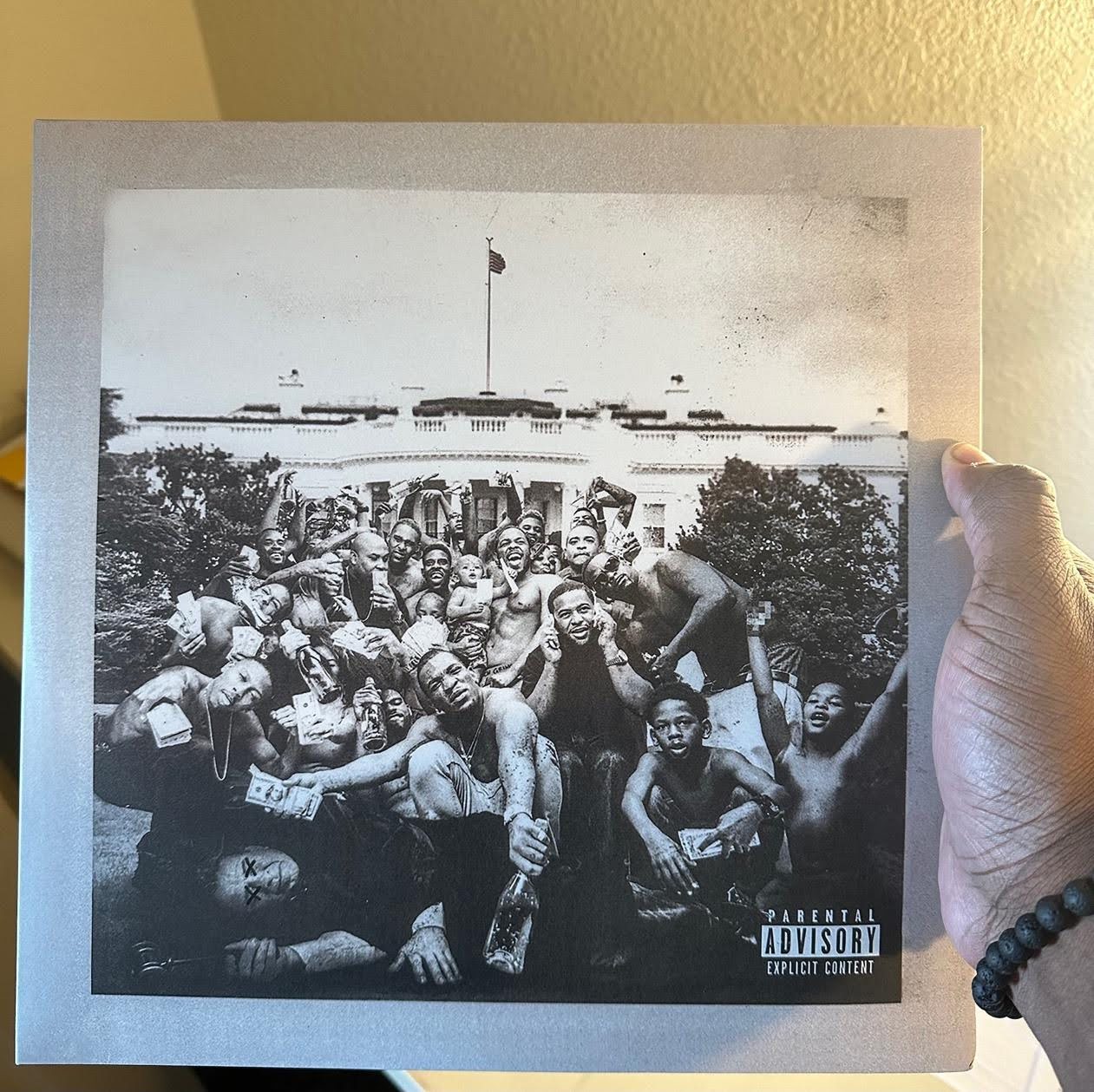
I initially thought that my disinterest in mainstream hip-hop conversations were the natural evolution of the oldhead, or the hip-hop community member who aged beyond the youthful energy that has been foundational to hip-hop since its conception. But my first encounter with Rapsody taught me that it wasn’t my oldhead evolution (I honestly wasn’t even that old). It was more so an issue of visibility. I first heard Rapsody when she featured on Kendrick Lamar’s track “Complexion: A Zulu Love” on his album To Pimp A Butterfly in 2015. Rapsody concludes the song with a verse that, through its lyrical performance, gave me those same feelings of floating and of contemplating that I sought after in hip-hop.
I experienced wonder and inspiration in this first encounter. But shortly after, I settled on a form of anger or disappointment. I became a fan of Rapsody after one verse, and a bigger fan once I went back and explored her catalogue, but I was disappointed to learn that I didn’t know her although she’d been steadily releasing music for the past five years and had worked with many artists that I was familiar with. I began to question why Rapsody had been invisible and unknown to me, an avid and active hip-hop fan, until she appeared on a Kendrick Lamar album. I could blame general music access at the time; this all occurred in 2015, right around the dawn of the switch to streaming services and the internet’s larger takeover of music accessibility. But I think the real reason is a little more insidious than that. And it is the investigation of this insidious process that is the central focus of this piece. In it, I argue that Black women hip-hop artists like Rapsody have been intentionally subordinated in hip-hop’s larger narrative in deference to Black cis-gendered heterosexual men. I argue that the subordination of Black women is a result of hip-hop’s inability to think reflexively, and advocate for a rereading of hip-hop through Rapsody’s performance in order to highlight more critical locations and definitions for identity within hip-hop culture. I now briefly return to Rapsody in order to better situate her critical performances as a necessary hip-hop intervention.
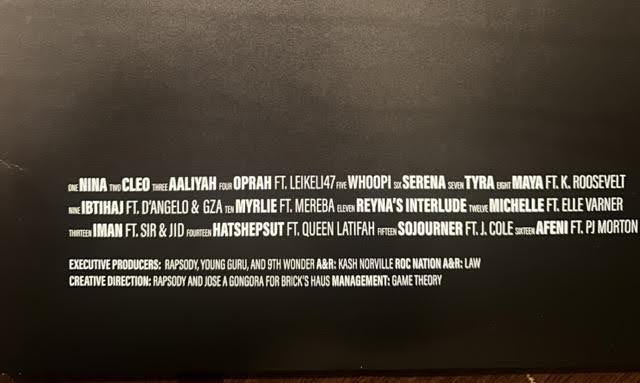
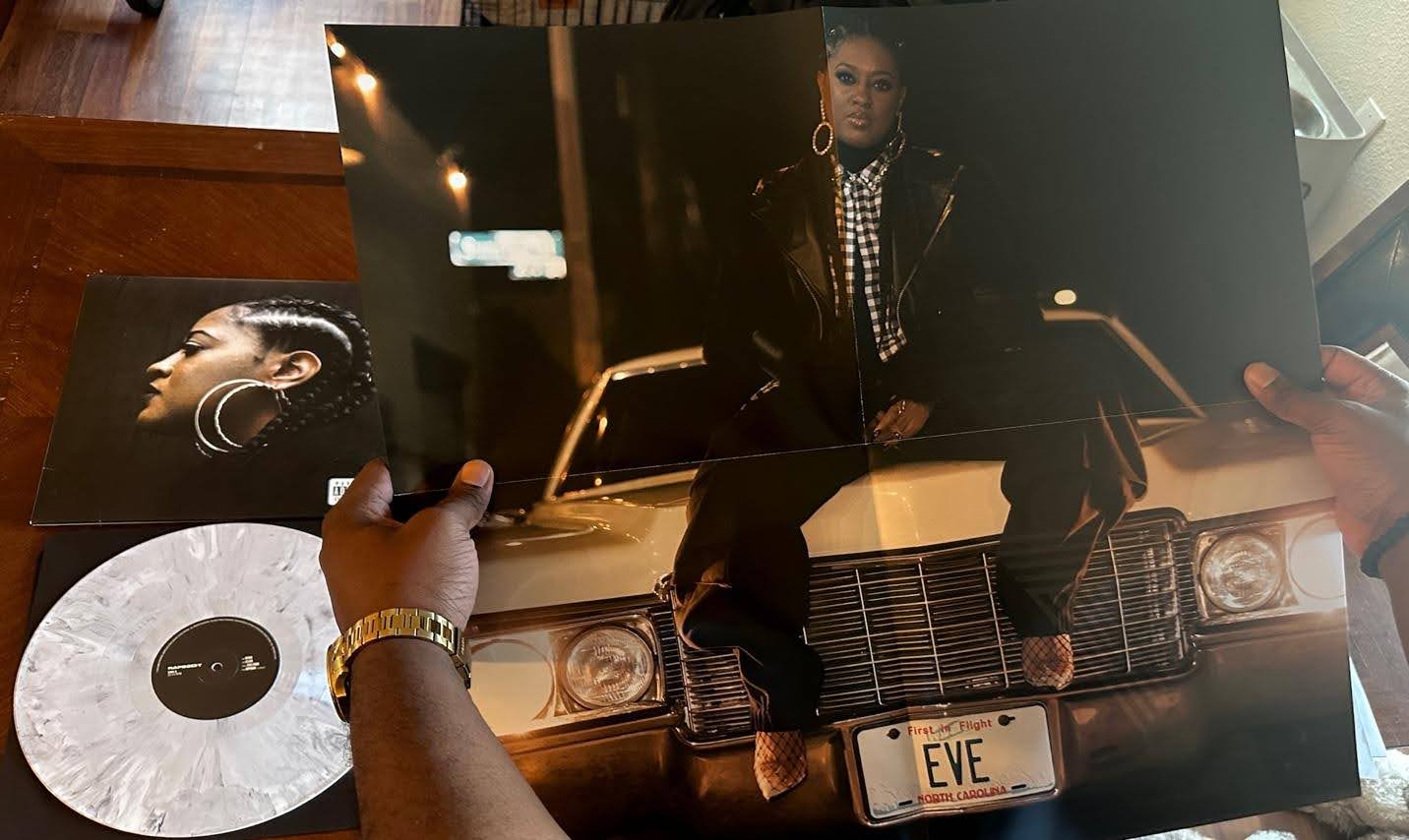
In 2019, Rapsody released her highly anticipated studio album titled Eve, a critically acclaimed work dedicated to Black women across the generations. Eve contains 16 tracks, each named and themed after a Black woman that inspires Rapsody. While some similarities exist in musical production and lyrical content throughout the album, each track on Eve stands as its own story, each being inspired by the narratives of the Black woman that the track is named after. Listeners are presented with narratives and possibilities of Black womanhood that span time and space as they immerse in a multidimensional, intersectional sonic experience of identity. “Cleo,” for example, is a clapback track that contains the same active, relentless energy inspired by Queen Latifah’s character Cleo Sims from the 90’s action thriller Set It Off. Cleo Sims’s energy resonates through the track, illustrated in the main line from the chorus, “We ain’t forget about them shots, jack. They gon’ be mad when I squeeze back.”
Rapsody’s portrayal of Black women as multidimensional and intersectional in Eve is a necessary representation of the dynamics between race and gender within hip-hop, and a part of its brilliance is its capacity to reflect Rapsody’s own journey navigating identity within the culture that illustrates a larger issue concerning gender in hip-hop.
Rapsody’s performance is a necessary mediation: We are in an era where Megan Thee Stallion, one of the most popular rap artists of the late 2010’s-early 2020’s, is continually villainized and mocked after she was shot in the foot by a male hip-hop artist. The events of Megan’s assault go beyond speculation; her assailant was found guilty in the court of law, yet as hip-hop scholar Nikki Lane reminds us, the continued mockery of Megan is a result of her being deemed ungrievable, a status placed on her through her refusal to adhere to Black middle-class norms governing gender performance and sexuality that themselves are governed by white supremacy (Lane). We live in an era where artists like Cardi B are vilified for their sex-positive lyrical content and presentation, attacks that as Raquel Moreira argues, are founded in a normative femininity that seeks to discredit Cardi’s racialized femininity (Moreira). Both Megan Thee Stallion and Cardi B are considered commercial successes within hip-hop, yet their success does not shield them from gender-based violence. Instead, their success leaves them in impossible locations as long as they are situated within hip-hop’s heterosexual, cisgendered, male-dominated paradigm, a paradigm that controls the ways in which women are imagined and made (in)visible in hip-hop discourse[1].
The issue with this heterosexual, cisgendered, male-domnianted paradigm is that it relies on a problematic and unstable construction of Black masculinity, one that assumes a naturalized racial and gendered identity. If the rhetorics of hip-hop rely on these troubled constructions, then hip-hop can only ever produce hegemony; only one type of imagined identity can participate, and all others can only do so within the Black masculine imaginary. The promise of rhetorical agency within Black cis-hetero masculinity in hip-hop, or the centering and privileging of performances that exist along a Black patriarchal order, is faulted and limited. It incorrectly assumes that hip-hop can only ever be a masculine culture, when Hip-Hop feminist scholar and icon Gwendolyn Pough reminds us that, “women have been representing hip-hop culture ever since the mid-seventies when the culture got its start in the South Bronx, and they represent it still” (v). bell hooks talks about this historical gendered violence in acts of colonizing Black women that then make ideas of freedom and domination equitable, urging us to consider racism and sexism as interlocking systems of domination that uphold and sustain one another (230). Attempts to take racist ideals to task (which hip-hop has historically done[2]) must not reify the same systems of oppression instantiated by white supremacy, which is to say that Black male supremacy in hip-hop cannot be an answer to resisting a white American patriarchy. Subordinating Black women within hip-hop only replaces one hierarchy for another, and in doing so not only limits the inventive possibilities of hip-hop, but also upholds patriarchal systems of domination.
The thought of hip-hop as a space to cultivate an essential Black male identity is symptomatic of hip-hop’s inability to critically grapple with issues of space and time. This essentialized Black male identity, which specifically is a heterosexual, cis-gendered Black man from urban spaces was discursively produced and thrived during what was termed the golden age[4] of hip-hop. To be visible in this age didn’t only mean to think critically about the political situation that displaced black people. It also meant situating divine power and energy within Black masculinity. The identity that was discursively produced at this time then had a rhetorical function to lead, to produce and manage discourse from a position that acknowledges natural hierarchy. There is a recognition that others existed, but others’ words do not have value on the same level of Black men. Claiming this identity within hip-hop culture is assumed to afford agency, while all others cannot be seen, heard, or known without first existing in the Black male imaginary.
This essay seeks to counter an essentialized Black male identity in hip-hop by arguing that our contemporary moment is constituted by mainstream hip-hop artists with complex depictions of Blackness. Unpacking these depictions are crucial in understanding the ways in which Blackness is critically and rhetorically configured, and through their continued unpacking we might be able to recognize the rhetorical functions and movements within hip-hop discourses, as well as resist hegemonic or hierarchical identifications within hip-hop culture. Drawing from Michelle Wright’s Physics of Blackness, I engage the spatiotemporal of Blackness in hip-hop through the notion of “epiphenomenal intervention” to both discuss some often ignored complexities of identity within hip-hop and question the notion of Black masculinity as the norm within hip-hop. “Epiphenomenal Intervention” might be thought of as an approach to discourse analysis that critiques static spatiotemporal properties within identity locations. It is an intentional practice of recurring reflection that asks that we always stay open and present to the interpretation of identities, and that we recognize the intersectional and multidimensional properties of our identities in order to move beyond linear narratives and definitions. I analyze the work of Rapsody to illustrate how spacious and critical hip-hop performances force us to rethink the rhetorical configuration of the imagined hip-hop identity, shifting from an essentialized identity to one who continually speaks to their location within a larger discursive frame.
I argue epiphenomenal intervention is a method that aligns with hip-hop feminism through its emphasis on rereading moments and performances spatially and temporally for social and political purposes. My analysis of Rapsody considers the ways in which she highlights her social and political location through her hip-hop performance in order to illustrate reflexivity. In other words, I will focus on Rapsody’s rhetorical performance to showcase her ability to read the social and political landscape she inhabits, her emphasis on the potential within her identity and location, and her ability to respond, call out, and imagine changes for the spaces she inhabits.
Reflexivity simultaneously operates on another level in my reading of Rapsody’s performance since it’s occurring from my location as a Black cis-heterosexual man. As I argue for an emphasis on Rapsody’s performance, I too must continue to reflect on the ways I, as a lifelong fan of hip-hop, have formulated aspects of my own identity based off of hip-hop’s privileging of people like me at the expense of Black women. This argument is then, both selfishly yet necessarily publicly, a way for me to continue the work of checking the problematic politics that inform the spaces and cultures that are near and dear to me. I now turn the discussion to Hip-Hop Feminism to further clarify the need for Rapsody’s performance as a Black woman in Black hypermasculine spaces and the need for me to continually reflect on my position as a Black man who is reading a Black woman as a necessary intervention in a culture that privileges Black men.
Hip-Hop Feminism as Critical Rhetorical Approach
Epiphenomenal Intervention is an argument for reflexivity; it suggests that we must continue to theorize and implement approaches within the study of rhetoric and culture from internal cultural locations that understand the complexity of fluid and contested identities. Hip-Hop is a culture that has its own sets of methods and practices that resist and pushback against the legacies of whiteness. Rap, for example, has countless examples of artists using their voices to call out questionable social dynamics, such as Grandmaster Flash and Furious Fives “The Message” utilizing storytelling and vivid imagery to call out the crumbling social conditions many Black communities faced at the hands of white capitalism, Public Enemy’s “Fight the Power” sitting in the Black rhetorical tradition of calling out to question affinity of white historical heroes such as Elvis while questioning the lack of Black heroes in the larger American imaginary, and more recently J. Cole’s “Firing Squad” that takes some moments to acknowledge hip-hop’s whitewashing in the mainstream. But within hip-hop are issues that suggest a mishandling of space and time which leads to the outright erasure of intersecting identities. Hip-Hop’s rhetorical approaches must then be continually called out and remixed should they prove to be impactful to the conversations of rhetoric, culture, and identity.
Hip-Hop feminism is then the rhetorical approach that guides my epiphenomenal intervention; it provides the framework for the sorts of questions I’m asking and the aspects of identity that I am contesting. Hip-Hop and Black Feminist scholar Aisha Durham defines hip-hop feminism as “a sociocultural, intellectual, and political movement grounded in the situated knowledge of women of color from the broader hip hop or the U.S. post-civil rights generation who recognize culture as a pivotal site for political intervention to challenge, resist, and mobilize collectives to dismantle systems of exploitation” (3). Hip-Hop feminism first operates as an extension of Black feminism and shares in Black feminism’s purposes, defined by Patricia Hill Collins, of sharing and legitimizing experiences of Black women and their relationships to various spheres of power (Collins).
Hip-Hop feminism furthers Black feminism by arguing that we might look at hip-hop self-representations to talk about everyday experiences and the operations of power, and it continues the work in calling out gender categorization as a racist project, all of which is done through the languages and experiences of the hip-hop generation (Durham; CFC). The Crunk Feminist Collective, a collective of hip-hop generation feminists of color who are located both within and beyond the academy, describe gender categorization as a racist project by first naming gender as a system, “invented to restrict performance of women and men to conservative and traditional behaviors, punishing nuances such as female masculinity or androgynous femme” (CFC 9). They argue that traditional attitudes of gender were described with White women in mind, in which case Black women who are often connected with masculine images of strength and resilience are read as “inherently more masculine and, therefore, don’t deserve or require the protection and provision as White women” (10). We might then read gender categorization as a racist project since it is particularly influential in, “[policing] the bodies and actions of Black women” (10). Through the energy of the hip-hop generation, Hip-Hop feminism as an approach unapologetically and actively resists patriarchal gender categorization that seek to silence, police, and control Black women, and such resistances are made without interests and investments of respectability or politeness because the lives of Black women, Black girls, and Black femmes are constantly on the line (11).
Through hip-hop feminism, I argue that the knowledges, experiences, and performances of Black women force us to rethink the hip-hop imaginary by taking a different look at the relationships between identity and rhetorical agency, specifically paying attention to the ways in which culture makes these relationships (in)visible. Aisha Durham describes hip-hop feminism to have an emphasis on embodiment and self-representations that are knowable through reflections on power relations and everyday experience in a way that understands identity as political and contextual. Investigating identity within this framework demands that we continually articulate identities along social and political axes, naming identity as a location and recognizing the racialized, gendered, sexualized, and class-based implications that come with processes of identification. It then asks us to reconsider the ways in which the promise of rhetorical power is often assumed within identity locations, which then invites critiques and theories concerning the role of culture in remixing and reimagining the relationship between rhetoric and identity.
Rapsody’s Raps as an Epiphenomenal Intervention
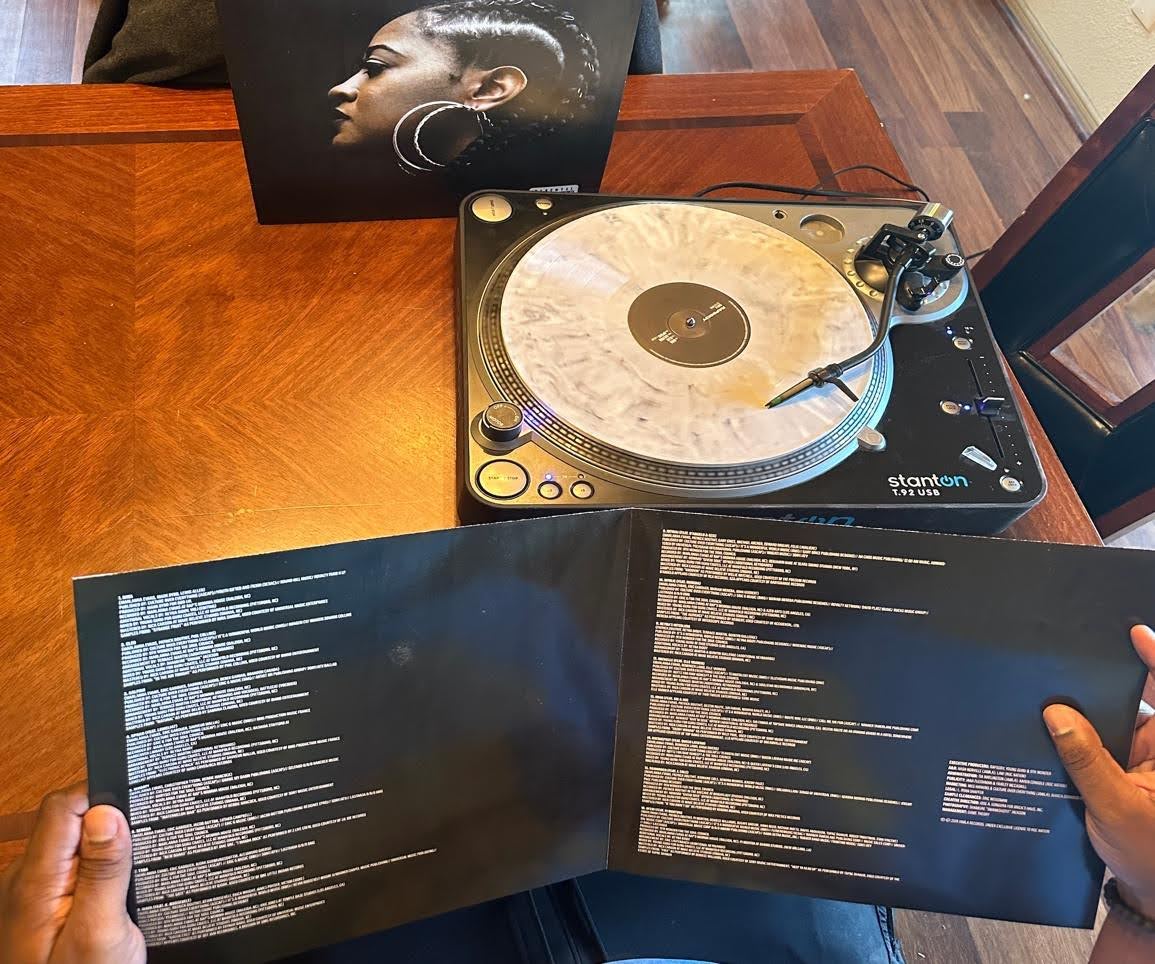
I mentioned earlier that Rapsody’s album Eve presents narratives of Black women intersectionally and multidimensionally, which is to say that her work offers complex stories both about and inspired by Black women across space and time. In this way, I argue Eve presents a sort of epiphenomenal intervention in that it’s able to present definitions of Black women through what Michelle Wright calls continual interpretations of the past, present and future, leading to capacious definitions of Blackness that are not dependent on linear progress narratives (Wright 4). In Rapsody’s album, stories inspired by Nina Simone sit alongside stories inspired by Aaliyah, fictional characters like Cleo Sims exist alongside historical figures like Pharoah Hatshepsut. Reading these sorts of stories as a linear narrative might provide valuable insights into definitions of Blackness, but those insights are limited. Epiphenomenal intervention suggests that Blackness is also a phenomenological experience, in which case we might consider the individual perceptions that also impact definitions of Blackness (4).
A linear narrative of Black women’s impact in music that starts at Nina Simone and moves through Aaliyah can illustrate the evolution of Black sound from Jazz and Soul into Hip-Hop & R&B by emphasizing the ways in which Black women have historically been at the forefront of Black musical expression. The idea of epiphenomenal intervention simply asks us to not forget about the complexities of both Nina Simone’s and Aaliyah’s individual stories. Nina Simone and Aaliyah give us different versions of Black women in music, and instead of only reading a singular story of Black women in music that says you cannot get to Aaliyah without the impacts of Nina Simone, (which might be true according to a linear progress narrative), we might instead take an additional moment to locate social and political influences to both Nina’s and Aaliyah’s expression of Black womanhood. This additional moment then invites discussions of representations of Black women in music that are varied, complex and unique.
In the same way, I argue it’s important to read Rapsody’s work as an epiphenomenal intervention; her work invites us to locate where we are and when we are, and once we do that, we are able to explore, as Wright states, “a broad variety of intersecting spacetimes for Blackness” (145). I should note here that an important emphasis that Wright makes in terms of her application of epiphenomenal intervention is the insistence that it does not act as a replacement of linear progress narratives. Rather, she acknowledges the conception of the epiphenomenal “now” could not exist, “without first locating oneself where and when one is in that now, then locating where and when one’s space and one’s time are fixed by the construct of linear spacetime” (145). Rapsody exists within the linear narrative of hip-hop, but solely reading her within that linear narrative locates her identity along what Wright calls a vertical connection, or identity categories that emphasize hierarchies (74). Instead, epiphenomenal interventions place these vertical connections with the horizontal, or with the categories that allow for and invite peer relations (74). In other words, reading Rapsody’s work as an epiphenomenal intervention invites us to open up the hip-hop timeline and see Black women rappers as foundational to hip-hop culture in the same way that Black men have historically been viewed, a necessary action to call out and critique hip-hop’s hypermasculine legacy.
So, So Hard to Choose
So let’s explore the ways in which Rapsody’s work acts as a epiphenomenal intervention. I started this conversation referencing Rapsody’s most recent work, and I will return to a track from Eve to illustrate an epiphenomenal intervention, but in the interest of engaging timelines and linear narratives, I will start with a track that dropped a few years before Eve in order to argue that Rapsody’s interventions also shift according to where and when she is.
Coming from her second EP titled Beauty and the Beast, “Hard to Choose” might arguably stand in as a metaphor for Rapsody’s overall rap persona: contemplative yet competitive with witty wordplay acting as sugar to go with the medicine that is reflections on her lived experiences. Themes presented in “Hard to Choose” permeate Rapsody’s catalog as she frequently exhibits a reflective and critical persona through the culture’s conventional (and often assumed as masculine) competitive rhetorical elements such as braggadocio and aggression, all while illustrating a commitment to reflexivity as she continually uses these conventional elements to bend back and critique the culture. Yet, her style blends those competitive aspects of hip-hop with an inherent respect for the art that results in a playful and aesthetically pleasing vibe necessary for making her reflections and social commentaries dope and digestible.
The first part worth emphasizing in my claiming “Hard to Choose,” as an epiphenomenal intervention is Rapsody’s ability to intervene from an internal space, utilizing language in a way that claims credibility through cultural responsibility. She continually gives shout outs throughout the track to illustrate the importance of naming the narrative in which one participates as a continuous endeavor, recognizing that the culture is fluid. There are eight specific moments throughout the song where Rapsody name drops either another rapper or rap group, speaking not quite as a fan, but as a contemporary who can cleverly mix in well-known rappers and position them as her peers. Sometimes those lines use another rapper to make a point, “It don’t make you, but it be cool to have money like Wayne,” which indicates her acknowledging of Lil Wayne’s commercial success and how it’d be cool to have that (Rapsody). Sometimes they reflect on her own choices within rap discourse, “Cause the world worship people that get they cake up, but I chose to De La Soul and raise the stake up,” which is a reference to rap group De La Soul’s popular track “The Stakes is High,” a song that itself a social commentary about materialism and capitalism in hip-hop (Rapsody). Sometimes they reflect on conversations with hip-hop legends, “MC Lyte, I ain’t forgot what you told me, I ain’t Hovy but damn. It’s hard to choose being humble or going HAM…This the shit I think about along with image and earnings, but when Nas tell ‘God you killin it’ then I’m burning”, which reference Rapsody’s personal conversations with Rap legends MC Lyte, Jay-Z, and Nas. (Rapsody). Regardless of the smaller purpose, when they do occur, they all signal to listeners that Rapsody is not only knowledgeable and reflective about the field which she inhabits, but she also has the potential to speak towards the field with authority. She doesn’t name drop to only show respect and due diligence. She does so to name herself as a contemporary who is just as responsible for the culture’s movement.
Once she is able to name the narrative in which she participates, another of Rapsody’s practices that showcases her intervention on the imagined hip-hop identity has to do with her location within Black womanhood. She starts early in the track by naming hip-hop’s problematic handling of gender, stating:
I’m still that rapper/ that your favorite rapper scared to rap after…/I’m just that good though I ain’t worth a lot of millions/ When you rap this well a lot of rappers catch feelings/ we all want the best, don’t let a female kill ‘em.
Here, Rapsody first illustrates the rhetorical practice of emcee’s that illustrates braggadocio rhymes, claiming that her lyrical ability is superior to the rest. Yet she recognizes that her location as a woman places her at a disadvantage in the eyes of other emcees, claiming that rappers catch feelings because the assumption is that women essentially cannot rock the mic in the same way that a man can. In these few lines, Rapsody is able to call out hip-hop’s problematic handling of gender and does so by speaking the language that the “imagined” hip-hop subject understands. The ordering and structuring of these lines then force listeners to, if only for a moment, inhabit her space and reflect on the ways in which the discourses of hip-hop respond to identities. From the empathy built through sharing her location, we might then understand the critique she builds throughout.
Rapsody continues to emphasize her location within Black womanhood through what is arguably the most potent portion of the song due to its ability to locate and intervene. Rapsody begins with an invitation to her location once again and engages listeners through her observation stating, “Welcome to my side, when you look in the crowd the minority is never white,” which is a recognition that at hip-hop concerts are mostly being attended by white people. Rapsody then positions listeners in relation to her identity with the line, “I appreciate y’all, but I’m lying if it don’t bite,” which is both acknowledging who is in the room while lamenting who doesn’t always get to be there (Rapsody). Once Rapsody locates herself in relation to other participating identities, she is able to make a critical statement as she raps:
Cuz I love all races/ but we gotta raise em’/ Cause I know the scales tipped/ ain’t in no Black girls’ favor/ Hey, y’all, we all outcasts/ These Black girls favor the blonde Barbie and scars we all gotta save em’. (Rapsody)
Once she is able to locate herself, Rapsody exhibits an ability to recognize power dynamics that place Black women on the periphery. Her recognition of power dynamics represents a critical position, one that the assumed hip-hop hypermasculine imagined identity often neglects. Rapsody instead recognizes the responsibility that comes from a critical position with statements like, “we gotta raise em’,” or “we all gotta save em’” (Rapsody). Rapsody’s hailing of the “all” should be read as a call for unity through allyship rather than as a necessity for Black women to save everyone else, a note expressed throughout the Crunk Feminist Collection and specifically through CFC member and popular Back feminist scholar Brittany Cooper’s reflection on allyship in the same collection where she discusses moments when Black men specifically failed to support her in real ways, as she heartbreakingly asks, “Is it so incredibly difficult to show up for me—for us—when we need you? Is it so hard to believe that we need you?” (16). Cooper’s questions echo a need for more critical positions within the narrative of Blackness, but it is from these critical positions, those that recognize the limits of the singular narrative, that a more critical rhetorical ability of hip-hop might be unlocked. Rapsody continues:
No love lost for whites, Latinos, and the Asians/ Loyal to all, but when I look in these Black girls’ faces/ I understand why I chose to be better, not basic. (Rapsody).
Rapsody seeks to intervene from a critical position that locates Black women as peripheralized by recognizing that identities cannot exist hierarchically or along a singular and static linear narrative, rhetorically positioning herself among difference as opposed to above difference. While we should be critical of her conflating of non-Black difference into similar categories, we must also recognize that this section, and really the song in general, is a love letter to Black women and Black girls with a main purpose is to call out that social forces that place Black women in the periphery. Her response in the last line is to be better and not basic in order for her voice to be heard for the sake of the Black girls and Black women, and we also need more conversations and interventions across difference in order to recognize even more critical positions.
Rapsody’s rhetorical performance in “So Hard to Choose” also works as an epiphenomenal intervention through its ability to match the vertical with the horizontal, or what we might call a rhetorical practice in reflexivity. The entire song illustrates her language practice as an intervention in what she notices as the vertical connections within hip-hop, calling on her perspective as a Black woman and her lyrical skill as an emcee to intervene in hip-hop’s linear narrative in order to plot out alternatives for the culture. Within the song, the beat is accompanied by a sampled sound that repeats “so, so hard to choose,” [5] of which Rapsody lyrically weaves in and out of in order to show the difficulty she feels in choosing how she should perform in terms of hip-hop’s hypermasculine and capitalist ideals. After working through her identity and place within hip-hop’s imaginary, Rapsody comes to a critical stance that reflects her commitment to her own skill and talent, intervening on the sampled “so, so hard to choose,” and changing it to a “not, not hard to choose” at the very end of the track. This might be subtle, but the change illustrates a reflexivity necessary to intervene and open up the linear timeline, as it suggests that the act of reflecting through one’s location can, at the very least, reveal potentials. Rapsody’s arrival at “not hard to choose” is not only a narrative of growth and transformation within her own story. It is also an intervention within the larger narrative of hip-hop that has historically affirmed Black men as the standard. Epiphenomenal intervention doesn’t do away with the linear narrative; rather, it opens it up for varied interpretations and informs us that Rapsody’s arrival at “not hard to choose” was not an inevitability. In the same way, hip-hop’s continued arrival at the location of Black men should not be read as an inevitability. It is a choice that hip-hop culture continually makes, but with more moments to intervene and with more opportunities to suggest other options or possibilities, we might begin to recognize new futures. This doesn’t mean that with enlightenment comes agency. It does mean that with reflexivity comes an understanding of one’s location within a space, and of the rules that guide and dictate one’s potential movement within that space.
They Gon’ Be Mad When I Squeeze Back
Much of Rapsody’s performances resemble the type of energy presented in “So Hard to Choose,” yet this conversation concerning epiphenomenal intervention demands that we analyze Rapsody along her own timeline to ensure the “epiphenomenal now” that Rapsody presented in “So Hard to Choose” doesn’t become a static representation of her identity as a Black woman in hip-hop. I will then bring us back to the track that I started this investigation with, the second track from Eve titled “Cleo,” to once again investigate the ways in which Rapsody’s performance might act as an intervention in hip-hop’s hypermasculinist discourses.
While “So Hard to Choose” presents a contemplative yet competitive version of Rapsody, “Cleo” brings an intensity that parallels its namesake, giving us a Rapsody who is fed up with being overlooked, doubted, and talked down on. Her energy in this track is very intentional; Rapsody begins with a brief intro that talks out the tracks intentionality before the rapping begins, stating, “To my real ones that know, this ain’t for you. To my enemies, it’s still love all day. Everybody’s still growing and learning themselves, right?” (Rapsody). We then get a glimpse at the enemies, those being Black artists and cultural commentators within hip-hop who have disregarded or disrespected Rapsody, to whom Rapsody is crafting this track in a move that, once again, sets Rapsody up in an internal position. This time, instead of placing herself horizontally among her competition through layered shoutouts, Rapsody attempts to build credibility through braggadocio moves while simultaneously hailing Middle Passage Epistemologies [6] to signal relation, stating, “Wonder how a bunch of sheep can have opinions on a G.O.A.T. / We all on the same continent and off the same boat. / Remember early on, y’all ain’t treat me all the same though” (Rapsody). The claiming of G.O.A.T status, or Greatest Of All Time, is a popular move in hip-hop discourse to claim that one exists in the highest tier of artistry, but we must focus on Rapsody’s article choice in using a G.O.A.T instead of the G.O.A.T. This is a subtle move, but it connects with the next line where Rapsody claims close proximity to her audience, the aforementioned enemies in the intro, through the referencing of Black American identity by way of the transatlantic slave trade. Within these two lines, Rapsody establishes her presence within the culture while emphasizing that she’s talking to those who, though they may be haters or temporary enemies, are still a part of the larger Black communities that she claims.
Once she’s established herself inside the community of Black rappers she wishes to critique, we start to see some of the immediate issues that require intervention. Rapsody continues her first verse, stating, “‘Member y’all wondered, used to wonder ‘bout Wonder/ Question why they’d ever wanna push a Black woman…/ Dress too tomboy, rap too lyrical/ I can say more, the pain would bring a few tears to you.” (Rapsody). Rapsody utilizes her rhyming ability and lyrical finesse to call out instances when those within the culture would criticize her producer and label head, legendary producer 9th Wonder [7], for rocking with Rapsody, a Black woman who doesn’t present according to the hypermasculine heteronormative imaginary. The line, “dress too tomboy, flow too lyrical,” then brings up an important part of Rapsody’s identity as a Black woman within hip-hop spaces, since she often discusses her physical presentation as a tomboy aesthetic, an intentional choice that illustrates her complex presentation of Black womanhood. As Rapsody discusses in an NPR interview, “Femininity comes in different ways, and this is my form of being a female. The way I dress is feminine in my way, so I call it tomboy femininity…” (Carmichael). Rapsody referencing that her haters often critique this aesthetic even though she owns it further illustrates the shortcomings of the Black masculine paradigm in hip-hop by suggesting that Rapsody’s performance is unintelligible to those who subscribe to the paradigm; Rapsody doesn’t perform femininity according to patriarchal gender categorizations in which case the only result for those who expect her to is to hate or disrespect. For Rapsody, performances outside these expectations are potentials and possibilities. This is the recognition that opens up possibilities to intervene on the reliance of hypermasculinity in hip-hop, since it is the moment that Rapsody is able to acknowledge that her subordination is occurring as a result of identity politics and limited expectations within hip-hop.
What is even more important is the choice Rapsody makes after locating the source of her marginalization within hip-hop, as she states, “Be careful, the validations y’all seek/ I been in them offices, they don’t look like you and me…/ I learned lessons ‘bout my essence and this industry/ Y’all banked on the wrong ones, wasted your energy” (Rapsody). It is important to remember that “y’all” that Rapsody is hailing in this track is the Black artists and cultural commentators within the hip-hop community that she is speaking back to. After spending the first moments of the track situating herself among the community that she’s critiquing, Rapsody grounds the root of her issues with those in her own community in white supremacy and capitalism, an extremely important move. Epiphenomenal intervention requires that one locate oneself along linear narratives before revealing potentials and imagining possibilities, and a part of hip-hop’s linear narrative is its relationship with capitalism.
Hip-Hop’s relationship with capitalism has often shown itself in the form of executives in record labels who greatly influence the type of music that is produced, marketed, and dispersed. Such a relationship is not unique to hip-hop and can be said about any popular music genre, yet the aspects of hip-hop that often get produced focuses on racist tropes and problematic stereotypes about Black people, performed by Black people. Andrea Queeley, a Black Popular Culture and Anthropology scholar, highlights some of the issues of these processes, arguing that, “the recurrence of deeply embedded racist stereotypes coupled with the fixation on consumption characterizes corporate control of hip-hop and diminishes its position as a revolutionary art form and burgeoning mass social movement” (2). Black artists who participate in these types of corporate machinations no longer operate from hip-hop’s roots of resistance, and instead, as Queeley argues, only signify the ghetto of white imagination (2). Michael P. Jefferies extends Queeley’s argument to really illustrate issues of this form of commodification, stating, “[I]t is not simply that hip-hop has been commoditized but that the ‘white imagination’ Queeley speaks of has repeatedly imagined hip-hop culture as synonymous with and exemplified by the dominant-driven, exploitative ghetto gangsterism invoked by many of the music’s most popular acts” (5).
Rapsody continues to critique this aspect of hip-hop culture in the second verse as she says, “They don’t want this kind of rapping. They love a fantasy, they love the gun-bang action.” Rapsody emphasizes that “they,” meaning the executives who push for the deeply embedded racist stereotypes within hip-hop, do not want her type of performances, or performances from Black women that are critical of their surroundings. Rather, they want to continue pushing the fantasy of the gun-bang action, or the, as Jefferies calls it, visions of hip-hop culture that are synonymous with tropes of Black gangsters who shoot guns and perpetuate violence. Rapsody’s referencing of the corporate vision for hip-hop is a reflexive move that denies further conflict within her hip-hop community by hailing the larger, more insidious enemy of white capitalism that seeks to push damaging stereotypes of Blackness to the public imaginary. The Black artists and cultural commentators that Rapsody is speaking to throughout “Cleo” are not innocent in these processes, but Rapsody’s performance is reminding them that their hatred towards her has the same energy as the corporate executives who don’t want her kind of rapping.
Yet, as I’ve mentioned in the “So Hard to Choose” example, the recognition that Rapsody is bringing is only an invitation, and not a guarantee of change or of agency. But Rapsody keeps the same energy in “Cleo,” and even doubles down on that energy by channeling the track’s namesake in the end, stating, “Bust my way through like Cleo with the ammo. / On my own terms, I’ma take what’s mine.” (Rapsody). As previously mentioned, this track channels Cleo Sims from Set It Off, a popular and relentless character that decides to quite literally take on the state, dying in a police shootout so that her friends might have a chance to escape their situation. For this reason, Rapsody’s ending in “Cleo” is harrowing, yet beautiful. Rapsody recognizes that the (mostly) Black men who have hated on her similarly operate within a culture that is in constant threat of corporate manipulation. Rather than fall in line and perform Black womanness according to the logics of patriarchy that guide both her haters in the culture and the record executives outside her culture, she decides to operate on her own terms. The decision might be to sacrifice for others that she identifies with or to take what’s hers on the way like Cleo Sims does. Either way, it is a choice afforded because of her intervention in the linear narrative about Black women in hip-hop.
Both “So Hard to Choose” and “Cleo” present interventions into the narrative surrounding Black women in hip-hop in different ways, resulting in two different versions of Rapsody worth considering. One version is contemplative, still competitive, yet reflective. The other is relentless, energetic, and unapologetic. Both are unequivocally Black and valuable. They both represent important versions of Rapsody’s own complex identity as a Black woman in hip-hop. They both provide us with unique insights for locating where and when we are within a given narrative, they inform us that are current locations are not forgone conclusions or inevitabilities, and that there are potentials for our identities when we open up the spatiotemporal properties of those locations.
Outro
Concepts and theories that come from Black women and women of color have already provided a critical vocabulary to think through the ways in which power, identity, and culture all interact (Patricia Hill Collins; Aisha Durham; Philomena Essed; Chandra Mohanty). These theories and concepts have already lifted the veil on culture, exposing it to be just as susceptible to hegemony as those already deemed as dominant. Wright’s usage of epiphenomenal intervention is another occasion to think through these processes, especially in the field of cultural rhetorics that finds itself consistently speaking back towards the hegemony of whiteness in rhetorical practice. As the field continues to theorize and legitimize the rhetorical practices of non-white cultures, it is imperative that the lessons already taught by women of color impact our scholarship. This investigation has sought to expose one example in hip-hop, a space founded in Black and Latinx cultures, where culture becomes a hegemonic space when imagined through essentializing discourses. But through epiphenomenal intervention, we might take a moment to reflect on and open up our understanding of the cultures in which we belong, noticing that difference actually reflects the functioning of culture.
In reference to Doreen Massey, Wright argues that we should embrace the notion that horizontal interpellations on vertical axes can produce both order and chaos, and there needs to be a balance between the order of the vertical and the chaos of the horizontal (144). The vertical provides a fixed frame and orientation while the horizontal allows for multiple interpretations that recognizes each moment as fluid and contested. The benefit of doing so in hip-hop is that it allows for multiple representations, which might lead to an increase in dialogue and understanding across differences. As Wright states, and as was repeated throughout this conversation, this type of intervention does not guarantee more equal peer relations, but it does, “reveal how using both linear and Epiphenomenal time…can provide a more cogent, cohesive, and inclusive analysis of Blackness than [linear] spacetime alone” (74).
Michelle Wright mentions that a main goal of her work is to “provide a model for defining Blackness across the Diaspora that easily locates and corrects the common exclusions so often found in our everyday speech, scholarly canon, and public assumptions” (5). And that’s what I’ve attempted to show through this investigation of Rapsody, since her performance is one that’s trying to check what is often ignored within hip-hop. Even if you’re not familiar with hip-hop or Rapsody, I hope you’ve been able to follow the ways in which she locates herself in her culture, how she continually reflects on not only what her culture is, but where and when it is, and how her choices invite capacious readings of her culture. And, probably most importantly, I hope my reading of Rapsody can illustrate how wack it is that cultures partly founded on the principles of resistance and liberation are blatantly willing to dominate and oppress others and their own through essentialist claims of authenticity.
Footnotes
[1] Rapsody’s work is extremely cognizant of these impossibilities. The two tracks that I eventually break down in this piece include references to the hypersexualization of Black women that typically occurs for the sake of attention and notoriety in hip-hop. We should be critical of some of the attempts to place Black women in opposition to each other in the conversation of hypersexualization, because the Black masculine paradigm suggests that it doesn’t matter the performance or the stance. A Black woman can have Native-Tongues Queen Latifah and Monie Love energy, “Dress too tomboy, flow too lyrical” Rapsody energy, Meg and Cardi’s WAP energy, or some blend of the various performances of Black womanhood, and the Black masculine paradigm will try to discredit it anyway. Yet, Black women continue to resist, create, and intervene in spite of. This article is a highlight of one such intervention.
[2] See Jeff Chang, 2005.
[3] See Omi and Winant, 1986.
[4] The golden age in hip-hop is thought of as the period of hip-hop between 1988-1995 and is described through its emphasis on creative progression in production and lyrical styles (Adams). Often described in language that resembles a period of Black enlightenment, the golden age saw an increase of essentialist Black ideologies and philosophies that found a home in hip-hop, some of which treated the Black man to be God in their worldviews (Knight).
[5] The “so, so hard to choose” in the song is a sample of Carolyn Franklin’s voice in her song “Dad.” Carolyn Franklin was a soul singer/songwriter in the 1960’s and 1970’s, and was the sister of legendary singer Aretha Franklin.
[6] Michelle Wright defines the Middle Passage as discourses on Blackness that link, “[Black] cultural practices and expressions, [Black politics and social sensibilities, to the historical experience of slavery in the Americas and the struggle to achieve full human suffrage in the West” (7). Wright prefers to think of the Middle Passage as epistemologies, since they are, “narratives of knowledge that are taught, learned, relayed, exchanged and debated in discussions on the ‘facts’ of Blackness” (8).
[7] Patrick Denard Douthit, mostly known by his stage and producer name 9th Wonder, is a prominent hip-hop producer who has worked with an abundance of hip-hop artists for the past two decades. While starting as the main producer for North Carolina rap group Little Brother, 9th Wonder as worked with legends such as Jay-Z and Erykah Badu. 9th Wonder has arguably been Rapsody’s biggest music supporter since he’s the main producer and label head for the majority of her work. As such, Rapsody recognizes that his status as an iconic producer constantly leads her haters to question why he continues to push and produce Rapsody’s work.
Works Cited
Adams, Kyle. “Golden Age of Hip Hop” St. James Encyclopedia of Hip Hop. 2018.
Carmichael, Rodney. “With ‘Eve,’ Rapsody Wields the Legacies of Legendary Black Women, From Nina to Serena.” NPR. National Public Radio, 9 August 2019, https://www.npr.org/2019/08/09/749645215/with-eve-rapsody-wields-the-legacies-of-legendary-black-women-from-nina-to-seren. Accessed 14 Feb. 2024.
Chang, Jeff. Can’t Stop Won’t Stop: A History of the Hip-Hop Generation. London: Ebury Press, 2005.
Collins, Patricia Hill. “Black Feminist Thought.” Race and Critical Theories: Text and Context Eds. Philomena Essed and David Goldberg. Wiley-Blackwell, 2001, pp. 152-175.
Durham, Aisha S. Home with Hip-Hop Feminism: Performances in Communication and Culture. Peter Lang Publishing, 2014.
Essed, Philomena. “Everyday Racism: A New Approach to the Study of Racism” Race and Critical Theories: Text and Context Eds. Philomena Essed and David Goldberg. Wiley-Blackwell, 2001, pp. 176-194.
Hall, Stuart. “Who Needs ‘Identity’?”. Identity: a reader Eds. Paul de Gay, Jessica Evans, and Peter Redman. Sage Publications Inc., 2000, pp. 15-30.
hooks, bell. “Reflections on Race and Sex”. Readings in Contemporary Rhetoric Eds. Karen A. Foss, Sonja K. Foss, and Robert Trapp. Waveland Press Long Grove, IL, 2002.
Jeffries, Michael P. Thug Life Race, Gender, and the Meaning of Hip-Hop. Chicago: University of Chicago Press, 2011.
Knight, Michael Muhammad. The Five Percenters: Islam, Hip-hop and the Gods of New York. Oneworld Publications (UK) 2008.
Lane, Nikki. “Ratchet Black Lives Matter: Megan Thee Stallion, Intra‐Racial Violence, and the Elusion of Grief.” Journal of linguistic anthropology 31.2 (2021): 293–297.
Mohanty, Chandra T. “Cartographies of Struggle: Third World Women and the Politics of Feminism.” Race and Critical Theories: Text and Context Eds. Philomena Essed and David Goldberg. Wiley-Blackwell, 2001, pp. 195-219.
Moreira, Raquel. “‘Didn’t She Used to Sell That WAP?’: Cardi B, Clashing Femininities, and Citizenship.” Women’s studies in communication 46.3 (2023): 269–288.
Omi, Michael and Howard Winant. “Racial Formation”. Race and Critical Theories: Text and Context Eds. Philomena Essed and David Goldberg. Wiley-Blackwell, 2001, 123-145.
Pennycook, Alastair. Global Englishes and Transcultural Flows. London: Routledge, 2006.
Pough, Gwendolyn D. Check It While I Wreck It: Black Womanhood, Hip-hop Culture, and the Public Sphere. Northeastern, 2004
Pough, Gwendolyn D. “An Introduction of Sorts for Hip-Hop Feminism.” Home Girls Make Some Noise: Hip-Hop Feminism Anthology Eds. Gwendolyn D Pough, Elaine Richardson, Aisha Durham, and Rachel Raimist. Parker Publishing, 2007. v-ix.
Queeley, Andrea. “Hip Hop and the Aesthetics of Criminalization.” Souls 5 (2003): 1-15
Rapsody. “Cleo.” Eve. Jamla Records. 2019
Rapsody. “Hard to Choose.” Beauty and the Beast. Jamla Records. 2014.
Rose, Tricia. Black Noise: Rap Music and Black Culture in Contemporary America. Hanover, NH: Wesleyan University Press, 1994. Print.
Wright, Michelle M. Physics of Blackness: Beyond the Middle Passage Epistemology. University of Minnesota Press. 2015.
About the Author
Eric House approaches the study of rhetoric and writing as a means to map out and understand cultural production and processes of identification. His current research examines how Black rhetoric remixes perceptions of writing and intervenes in the politics of representation. Specifically, he is interested in how the composing practices from figures in Black rhetorical tradition such as the hip-hop DJ might transform composition theory and pedagogy. His work places Black rhetoric and writing in conversation with scholarship in writing studies, rhetoric, literacy studies, linguistics, and cultural studies.
Production Credits
Editor: Alexandra Hidalgo
Copy Editors: Alexandra Hidalgo and Alex Jennings
Posted by: Alex Jennings
Editorial Assistant: Alex Jennings
Social Media Manager: Evelynn Pugh
Editor-in-Chief: Alexandra Hidalgo
Related posts:
 My Name is /KLA-ris/: The Bordered Name of an American Latina
 Articulating and Interrogating Black Embodied Resistance: Using Performative Symbolic Resistance as a Tactical, Analytical Tool
 Constellating with our Foremothers: Stories of Mothers Making Space in Rhetoric and Composition
 How to Spot a Fascist: A Review of The Rhetoric of Fascism, Edited by Nathan Crick
 Transnational Fissures and Solidarities: International Political Rhetorics Across Borders
 Performances and Personas: An Introduction to Issue 6 of constellations