Articles

Truth Beyond Reason: Speculative Fictions and the Mad Imagination

Truth Beyond Reason: Speculative Fictions and the Mad Imagination

By: Cavar
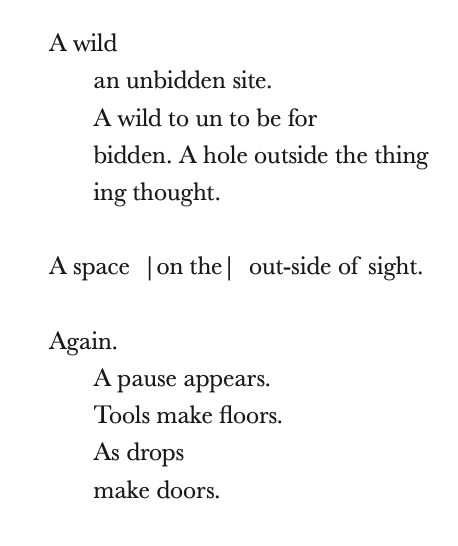
“A Maddened rhetorical imagination, a Maddened literary imagination, and a Mad poetic imagination, are necessary to fighting sane hegemony. These imaginative practices, I have argued, not only allow us to see and believe in the lived realities we have been taught to call ‘not yet,’ but also to discern in them practices of resistance usable here and now.”
Constellating Jewish Rhetorics: A Call for New Directions from an Iraqi Jew

Constellating Jewish Rhetorics: A Call for New Directions from an Iraqi Jew

by: Alexander Slotkin
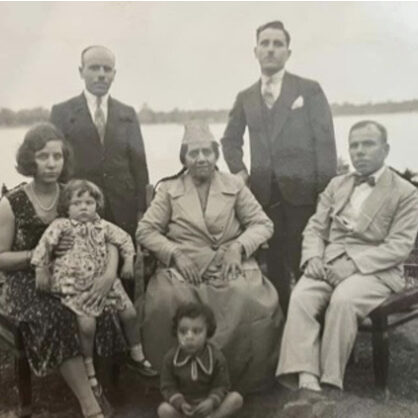
“If storytelling is about creating relationships, then it’s also about surviving and ensuring that our culture lives on. If we continue to tell and share our story even after losing access to our ancestral land, then we can continue to live l’dor v’dor, from generation to generation. And if storytelling produces and reproduces culture, then the decision by Iraqi and other Mizrahi Jews to tell our stories is also an act of survival.”

Gatekeeping Reviewer 2

Gatekeeping Reviewer 2

By Amy Wan
“When I received this damning review, I wasn’t sure how I was going to be able to move forward. I was two years into a tenure track job where I was the only writing person and one of the only faculty of color in the department. I did not want to show any weakness at this moment in my career but I was struggling.”

Negotiating for Space: Pushing Boundaries and Settling in New Spaces

Negotiating for Space: Pushing Boundaries and Settling in New Spaces

by Mariam Mohammed
“I realized that navigating new academic and cultural landscapes as an international student often means confronting vulnerabilities that challenge both personal and academic boundaries. For me, pushing boundaries goes beyond leaving my comfort zone: it connects to how much I am willing to learn, unlearn, and relearn about myself.”

Facilitating Stories of Immigration in Rural North Central Florida

Facilitating Stories of Immigration in Rural North Central Florida

by Laura Gonzales, Anwesha Chattopadhyay, Judy Colindres, Chandler Mordecai, Dinalo Chakma, Payal Nagpal, Felipe González-Silva, and Kaylee Lamb
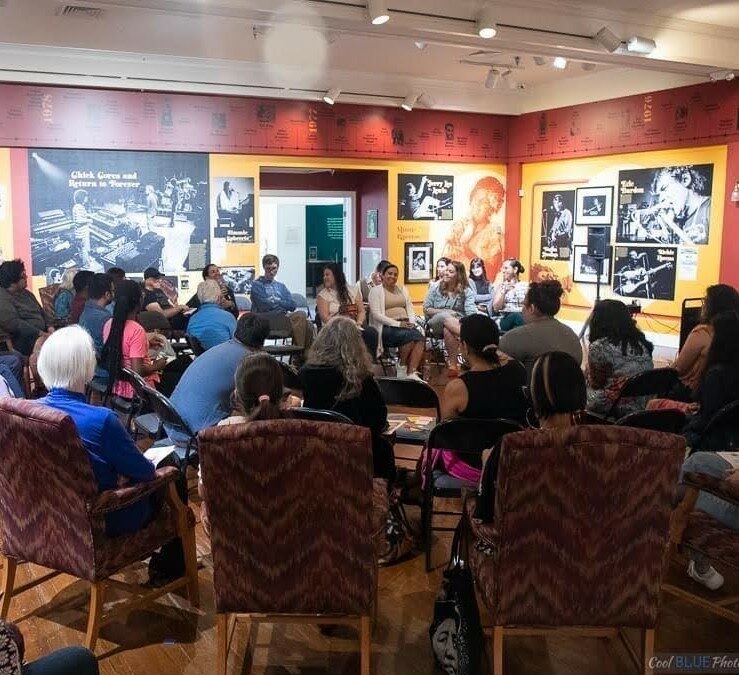
“At a time when immigration rhetoric is consistently influenced by racist and xenophobic policies in Florida and beyond, activists in our community have been hosting events focused on immigrant inclusion. Building on other efforts to increase inclusion in our city, as members of the large public University of Florida, we organized the event described here to support our community.”

Your Misogyny is Not a Cultural Difference: Constellating Transnational Stories of Religious Gender-Based Violence and Feminist Resistance

Your Misogyny is Not a Cultural Difference: Constellating Transnational Stories of Religious Gender-Based Violence and Feminist Resistance

by Victoria Houser and Eda Özyeşilpınar
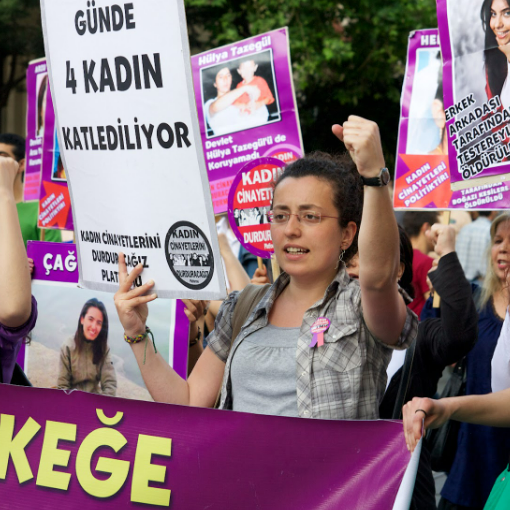
“The constellation of stories we share offers a path for embodiment through solidarity with those who endured and are enduring religious-based gender violence. There is no such thing as an easy intervention in religious structures that perpetuate gendered violence. Even so, there are possibilities for us to find our way back into the body, and in sharing our stories here we offer others the opportunity to do the same.”

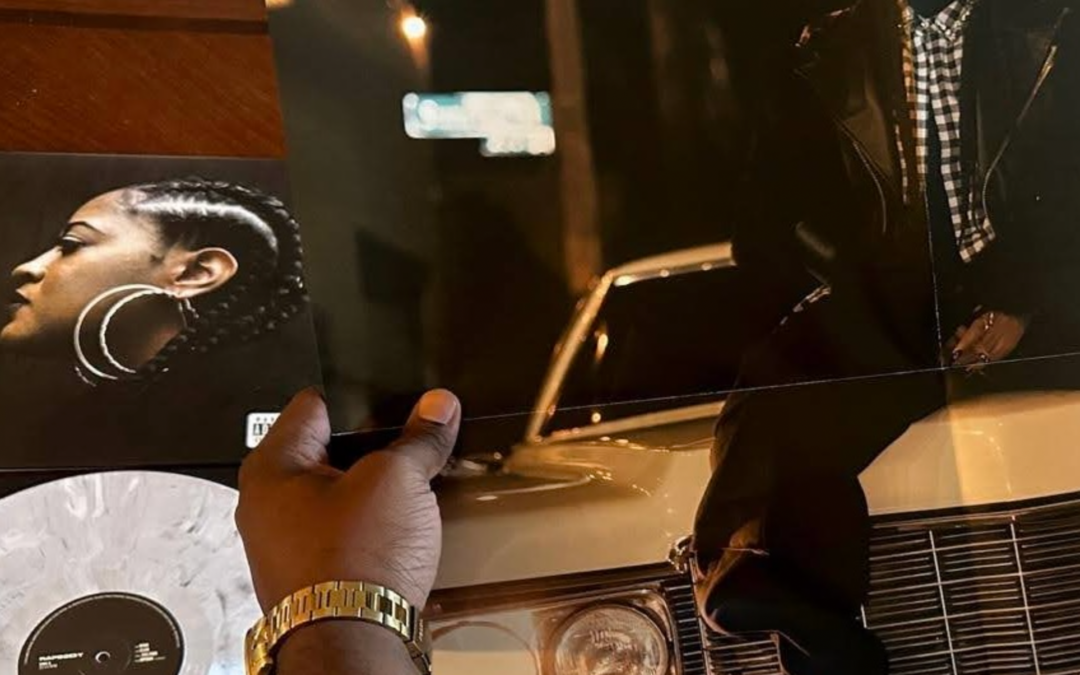
Rapsody’s Rhetorical Interventions: Black Women & the Hip-Hop Imaginary

Rapsody’s Rhetorical Interventions: Black Women & the Hip-Hop Imaginary

by Eric House
“I became a fan of Rapsody after one verse, and a bigger fan once I went back and explored her catalogue, but I was disappointed to learn that I didn’t know her although she’d been steadily releasing music for the past five years and had worked with many artists that I was familiar with. I began to question why Rapsody had been invisible and unknown to me, an avid and active hip-hop fan, until she appeared on a Kendrick Lamar album.”

Dancing Danny

Dancing Danny

by Cecilia Rodríguez Milanés
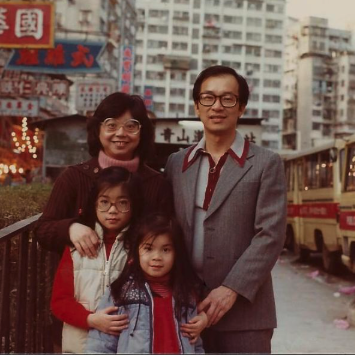
“The family photos and Super 8 footage document the performances of an immigrant, working-class family attempting a higher status. In sharing these, they sought to prove for themselves and, as noted in the video essay, for their/our families back on the island that they were not only surviving but thriving. In using these home movies and photos for ‘Dancing Danny,’ I am telling a story about family, grief, and memory and very much about love.”

Language as a Moving Anchor: Jhumpa Lahiri’s Whereabouts, Asian/American Rhetorics & the Politics of “Linguistic Migration”

Language as a Moving Anchor: Jhumpa Lahiri’s Whereabouts, Asian/American Rhetorics & the Politics of “Linguistic Migration”

by Vani Kannan
“This book made me confront the tension between seductive Eurocentric notions of ‘good’/’beautiful’ writing and the cultural rhetorics frameworks that have deeply reshaped my thinking about writing and knowledge-making over the past five years. Reflecting on Lahiri’s journey as a writer asked me to grapple with the kind of writer I want to be, the kind of writing space I want to co-create with students, and how I want them to understand the relationship between identity, land, and knowledge-making.”

Dancing with the Devil Revisited

Dancing with the Devil Revisited

by Marlene Galván
“Dancing with the Devil affirms this conception of the stranger as the unfamiliar, the unnatural outsider, enticing women to join him in dance, warning others: this is what happens when you break the seemingly natural boundaries of the community established by traditional religious and cultural institutions. The stranger is a metaphor that becomes real, created to quell the anxiety felt by established norms and institutions during the Chicanx Movement of the 1960s and 1970s. But, the story lives on even today.”

Digital Writing and Cultural Rhetorics Pedagogies

Digital Writing and Cultural Rhetorics Pedagogies

by Kimberly Williams, T. Allen Thomas, Alexander Slotkin, Ivette Rodrigues, Claudia Mitchell, Nicole Green, Laken Brooks, and Laura Gonzales
“At a time of so much chaos and change, we posit that bridging digital writing and cultural rhetorics pedagogies can help teachers and students alike envision new futures and interventions within and beyond the university, as pedagogy can help bring healing and reflection in both classroom and community contexts.”

A Response to Cushman, Baca, and García’s College English Introduction

A Response to Cushman, Baca, and García’s College English Introduction

by Alexandra Hidalgo
“We have indeed sought to publish work by and about BIPOC and diverse populations, and we will continue to do so, not because we think we are going to single-handedly take down the chains that bind us with this kind of scholarship, but because those diverse voices are rich and engaging and gift us with new territories to explore and transformative ideas to ponder.”

Never Forget: Ground Zero, Park51, and Constitutive Rhetorics

Never Forget: Ground Zero, Park51, and Constitutive Rhetorics

by Tamara Issak
“The Park51 uproar had a ripple effect on Muslim communities throughout America with reports of arson, vandalism, and violence at mosques. The shutdown of Park51 was another reminder that the constitutional right to practice religion freely and build houses of worship does not apply to Muslims.”

The Historical Work of Cultural Rhetorics: Constellating Indigenous, Deaf, and English-Only Literacies

The Historical Work of Cultural Rhetorics: Constellating Indigenous, Deaf, and English-Only Literacies

by Sarah Klotz

“While off-reservation boarding schools devastated indigenous language and kinship structures, they also generated inter-tribal coalitions that laid the groundwork for new waves of Indigenous activism in the twentieth century. In what follows, I read a series of artifacts from the Carlisle archive to explore how comparative cultural rhetorics work can benefit from the fine-grained inquiry that archival research affords.”

The University of Utah “Utes:” Towards Increased Rhetorical Sovereignty

The University of Utah “Utes:” Towards Increased Rhetorical Sovereignty

by Cassidy Hoff

“The University of Utah Department of Athletics’ (or University of Utah Athletics Department) media guides released from 1990-2016 in the sports of gymnastics, men’s and women’s basketball, and football highlight the way the university utilizes the “Utes” nickname, circle and feathers logo, and Swoop mascot to construct a “Ute” brand. This “Ute” brand encompasses the logo, mascot, and nickname, and also a “Ute” identity that can be assumed and performed by athletes, fans, spectators, and media.”

A Settler Archive:  A Site for a Decolonial Praxis Project

A Settler Archive: A Site for a Decolonial Praxis Project

by Romeo García

“Settler archives haunt us all. In reading its contents, I gain a greater understanding of my brown(ed) body. Settler archives demand a carefully reckoning, to be sure, with erasure, death, terror, trauma, and settler invention practices, all of which affect how and why I speak today from a particular place, out of a particular history, and from a particular community practice.”

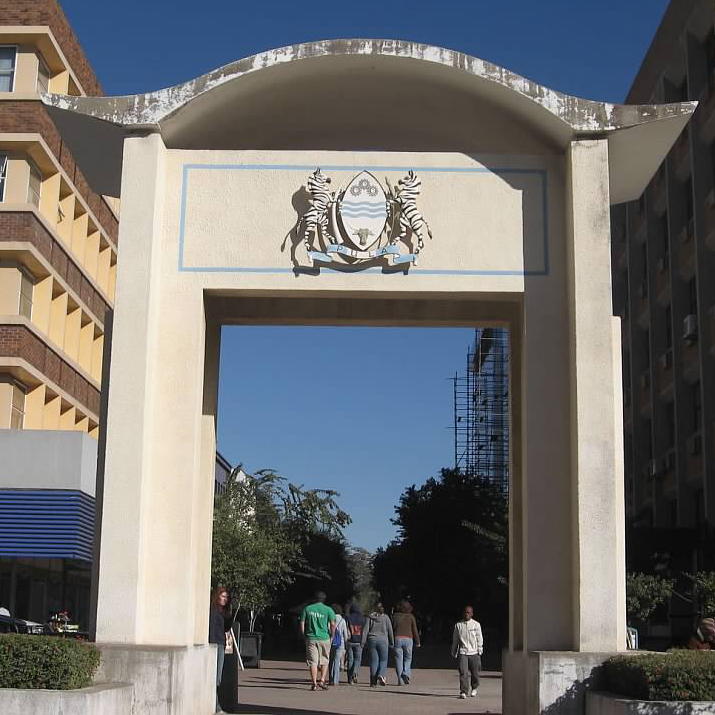
Toward a Rhetoric of Kagiso: Rhetoric and Democracy in Botswana

Toward a Rhetoric of Kagiso: Rhetoric and Democracy in Botswana

by Megan Schoen

“Kagiso as a rhetorical concept allows us to understand a discourse of democracy not grounded solely in the West—and one not tied to the limited binary of democracy as either agonism or consensus. Kagiso offers a powerful, living example of a discursive tradition that transcends this simplistic dichotomy between agonism and consensus because harmony and dissent are held closely in productive contact.”

Embodied Encounters: A Case for Autobiographical and Haptic Filmmaking

Embodied Encounters: A Case for Autobiographical and Haptic Filmmaking

by Anne von Petersdorff

“The acknowledging of the filmmaker’s body can remind us that the process of cinematic production is dependent on the participation of others: every image carries the footprints of a culturally and historically situated way of knowing, the absence or presence of an agreement between the camera operator and the object of the gaze, the incentive of economic gain, power relations, gender roles, expected ways of behaving, and so on.”

Rasquache Rhetorics: a cultural rhetorics sensibility

Rasquache Rhetorics: a cultural rhetorics sensibility

by Kelly Medina-López

“Rasquache as cultural rhetorics theory and practice presents a robust approach to meaning making by allowing users to pull from the compendium of theories, ideas, experiences, tangible tools, and intangible epistemologies they can access. Recycling, upcycling, making do, and making new meaning through whatever is available is an explicit performance of rasquache.”

What Fucking Clayton Pettet Teaches Us About Cultural Rhetorics

What Fucking Clayton Pettet Teaches Us About Cultural Rhetorics

by Becca Hayes, Violet Livingston, Casey Miles, Jon M. Wargo, Ames Hawkins, Ezekiel Choffel, Steven Hammer, Erin Schaefer, and Les Hutchinson

“We acknowledge the dissonance and disjointedness this project entails. Therefore, we provide no exhaustive remarks or conclusions, but rather a constellation of queer provocations. We work to render the ‘queer’ intelligible by making the piece and our responses to it seemingly unintelligible to heteronormative cultural logics.”