
Ersula Ore
Christina Cedillo
Rachel Jackson
Kimberly Gail Wieser-Weryackwe
Moderated by Ana Milena Ribero
Introduction
I still remember my first Latinx Caucus meeting. It was during the 2014 Conference for College Composition and Communication (CCCC) in Indianapolis. I had presented at the conference for the first time after winning the Scholars for the Dream Award. Fortunately, one of my graduate school friends, Dr. Sonia Arellano, had already been acquainted with the Latinx Caucus through her mentor Dr. Jaime Mejía, so she took me to the meeting. When I entered the room it was an amazing experience. I was surrounded by other Latinx scholars in rhetoric and composition. I sat in the same room with Jaime, Victor Villanueva, and Cristina Kirklighter—scholars I deeply admired. I also saw so many other Latinxs, some I knew from graduate school, most I didn’t know. Being in that room sent me a clear message: that there was room for me in the field. That in that very room sat the elders who had fought to create space for Latinxs in the discipline of rhetoric and composition. Soon, I would begin to call many of the Caucus members my friends. We presented together at CCCC and other conferences. We attended weddings and birthday parties. We met each other’s families. We wrote together and supported each other through our dissertations and the job market.
Once I started my first tenure track job, the community of the Latinx Caucus became even more valuable to me. Having spent my time in the United States in locations with a substantial Latinx population (South Florida, Chicago, and Arizona), I suddenly found myself in a predominantly white institution in a predominantly white city of a predominantly white state. At Oregon State University, I was the only Latina in my department, and indeed, one of just two BIPOC. My yearly trips to CCCC fed my soul. Through the Latinx Caucus, I was able to be in community with gente before I returned to my job to be, once again, the only one. The community of the Latinx Caucus is the number one reason I have been attending CCCC for almost a decade, and the single reason I continue to attend.
Officially, the CCCC Caucuses are “membership-driven groups focused around a common interest that supports directly CCCC’s mission and bedrock beliefs.” In practice, the Caucuses can be life-affirming to those of us who are minoritized within our departments and institutions. Importantly, members of these groups are also leaders in conversations about justice and equity in the discipline of rhetoric and composition. For the conversation you’re about to read, we invited leaders and members from some of the CCCC identity caucuses—the Black, Latinx, and American Indian Caucuses—to discuss the work they do within the Caucuses and the work they have been doing since 2020 in extending conversations about equity and justice across the discipline’s main journals—College Composition and Communication, Rhetoric Review, Present Tense, and Composition Studies. I had the pleasure to share this virtual conversation space on February 29, 2024, with:
- Ersula Ore, Lincoln Professor of Ethics at the Lincoln Center Applied Ethics and Associate Professor of African & African American Studies, Arizona State University
- Christina Cedillo, Associate Professor of Writing and Rhetoric, University of Houston, Clear Lake
- Rachel Jackson, Assistant Professor of English, University of Oklahoma
- Kimberly Gail Wieser-Weryackwe, Associate Professor of English, University of Oklahoma

Christina, Ersula, and Kim at CCCC 2024.
Mobilized by George Floyd’s murder and the nationwide protests that ensued, the participants in this conversation responded to the urgency of the moment by creating more ways for junior faculty and graduate students of color to see a place for themselves in the discipline not just in our classrooms, but also in our publications.
During our conversation, participants discussed the importance of the intergenerational networks the caucuses help build. The magic that happens when multiple generations of scholars share an intentional space is invaluable, particularly for those who are members of underrepresented communities. Rachel reminds us, “Younger scholars and elder scholars benefit each other inside caucuses and the generational dynamic is critical, with younger scholars often needing more space and support. Elder scholars, too, benefit from new critical locations and frames that emergent scholars embody and impart.” Importantly, this sort of intergenerational exchange can validate the presence of scholars of color in the field by providing models that young scholars can see themselves in. In remembering her first CCCC Black Caucus meeting, Ersula states, “I was coming from a space where folks side-eyed me when I said I wanted to be a professor, from a reality of only having had three black female professors in my life… So I wasn’t so much intimidated by who was in the room, as much as I was nervous to admit that I saw them as models of a future I wanted to be mine.”
Caucuses can be spaces for activism and critique, but also for the sort of community that nourishes graduate students and junior scholars as they experience the uncertainties of the job market and the precarity of the tenure track. As Kim states, “You will need them [community] and the way community feeds you—yes, sometimes actually food, but more specifically, spiritually and emotionally feeds you—to survive the experience and overcome.” The participants discussed various forms of communities and networks—including formal, informal, and imagined networks—which Ersula describes as the people that we have in our heads as we write.
Finally, the participants also reflected on the whiteness of the discipline, particularly in our publications. Referring to the history of the Latinx Caucus, Christina writes, “The story that always sticks with me is how scholarship about our community was published by our discipline’s flagship journals when written by white scholars, but when members of our community who had both academic and experiential knowledge tried to publish, they were told that they wouldn’t be published because there was already an article by a white author slated.” While more recently many journals in rhetoric and composition have embraced anti-racist scholarly reviewing practices, junior scholars trying to publish continue to benefit from the intergenerational mentoring and intentional community-making that the caucuses create. After participating in this conversation, I am reminded of the importance of remembering that, as Christina writes, “we are all implicated—and potentially vulnerable—in a system where we are all connected.”
How did you begin your work with your respective Conference on College Composition and Communication (CCCC) Caucus? What role do you currently play in that Caucus?
Ersula: My first CCCC was in New York. I was a novice, newly committed to rhetoric and composition, and eager to learn about the field and to network. It was at this time that I attended my first Black Caucus meeting and established relationships with elders in the field including Drs. Geneva Smitherman, Jackie Jones Royster, Beverly Moss, Gwen Pough, and Carmen Kynard, among others. My work with the NCTE/CCCC began while I was a graduate student at Penn State University. At the time, Drs. Elaine Richdarson and David Kirkland served as co-chairs of the Black Caucus. Dr. E invited me to first serve as Treasury Secretary. I later became Treasurer and eventually co-chair; I have served as co-chair for the NCTE/CCCC Black Caucus since 2019.
Rachel: What was it like, Ersula, to walk into a room of such influential scholars? I would have found the thought intimidating. How wonderful you were welcomed into a relationship with them.
Ersula: You know, Rachel, ignorance can be bliss. Like I said, I had just committed to rhetoric, so I was just getting acquainted with the heavy hitters when I met them. What sat with me most was the fact that I was surrounded by not just Blerds but women Blerds. Understand that I was coming from a space where folks side-eyed me when I said I wanted to be a professor, from a reality of only having had 3 Black female professors in my life. During undergrad at Maryland, I had courses with Mary Helen Washington and Jemima Pierre; during grad school at Penn State, I had courses with Debra Atwater. So I wasn’t so much intimidated by who was in the room, as much as I was nervous to admit that I saw them as models of a future I wanted to be mine. And you’re right, I’m blessed for the opportunity Doc (Gilyard) created for me when he said, “You ever been to Cs?”
Christina: I first became involved with the NCTE/CCCC Latinx Caucus when I started attending CCCC in 2012. I was a new assistant professor and hadn’t attended the conference due to the way that funding had worked during my program and how I had to dissertate from afar as part of my graduate studies. When I first attended, I received a Scholars for the Dream award for the presentation I was doing on racism in video games, which dovetailed with the work I continue to do on racism in digital spaces. When I attended the meetings, I was able to make connections to some of the Caucus elders who helped create this space for us, like Cristina Kirklighter whom I’d met previously, as well as some of my contemporaries like Christina Garcia, Aja Martinez, and Genevieve Garcia de Mueller, who I’ve continued to work with since then. During that time, Iris Ruiz and Steve Alvarez were serving as co-chairs, and Iris helped me learn the ins and outs of working within the Caucus. A few years later, I became co-chair alongside Cruz Medina, who I credit with providing a lot of support for doing the work I got to do with my colleagues across the different caucuses. Malea Powell, Lisa King, and Andrea Riley-Mukavetz in NCTE’s American Indian Caucus (AIC) also provided a lot of mentorship along the way.
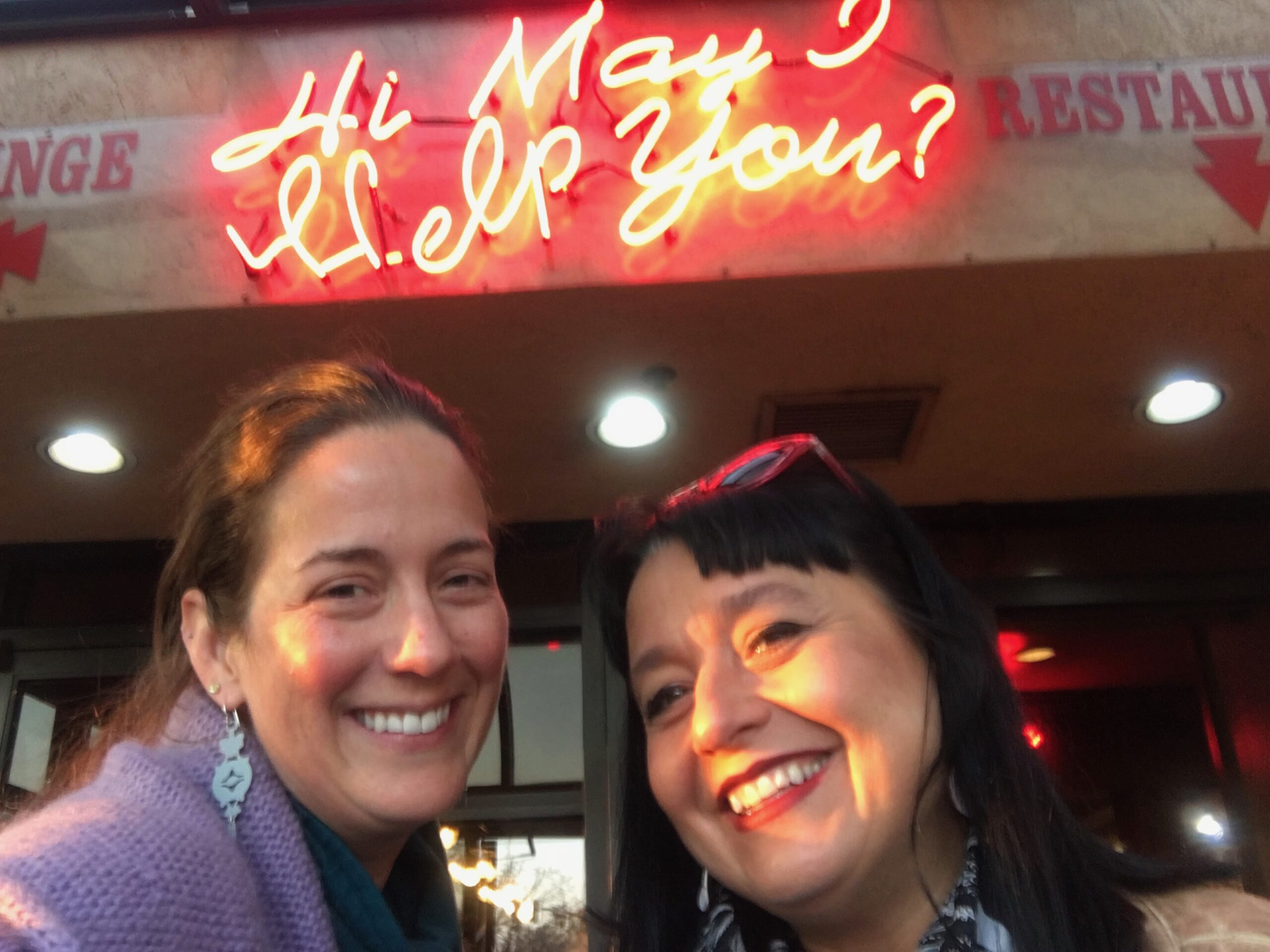
Kim and Rachel at Gage’s BBQ in Kansas City before dinner during CCCC 2018…Rachel’s last C’s for a long while.
Rachel: Congratulations on the Scholars for the Dream award, Christina. That award supports so much incredible emerging scholarship. I really haven’t worked much with any caucuses thus far in my career. As a graduate student, I attended the American Indian Caucus in 2012, the same year Malea Powell delivered her CCCC Chair’s Address. I was there with one other student from the University of Oklahoma and felt awkward and out of place (also rather starstruck and stymied to be in the same room with Malea Powell after such an address as that). Though I attended CCCC for many years as a grad student, I tended to stay in my room and hide unless meeting with people I knew. Kim was being held as a captive in literary studies and wasn’t attending CCCC again yet. As an insecure grad student, Caucus felt intimidating. Right after graduating with my PhD in 2016, I had to make the hard choice to stay in Oklahoma because of aging parents. This responsibility also put a heavy burden on my capacity to tend to my career in the ways I would have wished in those early years. I was fortunate to start a tenure-track job at the University of Oklahoma in the fall of 2019, a rare opportunity in academia to work and research at home. Kim and I had dreams about building a cultural rhetorics focus in our department, but the pandemic changed so much for us both. It limited all of us in ways we could not have imagined. We’re still dreaming, and there’s a lot of doing, too.
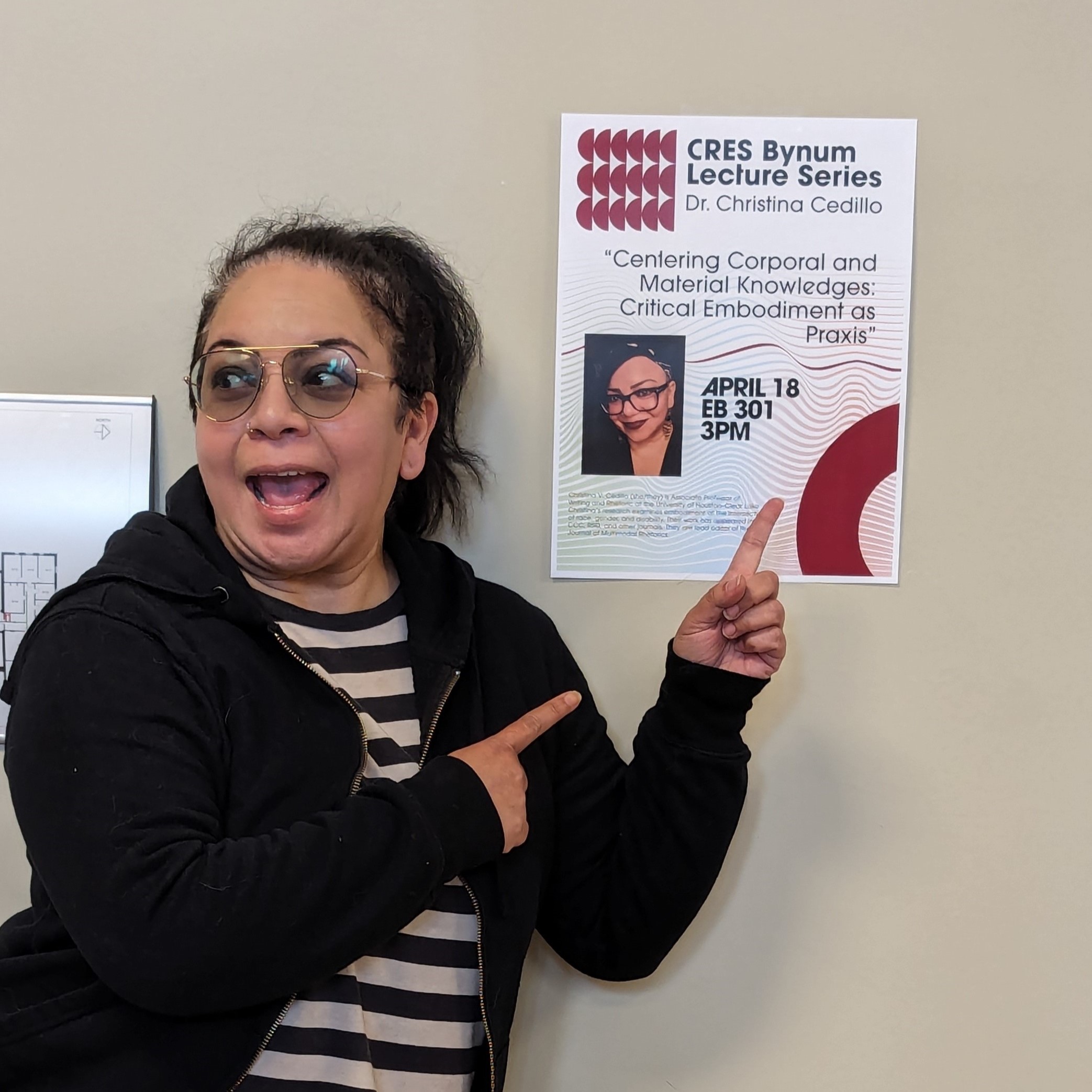
Christina points at a flyer for a talk delivered at the University of Alabama (Photo by Amber Buck).
I do remember talking with Kim during lockdown as the brilliant conversations took off in AIC in response to local, national, and global events, injustices, violences, inequities, uprisings, movements. Not being on social media ever in my life, I could not participate in the conversations happening there. Also, I was increasingly unable to focus on anything other than my parents, who were in lockdown inside an assisted living center. Kim kept me then (and keeps me now) informed on discussions and ideas within AIC and across caucuses. She also knows how to have a backyard phone call to talk about the darkest, hardest parts of life. She tells me to always protect my time as much as possible, particularly right now. Now that I am finally able to focus on my manuscript project for tenure, I also hope to eventually become involved with the Caucus the closer I get to post-tenure. Now that both my folks have passed, I am able to focus more on my career again.
Ana: I’m so sorry about your loss, Rachel. That must have been incredibly challenging, and with the added pressure to also produce as an academic!
Rachel: Thank you, Ana. It was a deep dive into death. What can I say? It’s a part of life, there is beauty in it, and death is not only an end. The story continues. I am thankful so many were doing good work in the meantime and created space for me to join when I could. The College Composition and Communication 2023 special issue “Cultural Rhetorics Stories and Counterstories: Constellating in Difficult Times” (75:1) with Kim and Christina was a re-entry point for which I am grateful.
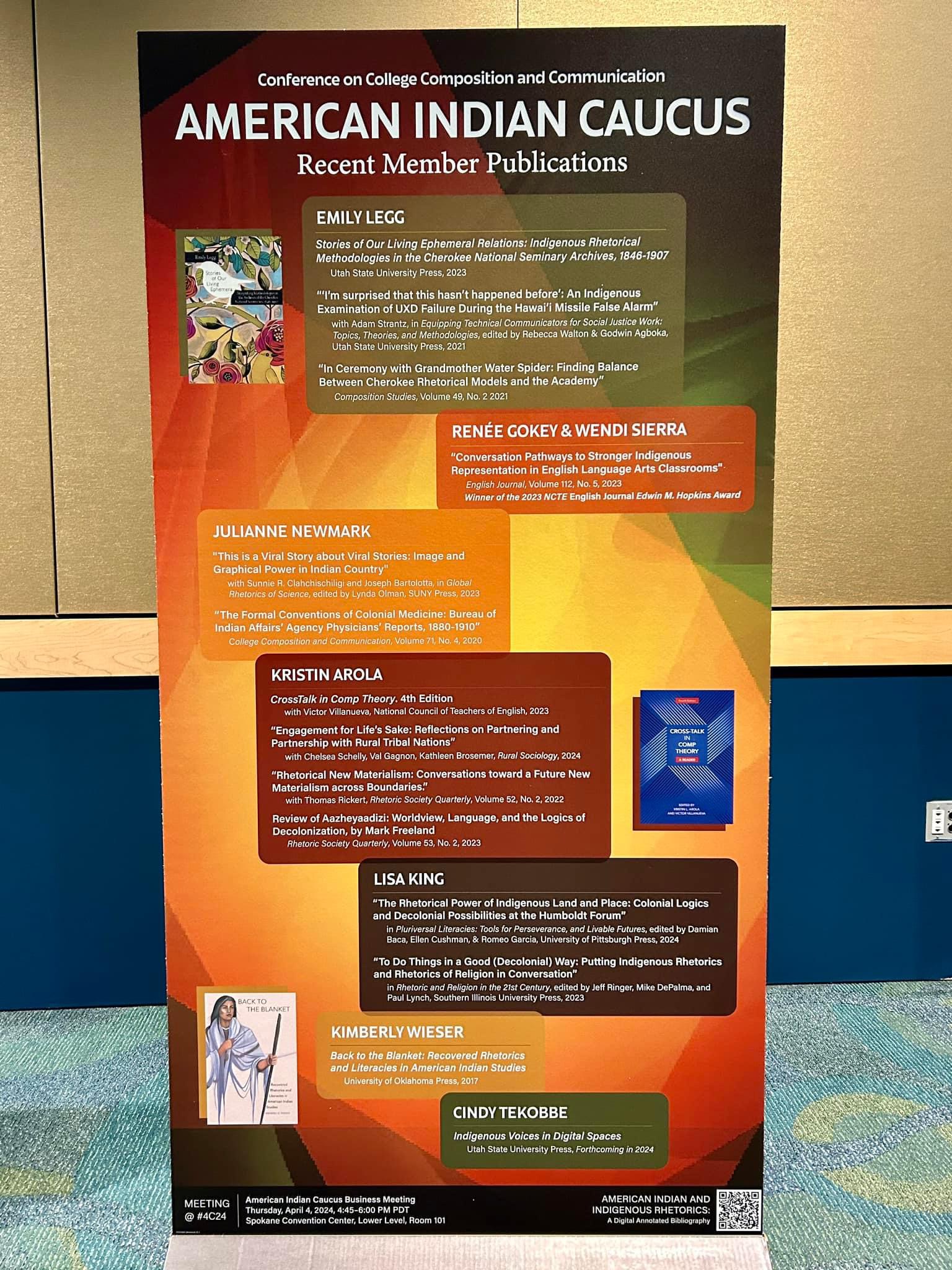
Poster for American Indian Caucus at CCCC 2024 that includes Kim’s book on the bottom left.
Kim: Rachel, I know it has been hard. It seems like ever since 2017 when my daughter passed, the world has thrown one huge challenge after another at us. I know that is my personal perspective, but the loss of your parents, the pandemic, 2020 as a whole . . . everything has changed. The work is the one thing that has kept me going, the work and being able to work with people like you, Ersula, and Christina. I think that is the best thing about Rhetoric and Writing Studies—the amount of collaborative work it has enabled me to do and the wonderful people in the field, particularly in the caucuses and in cultural rhetorics, that I am blessed to work with.
To answer the original question, I first attended CCCC American Indian Caucus in 2001 at the invitation of Malea Powell, whom I knew from Wordcraft Circle of Native Writers and Storytellers. Malea, Scott Lyons, and I had all been working on American Indian rhetorics in our scholarship during our respective graduate programs, and a group of people—including Malea, Scott, Joyce Rain Anderson, Kimberli Lee, and Ernest Stromberg—had formed a caucus for American Indian scholars and scholarship. CCCC was held in Denver that year. I then had a career in Native American Literature as that was where the jobs were, but continued to approach nonfiction and non-alphanumeric texts with rhetorical lenses. After I published Back to the Blanket in 2017, I returned to CCCC and AIC. A few years later in 2019, Malea stepped away from leadership, and I was asked to join Andrea Riley-Mukavetz and Lisa King as the third co-chair. I have been serving in that role since and started serving as our representative to CCCC’s Executive Committee this year with the constitutional changes in Article IV, Administrative Committees, Section 1. The Executive Committee in number 5 specifically. This change led to the identity caucuses each having a person on the Executive Committee who is tasked with representing their interests.
Rachel: That’s amazing news, Kim! Congratulations, and also thank you for being willing to do the work! And, yes, I remember being happy to see our department represented in the Caucus when you were first invited to co-chair. So many changes since then!
In your view, what is the function of the CCCC Caucuses?
Kim: I can’t imagine CCCC without the caucuses. I think the creation of the caucuses literally and metaphorically made space for us and our work at CCCC. The conference itself is huge. Even with the caucuses and the work we do to make the work of BIPOC and other othered others visible by creating mini-schedules where we share our sessions, workshops, and events, as well as ribbons to add to our conference badges so Caucus members might be more easily seen, it is easy to feel lost in the crowd and isolated. The caucuses are supposed to be safe spaces, for one. I’m not going to lie and say they always are or always have been. Personal enmity has and does rear its ugly head from time to time, and no matter how advanced I am in my career or in my own life journey, that kind of thing still hurts, and it causes issues when we need our communities not only to feel safe, but also to have an informed audience for our work who can help us continue to grow as scholars. The caucuses need to be that safe space. We have all noticed a decline in graduate student attendance at CCCC. If we want a future in this field, graduate students need to feel both welcome and nurtured. The families we have found in the caucuses provide that, but we still—like all humans—need to work on making our tent bigger and making sure potential Caucus members know they are welcome.
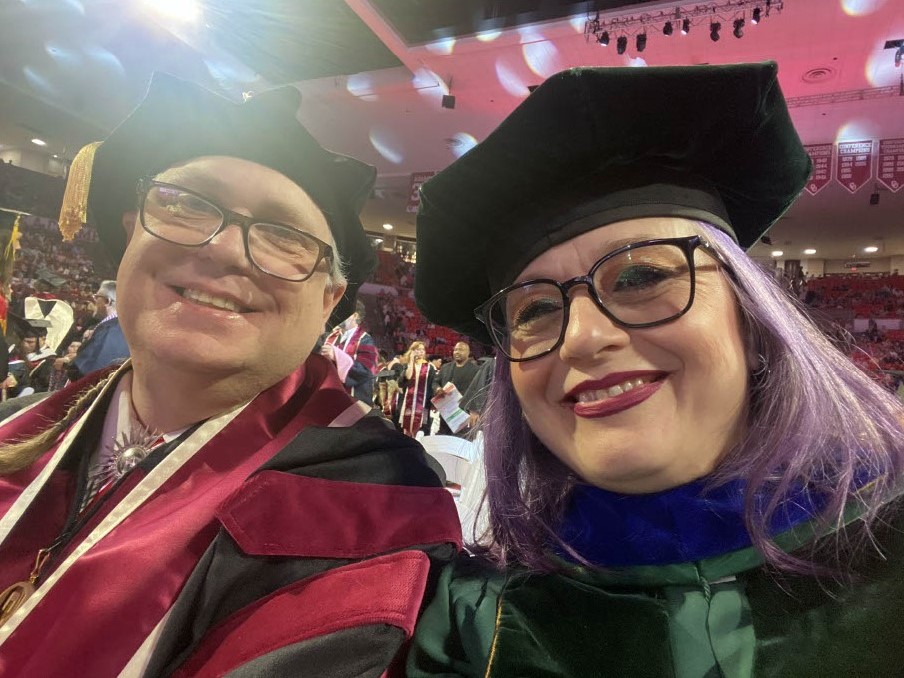
Kim with Dr. Brian Daffron, a recent Ph.D. under her direction, at his graduation.
Christina: The caucuses provide a space for recognizing the pain the discipline has caused our communities. That is important to state. But they also provided space to celebrate the joys that we experience and share. Romeo Garcia, Iris Ruiz, Anita Hernández, and María Paz Carvajal Regidor have edited a history of the Latinx Caucus titled Viva Nuestro Caucus: Rewriting the Forgotten Pages of Our Caucus (Parlor Press 2019) that shows how it was founded to provide a location where the work by members of our communities could be acknowledged and, again, celebrated, due to a constant struggle against erasure that reflects what is also experienced in society outside the academy.
Within our caucus history, a story that always sticks with me is one that reflects how scholarship written by white authors about our community has been given more space in our discipline’s flagship journals under the guise of standard procedure and “fairness.” In May 1970, Felipe de Ortego y Gasca, a major Chicano Studies scholar and early caucus leader, wrote a letter to Richard Ohman, then-editor of College English, after having submitted an essay on Chicano poetry to the journal, only to be informed that a white scholar’s work on Chicano literature had already been selected for publication. (I use “Chicano” here rather than Chicanx as I usually do to reflect the designations of the time). As fellow early caucus leader Christina Kirklighter explains in a guest blog on Pluma Fronteriza (2011), the editor told Ortego y Gasca that publishing the essay would prove more than he wished to publish on Chicano literature at the time. Cruz Medina and Perla Luna recount in “‘Publishing Is Mystical’: The Latinx Caucus Bibliography, Top-Tier Journals, and Minority Scholarship” (2020) that Ortego y Gasca told the editor that the experience made him realize that the only disciplinary spaces where our words were welcome were those we made ourselves.
I do think that things have changed since then, but there’s still much work to be done. Work on and by members of marginalized communities is still viewed as collectively niche, no matter the topic, while writing on and by white authors just gets to be literature—rather than deemed “white literature.” It is also granted a significance and validity that writing originating in marginalized communities is not. Hence, Ortego y Gasca’s response that an essay on Shakespeare might not have been turned away because another essay on the topic had already been published. People still argue about doing away with “the canon” but do not reflect on why and how that canon was established. Furthermore, cultural distance is often viewed as vital objective inquiry, discounting the value of academic and experiential knowledge as well as ignoring how every one of us has an academic perspective based in lived identity. So when limited space is granted to our work, and work by community outsiders about us is given priority, we often don’t get to speak about our own experiences and ideas. It works out to where we contend with a quota system and white supremacy dictates that we don’t even get to speak first—or at all.
This is especially vital when you’re speaking in a language (or languages) that doesn’t uphold the supremacy of English-only rules, which can render our work as insufficiently academic. We need spaces where code meshing and multilingualism can thrive. I know that has been the case for other communities, as evidenced by so-called debates over African American Vernacular English. There’s a great irony in that the author who was published in College English, Gerald Haslam, even argued in his essay that Chicano literature should not be read through lenses meant for reading white literature and that to do so is a sign of Anglo domination. So ultimately, caucus spaces have been where BIPOC get to affirm and support one another, and when we speak cross-caucus-wise, we get to speak to others who get it and take action to help one another and work to prioritize those most affected by those structures of domination that enact erasure on our language practices, experiences, histories, and lives.
Rachel: You remind us that the caucuses can/should/must be radically different spaces for justice. I am not sure all caucuses operate this way, but I’d like to believe they do or aim to. The story you tell here about white scholarship in the flagship journals reminds me of the reasons the Society for the Study of Multiple Ethnic Literatures of the United States split off from MLA. We are building new structures to outlive old institutions using our own languages from our own centers. The caucuses can truly serve as future spaces now.
As an outsider to some extent so far, I think the caucuses function as hubs of connection and support that bring together people from many locations. Ideally, caucuses would be robust, open, diverse, intersectional, inviting, generative, collegial, collaborative, and so on. I think the caucuses do good work in modeling for the executive board the kinds of changes that we would like to see made at all levels of powers within the organization, disciplines, and fields. I imagine that, likely all too often, the hard work of sustaining caucuses and caucus ties falls on too few. This can lead to all kinds of challenges and problems, beginning with the additional labor carried by those too few. Yet, there are real constraints in all of our professional and personal lives that keep many from participating in professional organizations—not the least of which is two-tiers of membership dues. To me, as the stories above demonstrate, younger scholars and elder scholars benefit each other inside caucuses and the generational dynamic is critical, with younger scholars often needing more space and support. Elder scholars, too, benefit from new critical locations and frames that emergent scholars embody and impart. I would like to believe more involvement from folks at all stages of their careers would enable less caucus work and more caucus benefits for all. Building the caucuses also requires building real departmental and program support for participation as well. It is demanding, unpaid professional service after all.
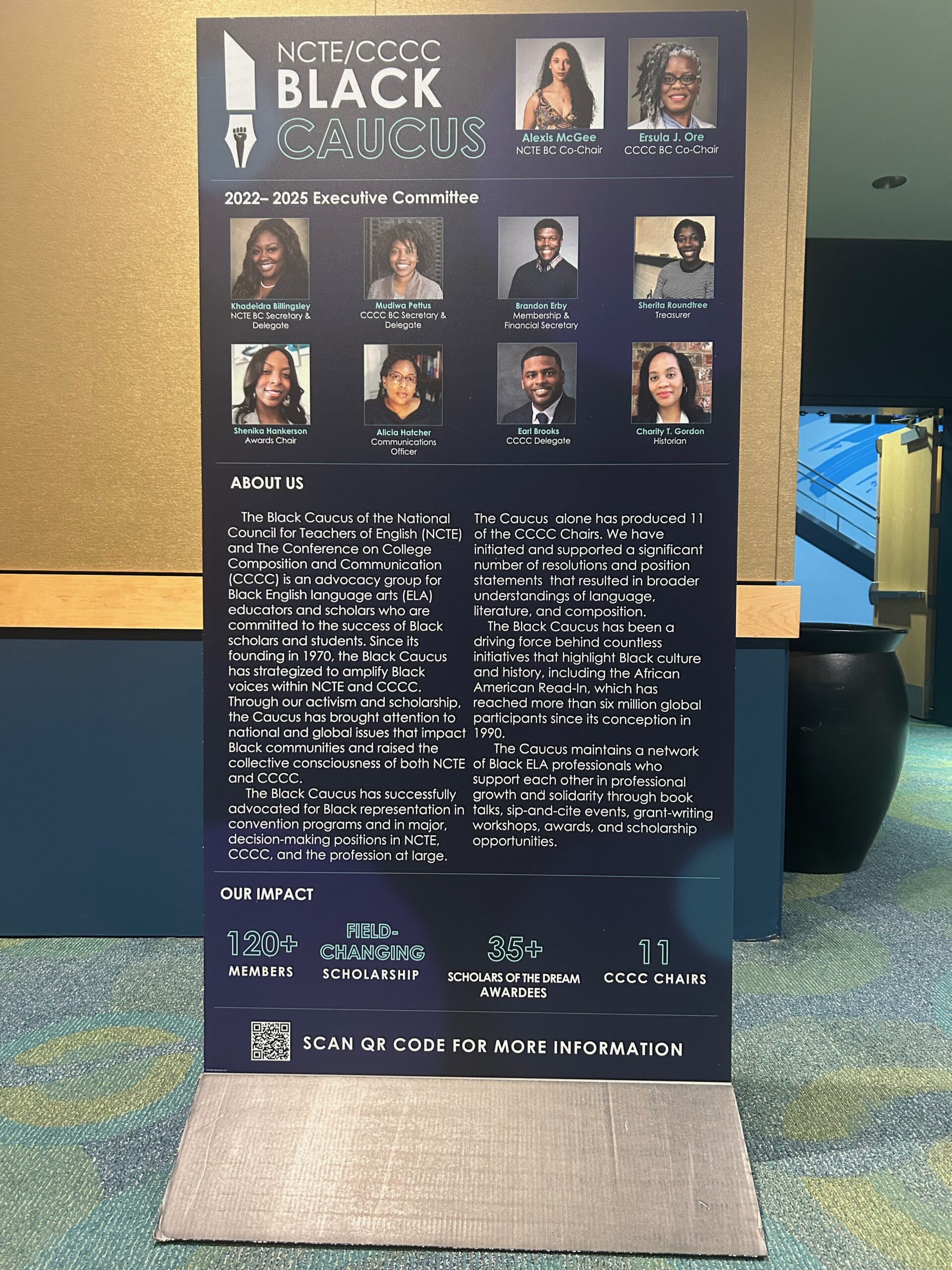
Black Caucus CCCC 2024 poster.
Ersula: I agree. The caucuses are spaces that do the political work of remembering and redressing the oppressive, exclusionary, and silencing practices of the conference in particular and the field more specifically. They are spaces of affirmation that visibilize—via their intellectual, professional, and administrative contributions—the whiteness of the field and the intersectional injustices that plague higher education’s capacity to establish equitable processes of learning, nurturing, and teaching. At the same time, these spaces can be exhausting, abusive, and exploitative in the ways that reproduce gendered, racialized, and ableist oppressions. In that regard, they are no different from any other space in which folks have self-organized in pursuit of justice.
Admittedly, this question makes me wish I knew more about the histories informing each Caucus, as I assume that each originated from a history of activism and advocacy. For the Black Caucus (BC), its formation arose in response to the invisibilizing of Black scholarship in the language arts. The function of the BC, then, has always been first and foremost to champion the language arts needs of Black learners. As a space for Black language arts practitioners and scholars of rhetoric and composition, the BC has operated secondarily as a space for professional organizing, community outreach, advocacy, and networking. The Caucus provides professional support and development; it is a space that fosters collaboration and intellectual growth. Most importantly, though, and this is something that officers of the BC have been discussing a bit more intently, it is a landing pad for those new to the field of literacy, rhetoric, and writing studies. While the function of the BC is to maintain a space dedicated to enhancing the professional welfare of English language arts professionals of African descent and to help Black students and scholars experience success in English language arts, the labor of maintaining such a space has historically—and with murderous regularity and precision—fallen on a few. This work, which I have come to recognize as highly feminized, leads to burnout on account of the lack of reliable support and participation in leadership.
Kim: I just want to give an “Amen” to what Ersula said. This work is exhausting. Without the caucuses, it would also be lonely, and there’s just no way I’m signing up to live like that. I have spent far too much of my life in the academy on academic work, and it’s really not a great way to live. Find your people. Make time for you. Make time for your family and friends. Take care of what feeds you. Academia only does part of that.
Ersula: You’re definitely right, Kim. As much as it’s about activism and advocacy, it’s also about community and camaraderie.
The four of you have been co-editing special issues of journals in Rhetoric and Composition since 2020. Can you discuss the event(s) that brought about this work?
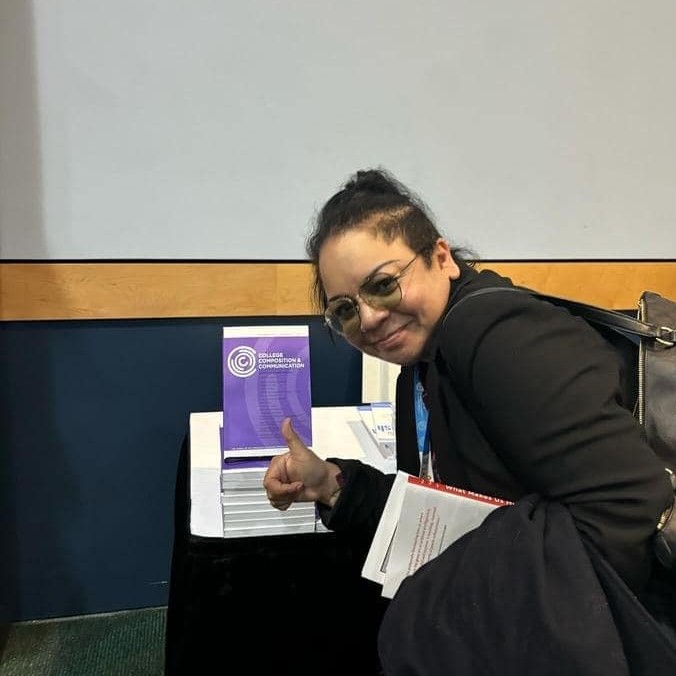
Christina gives a thumbs up in front of the CCC cultural rhetorics special issue (Photo by Marissa Juarez).
Christina: It started with Ersula asking some of the other Caucus leaders about scholarship in the field regarding racism and its impact on members of our communities. There were a lot of things written more broadly but not much—or should I say, not as much as there might be—written by people most affected and from the personal perspectives of the people living it. And specifically in rhetoric and writing studies. Yet we all knew that there was so much to be said about racism’s myriad effects on our work, teaching, research, mentoring and networking practices, and just how we have to live our lives on a daily basis.
I would say the contrast in our experiences and the work that had been published had a lot to do with the way racism impacts publication itself, with racism being regarded as a topic that is best treated “from a remove.” We could all cite cases where members of our respective communities had work that hadn’t been accepted for publication based on criteria that privilege those that can speak to its impact through a “neutral” or “objective” lens while our folks were told that our writing was too subjective or too emotionally invested to offer insight beyond a thin sliver of experience. Yet I always think about Toni Morrison’s powerful response to an interviewer where she said white authors are never questioned regarding their centering of white subjects and whether that is narrowing their frame of relevance. BIPOC have much to teach everyone regarding our knowledges, our experiences, our struggles, our survivance practices, and the invisible labor we undertake in the supposed meritocracies of academia and society. Furthermore, I think this became especially clear after the murder of George Floyd since this, for many, was a wake-up call despite such violence being an ongoing reality for Black and other POC communities. I think more people are starting to realize that the tenet of “all our relations” needs to be understood because we are all implicated—and potentially vulnerable–—in a system where we are all connected. So we can no longer ignore the issues that impact our most vulnerable relatives.
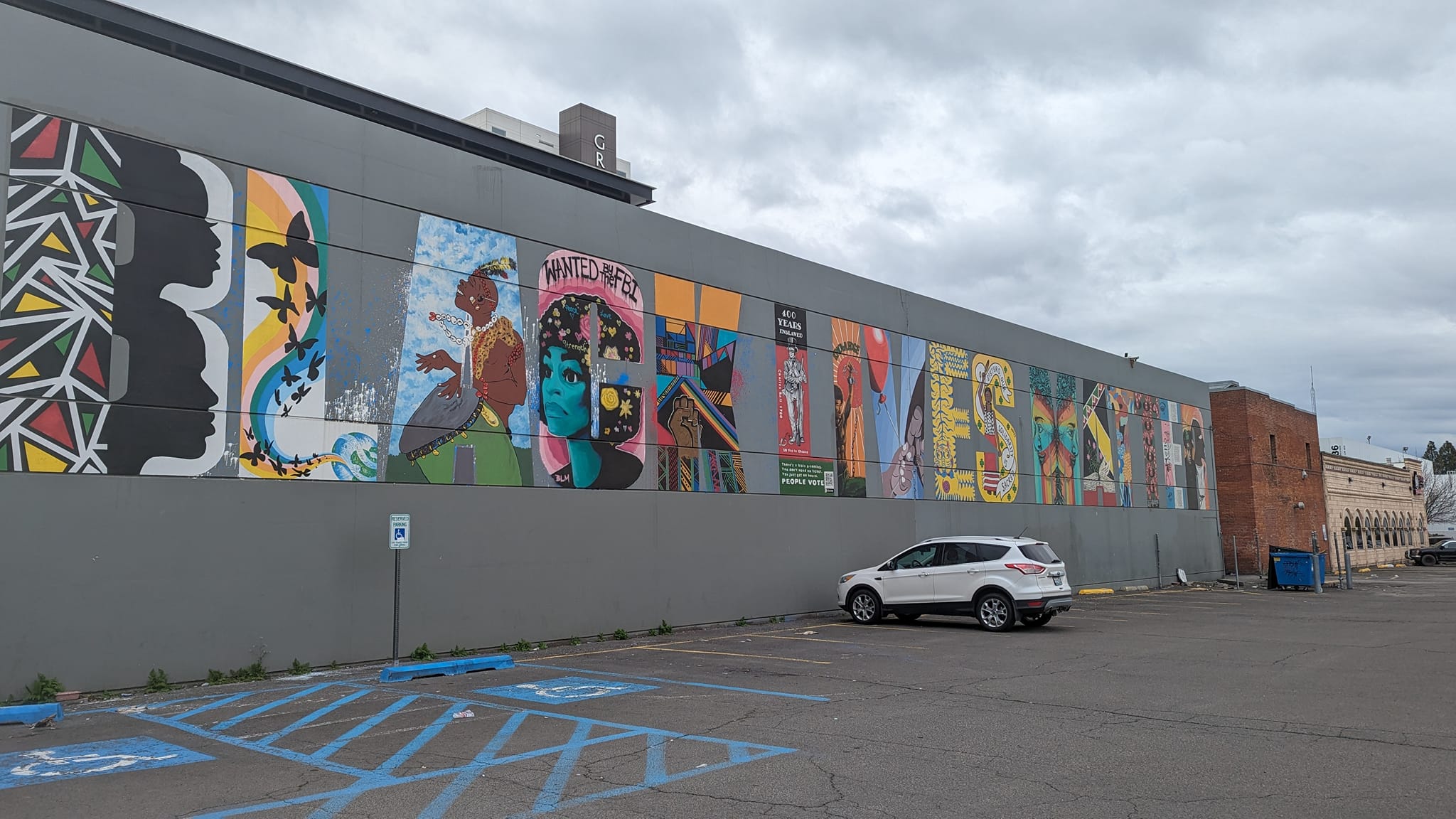
Black Lives Matter murals in Spokane near the CCCC 2024 convention.
Kim: I’m with Christina on this. If it weren’t for Ersula taking the initiative, deciding that we couldn’t just sit around and be silent, that giving up on and into that notion was not an option. I know it was an intense moment. We were all reeling from January 6th and the pandemic, then George Floyd was murdered in public in broad daylight in front of us all—there is no more hiding in this world of surveillance and social media—by public servants, whom we all realized never really met that label and certainly didn’t serve or protect us or people who looked like us or relatives, and it was too much. However, the intensity of those emotions are what gave me—and I suspect everyone else—the motivation to do something about it, to do what we could about it.
When Ersula invited us to help her edit a special issue that began to give voice to graduate students and young faculty who are marginalized, not just outside of academia, but also in it, I saw it as a call to action that I couldn’t ignore. That one “issue”—which actually became a symposium in College Composition and Communication (CCCC)—led to another symposium and four special issues. Ersula, Christina, and I did the CCCC symposium, a symposium in Rhetoric Review, and the Present Tense and Composition Studies special issues. Ersula stepped away to produce a beautiful baby, and Rachel joined Christina and me to edit the College Composition and Communication special issue, and, of course, Ana, you joined Christina and me for this last special issue, this constellations special issue.
Christina: Yes, Ersula’s invitation felt like taking a break, despite the hard work? For me at least, because it was centered around doing or offering something positive to folks in the field who were grad students and junior faculty and giving them a metaphorical hug. Saying, “We see you” or just that little head nod you give someone when you enter a room and you see someone you recognize in a room full of strangers. I don’t even know if that makes sense. And in the midst of it all, when Ersula had her baby, I don’t know if I ever said this, but I cried. I cry for everything. But they were happy tears and I saw her picture and remember saying, “Welcome, baby, you’re already so loved.” It was just a blessed reminder that in a world that sometimes feels so hard and you have to act all hard, there’s family and friends and love. You all remind me of that because I tend to be gloomy all the time. LOL!
Ersula: I can’t discount what Christina and Kim have repeatedly stated, that, “It started with Ersula.” That’s true. And in an effort to be transparent, I need to admit that my need to publicly acknowledge the truth of their statements is because I often discount the ways I show up, how my showing up impacts other people, and how my impact on other people grows the field. I don’t think of myself as a visionary and rarely ever as a leader despite what many have identified as a kind of natural, innate leadership style. My mentality is simple, “I wanna get some shit done.” I had no clue that Christina and Kim shared my mentality, only that they were women of color in leadership roles whose work in the field reflected the kind of social and political conscientiousness I respected and thought might lend some collaborative fire. But you never know until you ask.
I went to Cedillo first because we’d been cool for sometime and I knew she had serious editorial experience. Aside from a guest-edited special issue of Reflections, I’d never served as an editor, and I’m smart enough to know that if you want something to succeed you ask fire folk who are fire at what they do. Cedillo suggested that I ask Kim next. I can’t recall if they had worked together before but I was eager to connect with Kim because, other than tangential associations, I didn’t know her very well. Herein lies one example of how collaborative projects come together. All that aside, what motivated me to make the ask in the first place was that I knew the only way to organize Caucus voices was to reach out to Caucus leaders—and to do it strategically. The exigence of the ask, however, stemmed from a personal desire to facilitate a kind of critical conversation centered on reflective responses by graduate students and junior faculty struggling to navigate the academy during COVID. What I hoped to visibilize via these reflective shares was the institutional logic that led to our exploitation, burnout, and abandonment of the academy.
Kim: You are a visionary, Ersula. And I am happy to see you at least acknowledge your own vision and initiative some. I know if I say “take credit,” you’ll want to step away from that, and it’s not what you are doing. It is hard to acknowledge ourselves. We are so trained not to—yet the academy asks us every year and in formal fashions to do just that. It is so hard for BIPOC scholars, particularly female-identifying BIPOC scholars, to do that. But it’s not just that. It’s not just taking note for the academy. It is acknowledging all of our ancestors—academic, biological, and social—and the work they did to get us here so that we do have a voice and the freedom and initiative to use it. Honestly, you are so strong and so smart it leaves me in amazement. I hate that this is true: those of us who have gone through the most are often the strongest and most dauntless and have a smile on our faces despite it all. I hate it, but at the same time, knowing you and working with you has been one of the biggest blessings of my life. Ersula, you are transformational. I might follow you just about anywhere.
Christina: Ersula, I believe you’re a born leader and definitely a visionary. I love that you just have to speak with people to articulate a vision to let folks know why it matters and how we all fit. And you do so with so much heart and respect and compassion. Not a lot of people do that. I agree with Kim that it’s good to see you acknowledge that side of yourself because I think you underestimate just how many of us see you that way. I was seriously excited to work with you because, as you say, we were cool but we hadn’t had a chance to work together and I was always so enthralled with your work and the way that you take up such powerful topics and render them accessible for others in your scholarship. I know that work is not easy and it takes its toll in different ways, so someone who is willing to do that kind of work when they shouldn’t/don’t have to is someone who cares about making real change in the world.
Ersula: See bitches!! I listen to you…it might take a while to manifest! But I’m always working to put into practice the good and loving habits of mind that y’all share.
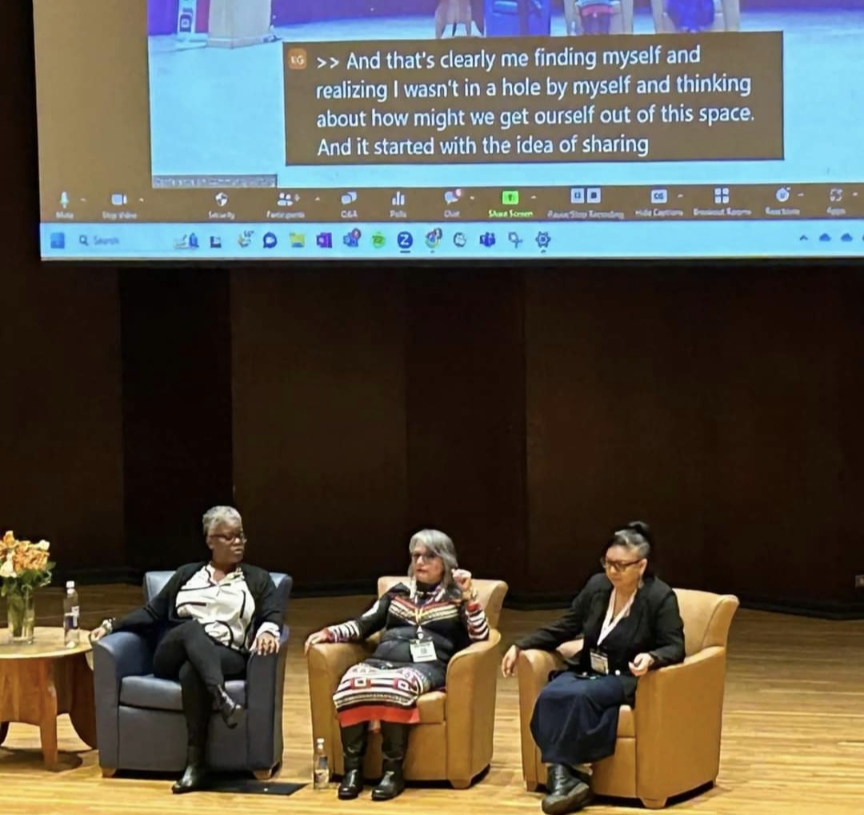
Ersula, Kim, and Christina delivering 2024 Coalition of Community Writers Keynote in Denver.
Christina: Kim, I know you do this too. When we first met at CCCC through Malea Powell, I knew your work but didn’t realize that was you sitting across the table from me at first! Then we started talking and I thought, this is a scholar doing great work who still treats people so well and finds time to help others. Those are the kind of people you need to find. That’s why I love you folks.
Rachel: Meanwhile, I was on Family Medical Leave taking care of my mom for the last several months of her life. By this point, she could not walk or talk or feed herself and once again much like an infant herself. In the spring of 2022, I returned to teaching online from home while Mom continued to decline in hospice in the other room. I could barely keep up. That semester, I used Ersula’s incredible book Lynching: Violence, Rhetoric, & American Identity (University Press of Mississippi 2019) in an Introduction to Rhetoric and Writing Studies course. Reading through it for the first time alongside graduate students confirmed all the good words I had heard about her from Kim. So embodied. So emplaced. So honest. So fierce. So clear and unmovable, passionate and undaunted. So critical and brilliant and well-timed—all the things I did not think I had it in me to do. Her story, however, strengthened me way down.
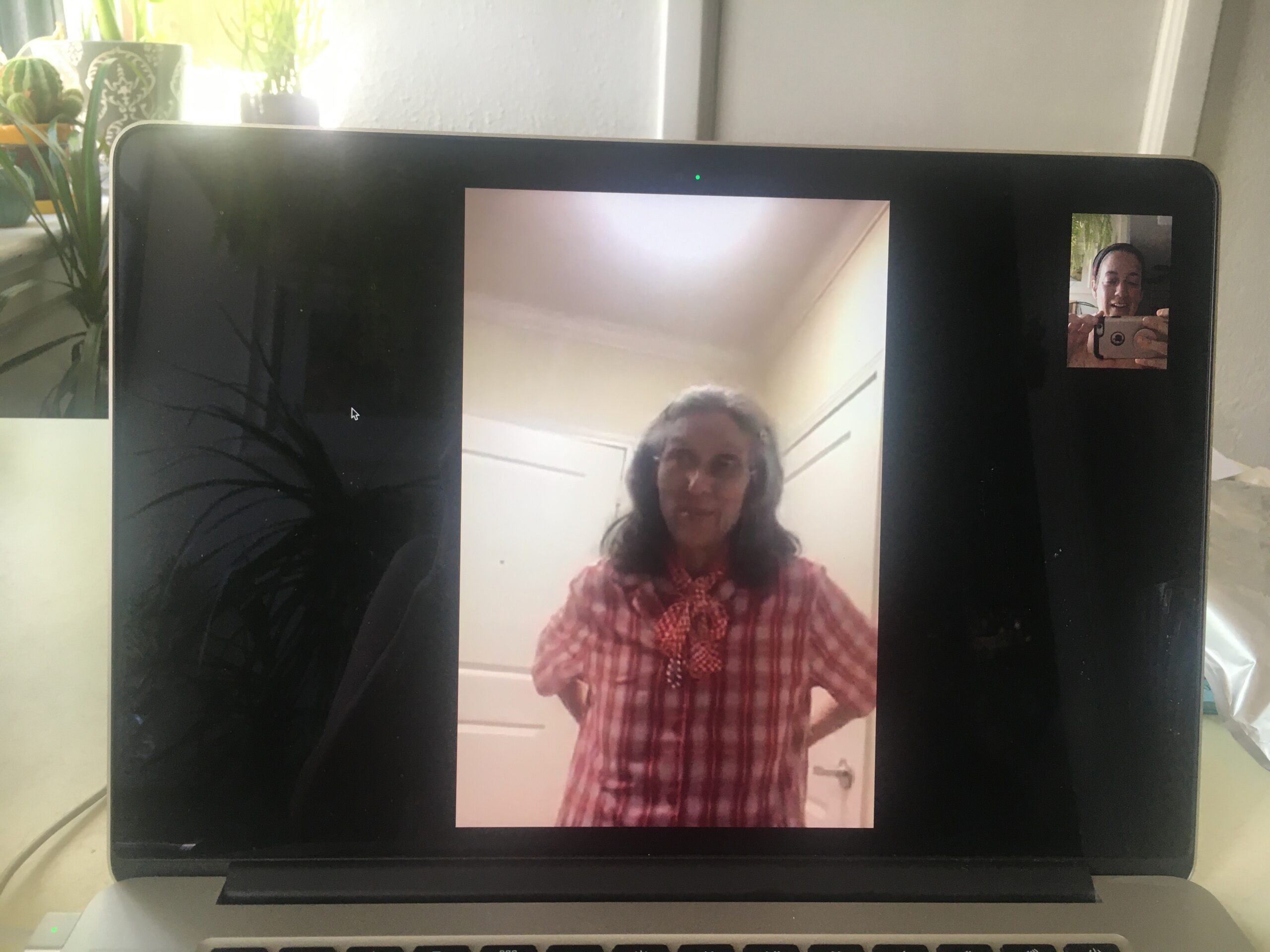
Rachel’s mom, Connie Mae Vann Jackson (June 1, 1935 – April 19, 2022). She was an enrolled Cherokee Nation of Oklahoma. Here we see her on Zoom with her daughter despite advanced last onset dementia during COVID-19 lockdown in May 2020.
I was tired and beleaguered after my beautiful Cherokee mother passed over in April of 2022 just after Easter. It’s disorienting when you lose a precious loved one. Grief is made up of many emotions. It gives you a new perspective, as Kim always told me it would. I was unable to care about much, let alone do it. Turning my attention to drafting the call for papers for the Special Issue on Cultural Rhetorics with Kim and Christina gave me the kind of hope I needed. Ersula’s story and her book gave me this hope, too. And how beautiful that mothering threads throughout our stories.
Christina: I will always be grateful for your work through the process, Rachel. I know how hard it is to experience the kind of loss you—we—have. Sometimes, getting to do this kind of work and assist others can bring some respite; sometimes, it adds to our already full plate. But your generosity in helping others while experiencing your own difficulties can and should never be underestimated. That needs to be recognized.
Ersula: Rachel. I’m honored to know that my efforts to be as human on the page as I am in person translated in ways meaningful to you. You never know how making your grief transparent will impact others or direct them on how to interact with you. Additionally, personal experience has taught me that caring for others, especially a parent, as you care for yourself is a part of that “work-life-jenga” (Stacey Abrams, Lead from the Outside, 2018). Balance is a lie of masculinist discourse. There is no balance, only the appraising of priorities and the strategic focus of energies that help us to move and restack one piece at a time.
What have been some of the highlights of your experience editing special issues of journals in Rhetoric and Composition? What have been some of the challenges in this work?
Kim: One of the most recent highlights was seeing Brandon Erby take the Richard Braddock Award for his article, “Imagining Freedom: Cultural Rhetorics, Digital Literacies, and Podcasting in Prison,” in the special issues of CCC that we completed recently. It has also been wonderful to see the career trajectories and life paths of the scholars we have worked with for the past several years, to see how they and their work are growing and changing. Being closer to the end of my career than the beginning, all of the editing I have done the past several years has been really good for me. I guess it’s also the mom and grandma in me. I enjoy working with younger scholars and seeing where their work goes.
Watching Mara Grayson’s work has been really encouraging to me. That’s another good thing about working across caucuses. People are marginalized and oppressed by the world and by the field in different ways. Sometimes, preconceptions—even when founded in what are thought to be the best of intentions by the most empathetic of people—keep us from seeing another person, from understanding their positionality. Mara, who participated in that first symposium and wrote an article for a special issue, has produced books and articles the past few years that have been really phenomenal work from an academic perspective and, I hope, have opened a few eyes to the discrimination even BIPOC engage in when they only know one aspect of a person or one side of a story. I’m looking forward to the work she is now doing outside of the professoriate to make the academy a better place for us all.
Rachel: Yes! The NCTE Richard Braddock Award is a tremendous acknowledgment. It’s an honor to celebrate this for and with Brandon for sure. To me the biggest reward for the special issue on cultural rhetorics was getting to see all the wondrous ways the conversation extends from so many locations and connects us in such intricate, binding ways. As we acknowledge Brandon’s amazing contribution to the issue and the field, we also have to work against this settler tendency not to acknowledge all of us, the collective, the unending stories like Brandon’s but also different from Brandon’s. I imagine Brandon and Mara both agree. I remember feeling this way when I won the Ohmann Award. It always takes more than one person. We know this! Especially with the community-engaged work that so many cultural rhetorics scholars do. It was also super encouraging to see story threaded throughout the issue and trace the vibrant critical methods modeled for storywork across the chapters—we need these methods for cultural rhetorics. One more thing: helping these writers helped us, too, as we tackle mind-bending complexities, intersectional injustices, and incommensurable problems in our own research and writing. It was just simply exciting and satisfying to see so many scholars of color and our allies articulate methods to unsettle, decolonize, indigenize, inspire, and prepare the discipline.
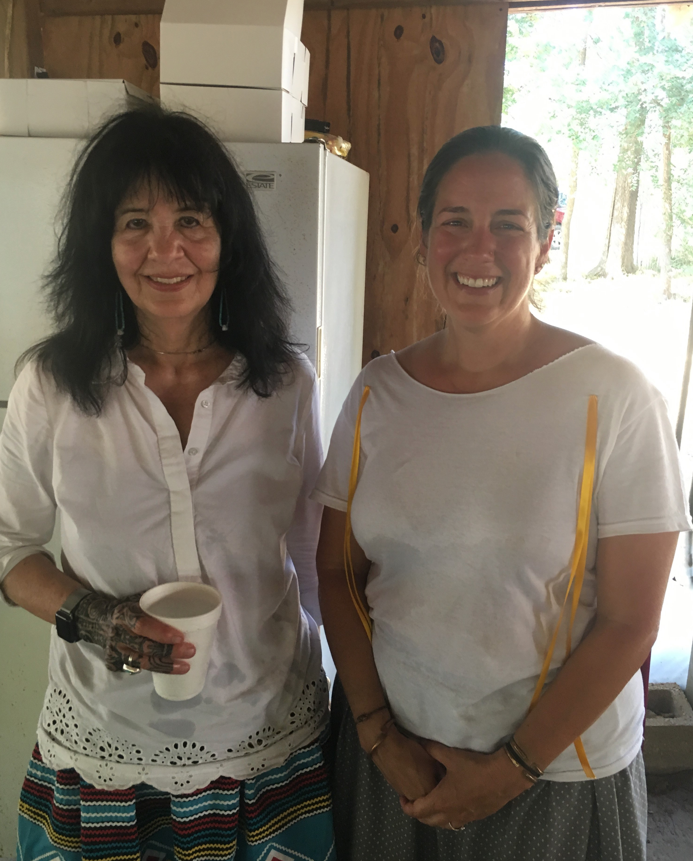
Rachel (right) with Joy Harjo after the Ribbon Dance at Green Corn Ceremony in July 2019. This was the summer before starting her tenure-track position at OU just after Harjo was announced as the 23rd Poet Laureate of the United States, the first Indigenous woman to hold the position.
Christina: YES!!! I was so excited to learn that Brandon won the Braddock award! I remember reading his essay and just thinking, “This is really something!” The reason why I was excited by it is because I have taught courses at Ramsey Prison Unit and found my incarcerated students to be some of the most brilliant students I have ever had the privilege to teach. I also wish our society did better in combating stigma that follows formerly incarcerated folks and permitted restitution of their full rights, especially considering how the penal system targets BIPOC, disabled, and working-class communities. So to see how the article intersects these issues with the Black rhetorical tradition and multimodality was most excellent. Of course, the whole CCC special issue was full of amazing essays and, as we reviewed them all, I found myself so emotionally blown away by each one.
I particularly loved how the essays by Misty Fuller and Ada Hubrig critique the myth of meritocracy from diverse perspectives, as well as how Stephen Kwame Dadugblor, Andrés C. López, Karrieann Soto Vega, Stephanie West-Puckett, Nicole I. Caswell, and William P. Banks all teach us about different ways of telling stories that serve different purposes but are all based on how cultural rhetorics assist in the work of humanization. I could go on. They all highlight what we were trying to say in this special issue: there is no one definition of cultural rhetorics because it’s about building community, so long as we ensure that we aren’t erasing its foundations and connections to people’s lives as Andrea Riley Mukavets pointedly reminds us in “Another Temporarily Hopeful Intervention: Cultural Rhetorics as a Commitment to Indigenous Sovereignty, Cultural Continuance, and Repatriation of Land and Life,” the essay that opens the Special Issue on Cultural Rhetorics. I also really think back on the original symposium that started it all, and how it features such an excellent group of absolutely brilliant scholars like Earl Brooks, Luhui Whitebear, and Temptaous Mckoy, to name just a few. I keep coming back to this symposium in my own work.
Ersula: I celebrate Brandon’s recognition as well and have no doubt that this is only the beginning of a well-respected and deeply impacting career in rhet/comp, Black studies, and the Black rhetorical tradition. Beyond CCCC, though, seeing scholars like Jo Hsu being recognized by organizations including the Coalition of Community Writers (CCW), the National Communication Association (NCA), and Rhetoric Society of America (RSA) has been invigorating. The recent leadership of CCCC chairs Vershawn Young and Staci Perryman-Clark, as well as RSA past president, Kirt Wilson and RSA president-elect, Gwen Pough, provide timely examples of culturally responsive leadership and offer innovative and insightful contributions to forward our work as practitioners and leaders.
According to 2017 data[1], only 5.23% of NCTE/CCCC members identified as other than “white.” How have you experienced this lack of diversity in the field? What words of advice do you have for BIPOC scholars entering the field of Rhetoric and Composition?
Kim: I’m blessed to be located most of the time in Oklahoma, so I don’t feel so all alone—I have Rachel in my department, so I have someone with whom I closely identify and who is in the same field, and my husband Rance Weryackwe is in our field as well. I have also been blessed by caucus and the support of that family. I would tell young scholars to run, not walk, to their caucus. Don’t be shy. If you are shy, write to someone. The caucus leaders are listed on NCTE’s website. If they don’t answer, try again, or write to Kristen Richie, NCTE’s Director of Affiliated Groups, and tell her they aren’t answering so someone calls and says, “Hey, busy person. There’s someone emailing you.” Most of us are willing to respond. People are just so busy that sometimes they don’t notice.
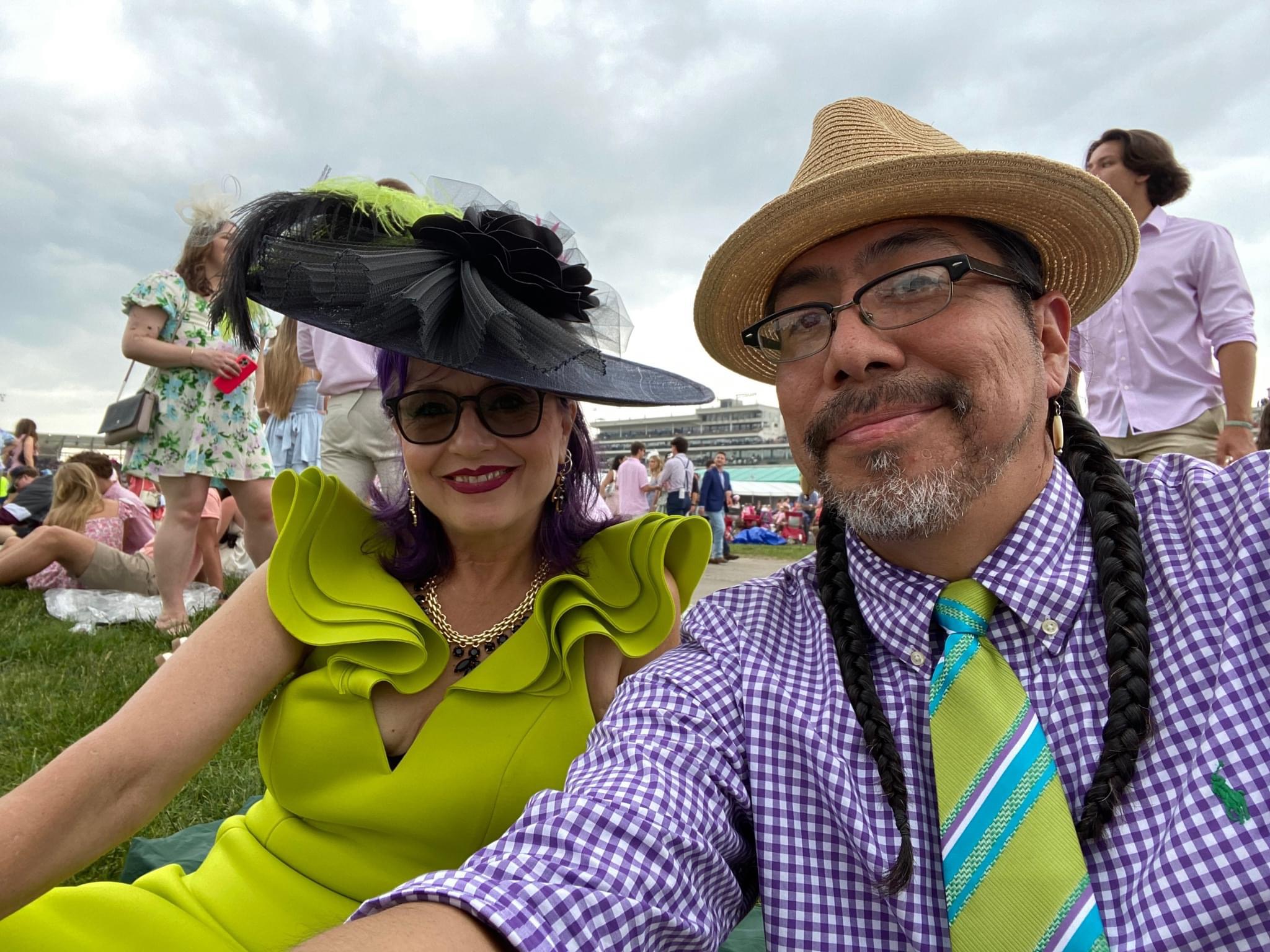
Kim with her husband and fellow scholar, Rance Weryacwe, in Louisville at the Kentucky Derby at the end of her Watson Fellowship.
You have to get support, though, particularly if you don’t have a chair or professors in your graduate program to mentor you. Also, you have to find community where you are, whether that is inside or outside of the academy. You will need them and the way community feeds you—yes, sometimes actually food, but more specifically, spiritually, and emotionally feeds you—to survive the experience and overcome. When you finally reach the point where they start calling you “Dr.,” you’re only part of the way there. The road to tenure is still long. For BIPOC or other othered scholars, the only way to do this and not drain yourself to the extent that you run away from the academy as fast you can, is through community. Reach out. Don’t drown on your own. Ask for help. Ask for guidance. Ask for someone just to listen to you. You’ll need them.
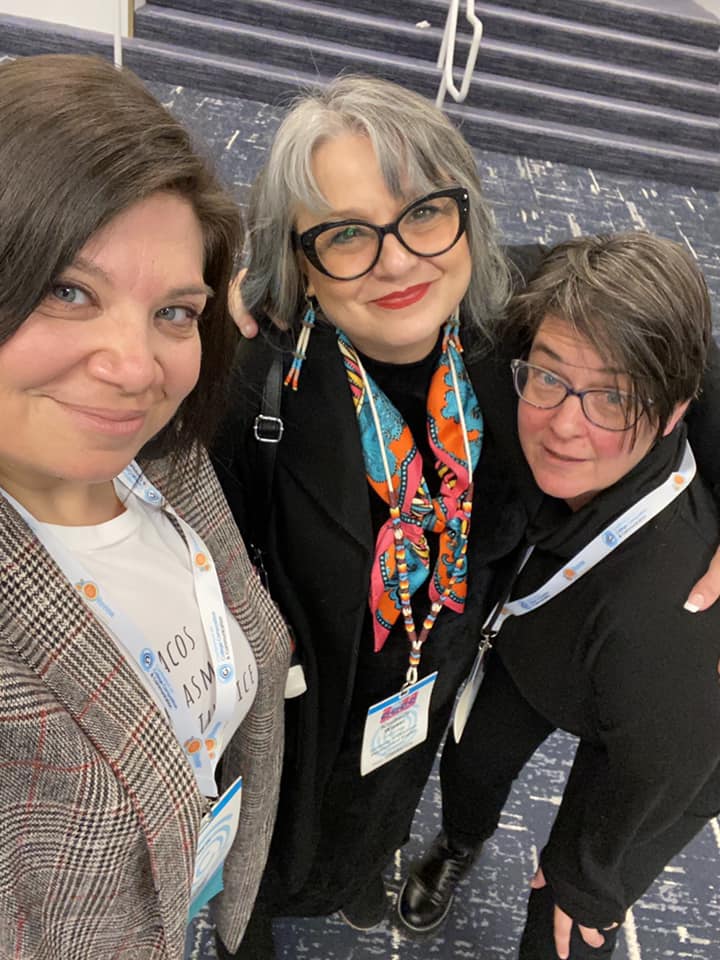
Kim between former constellations editorial board members Andrea Riley Mukavetz and Daisy Levy at CCCC 2023.
Rachel: Kim is right—don’t go it alone. As best you can, stay in proximity to your peoples, places, and communities where your heart lives and in the best of circumstances your work resides. You will need each other. Academia will not make this or any other relationship easy. You will still need each other. Center yourself within your own circles and proceed from your own foundation(s). From there you will run into challenges and troubles in due time. They come and go, like all of us and everything. Racism and hate, however, persist. None of us are innocent or free of imbrication. I have most definitely experienced a lack of diversity in the field, on my campus, in my department, and in my classrooms. In Oklahoma (and Kim can second this), we have students so culturally confused they don’t know where they come from in many cases. Worse, sometimes, when they know, they are afraid to claim it. That’s what white supremacy, federal policies of assimilation and segregation, and silenced histories and suppressed voices do in this world. Oftentimes, the kids claiming to be white are the most confused. What does cultural rhetorics and diversity work look like in this place where students struggle to know who they are and where they are? In many situations, classroom discussions come down to a simple lesson, no less revelatory for many: difference exists. When your work directly engages difference (perhaps your own difference) and particularly when your work engages difference in the place(s) you live, you will feel and experience the world around you differently, too. The Oklahoma state legislature has made it a felony to teach anything white supremacists label “critical race theory.” Our Governor closed our campus DEI Office by Executive Order during finals week last December.
Be prepared for everything from absurdities to rhetorical violences to physical violences. I once had to prove my own Native American descendancy and tribal citizenship through citing federal documentation in a scholarly article for NCTE—in that very College English article for which I later won the Ohmann Award, “Resisting Relocation: Placing Leadership on Decolonized Indigenous Landscapes.” My own family’s stories were not enough. Who else gets asked to do this in academic settings, and as an emergent scholar of color? Teach and write for justice, with peoples, places, and communities anyway—if you can stay safe and you are not alone. In the unavoidable confusion, be as clear as possible with yourself first and others second. Tell stories that teach people how to listen.
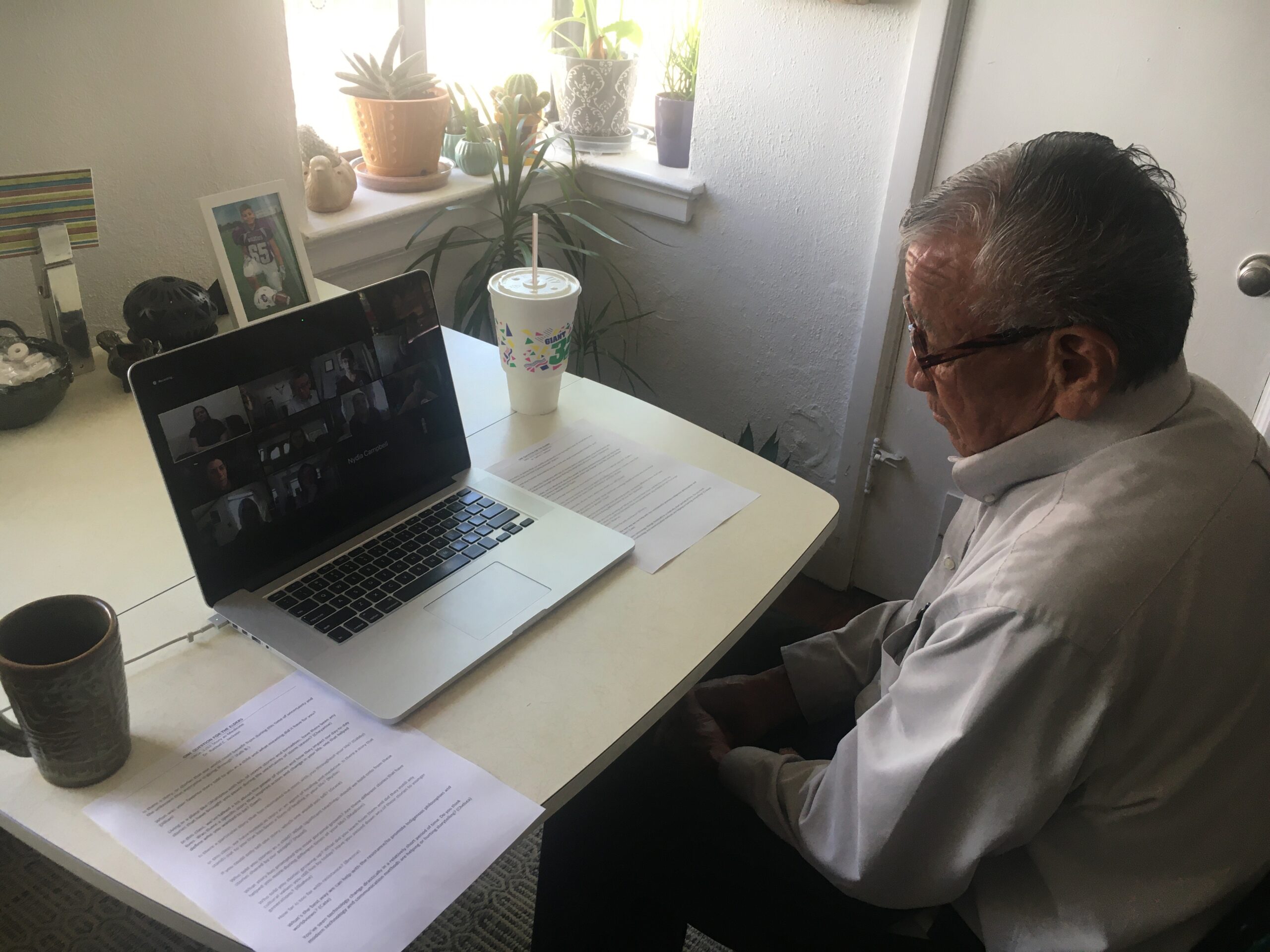
J.T. Goombi, Kiowa Elder and former Kiowa Tribal Chairperson, guest lecturing in Rachel’s Spring 2020 class, “Stories as Medicine,” on Zoom during lockdown. COVID-19 took his life in January 2021.
Ersula: Universities are siloed spaces by nature, so a chief stratagem to navigate the academy with your integrity and sanity intact is to build a network. The important thing about a network is that it can take many forms—physical, digital, imaginative. My imaginative network consists of the scholars I respect, fuck wit, and aspire to be like. These are the folks I’ll probably never meet, but the ones I talk to in my head and on the page all the time. My physical and digital networks consist of folks in the field I’ve met as well as supportive friends and family and individuals who serve as mentors. At any time, I can email, call, or, if in the vicinity, physically share space with members of this group.
Each of these groups is important and sometimes folks from one group migrate to the other and vice versa. Admittedly, though, I’ve cold emailed a scholar from my “imagined network” following my assault in 2014. I’d been reading the late Charles Mills’ The Racial Contract before my incident and was brought back to it while working on the book and drafting my defense. At the height of the bullshit, I emailed Mills and asked him if he had any advice for me. His advice was disheartening, but understanding, and echoed what a good number of senior Black faculty and scholars had suggested to me when they reached out in support and encouragement: “Keep your head down, keep quiet, and get tenure.” Their advice was in support of my securing an institutional protection that means less now than it ever did. And I had to ask myself what mattered most: tenure or my own self-respect. Needless to say, soliciting advice is one thing; following your heart and trusting your gut is an act of righteous indignation—it is a self-sustaining and self-loving practice I’ll perform all day.
Christina: It’s incongruous to me to think about these numbers because I live and teach in Houston at an Hispanic Serving Institution and this doesn’t fit my everyday experience at all. That’s not to say Houston doesn’t have its own legacy of redlining or historical cultural enclaves, but it’s definitely more racially and linguistically diverse than many places. My classroom is, too, and students want to know about complex histories, not the whitestream narratives that they’ve been taught, and that the recent laws now dictate. When it comes to our field’s conferences, I admit that I have managed to find ways to expertly engineer my conference experience to center my friends and communities, to surround myself with friendly people. That said, at my institution, I do notice that the administration is overwhelmingly white and the few BIPOC admin tend to struggle. In our conference spaces and during the publication process, whitesplaining can happen when people who don’t know you assume you don’t cite certain scholars or engage certain theories because you don’t know them. I have had to explain during Q&A that I do know certain critics/ideas but always don’t find them germane because I was taught that scholars should “listen” to the text to identify and honor the frameworks and concepts that influence the author(s). This means you can’t shoehorn critics or their ideas in just because they are well known but should instead consider their communities of origin, the contexts of rhetorical action, and the spaces and times where/when they wrote or are writing. That is the whole point of a cultural rhetorics approach—to recognize where speakers are coming from. But I want to add that comparative rhetorics scholars like Bo Wang and LuMing Mao have also long written about this very issue. We cannot universalize “traditional” (aka Western) theories and concepts to examine non-Western works or works by members of marginalized communities lest we misconstrue or invalidate their practices.
Personally, I have had editors tell me I must cite certain white scholars in my work because that’s whose work they know, even when those critics have not influenced my thinking, though this is becoming less of an issue, perhaps because I’ve published more or because we’ve had more conversations about this as a field. Editors have critiqued my writing style for sounding like “non-mainstream English,” for refusing to translate Spanish phrases into English, and for refusing to use cultural/rhetorical terms they insist are correct when I know they aren’t. (These are just some of the reasons why Melissa Elston and I started The Journal of Multimodal Rhetorics based on anti-racist, anti-ableist, culturally-centering reviewer practices.) Knowing these things happen, young scholars need to be prepared to make choices about where they publish.
Never feel like you have to sell yourself short. Find venues that value your work and you as a person. Find mentors at your institution or elsewhere who can offer information about making safe communities of support. Mentors can also translate any “helpful feedback” you receive from editors or administrators so you don’t internalize feelings of failure, especially if you experience abuse. They can also guide you in making the best choices to ensure that you get published or meet any tenure expectations even if you feel alone where you’re at. And remember that mentors can even be your peers, when you have one another’s backs. You are needed here.
Notes
[1] See Ribero, Ana Milena and Sonia Arellano. “Advocating Comadrismo: A Feminist Mentoring Approach for Latinas in Rhetoric and Composition.” Peitho: Journal of the Coalition of Feminist Scholars in the History of Rhetoric and Composition, vol. 21, no. 2, 2019. cfshrc.org/article/advocating-comadrismo-a-feminist-mentoring-approach-for-latinas-in-rhetoric-and-composition/
About the Authors
Ersula J. Ore is Associate Professor of African & African American Studies in The School of Social Transformation and co-editor of the interdisciplinary journal Rhetoric, Politics, & Culture (RPC). She is a rhetorician who researches and teaches in the areas of African & African American studies, rhetorical studies, and racialized violence. Her book Lynching: Violence, Rhetoric & American Identity (University Press of Mississippi, 2019) which received the 2020 Rhetoric Society of America Book Award, examines lynching as a rhetorical strategy and material practice interwoven with the formation of America’s national identity, and the precursor to antiblack police violence today. Her current work examines how appeals to civility, civility discourse, and civilizing strategies curtail and racialize the civic performances of Black women as they operate in public space. Dr. Ore’s work can be found in Rhetoric Society Quarterly, Rhetoric & Public Affairs, Communication and Critical/Cultural Studies, Women Studies in Communication, Quarterly Journal of Speech, Pedagogy, Present Tense, Critical Discourse Studies, and Rhetoric, Politics & Culture among others journal publications.
Christina V. Cedillo (she/they) is an associate professor of writing and rhetoric at the University of Houston-Clear Lake. Christina’s research draws from cultural rhetorics and decolonial theory to focus on embodied rhetorics and rhetorics of embodiment at the intersections of race, gender, and disability. Their work has appeared in College Composition & Communication, Rhetoric Society Quarterly, the Journal for the History of Rhetoric, Composition Forum, and various other journals and edited collections. Christina’s current project examines spatiotemporal tropes that affect how marginalized rhetors and their messages are perceived and received based on modernity’s colonial/modern epistemics. Christina is also the lead editor of the Journal of Multimodal Rhetorics.
Rachel C. Jackson (enrolled Cherokee Nation of Oklahoma) is an Assistant Professor of the Native American Literatures and Cultural Studies and Rhetoric and Writing Studies programs in the Department of English at the University of Oklahoma. Her research examines local activist rhetorical strategies in the context of historical suppression, particularly as activist rhetorics operate transrhetorically across different cultural locations to build collective action toward decolonial futures. Her community-engagement projects focus on sustaining Native American languages and cultural literacies and forwarding Indigenous cultural knowledges and practices. Her work has appeared in College Composition and Communication, College English, Rhetoric Review, Community Literacy Journal, and Journal of Multimodal Rhetoric, as well as several chapters in edited collections. She is both a Ford Foundation Fellow and a Research Fellow with the Newberry Consortium on American Indian Studies and the National Consortium on Rhetoric and Environmental Writing.
Dr. Kimberly Gail Wieser-Weryackwe is Professor of English at the University of Oklahoma as well as affiliated Native Studies and Environmental Studies faculty. Her book Back to the Blanket: Recovered Rhetorics and Literacies in American Indian Studies was published by OU Press in 2017 and is part of the Recovering Languages and Literacies of the Americas Initiative, funded by the Andrew W. Mellon Foundation. Wieser-Weryackwe is one of the co-chairs for American Indian Caucus for NCTE/CCCC and serves as a Managing Editor at Constellations: A Cultural Rhetorics Publishing Space. During Spring 2024, Dr. Wieser-Weryackwe served as the Thomas R. Watson Distinguished Visiting Professor for the University of Louisville English Department. Louisville, Kentucky. Her volume American Indian Literature: An Encyclopedia for Students is forthcoming from Bloomsbury in 2025.
About the Moderator
Ana Milena Ribero is an associate professor of rhetoric and writing at Oregon State University. Her research and teaching focuses on rhetorics of im/migration, rhetorics of race, critical literacies, Women of Color feminisms, and critical race and feminist pedagogies. Her latest book is Dreamer Nation: Immigration, Activism, and Neoliberalism and her scholarship can be found in Rhetoric Review, Peitho: Journal of the Coalition of Feminist Scholars in the History of Rhetoric and Composition, Performance Research, Present Tense: A Journal of Rhetoric in Society, and in edited collections.
Production Credits
Copy Editors: Natalie Cohen and Alexandra Hidalgo
Posted by: Natalie Cohen
Editorial Assistants: Alex Jennings
Social Media Manager: Evelynn Pugh
Special Issue Editors: Christina Cedillo, Ana Milena Ribero, and Kimberly Gail Wieser-Weryackwe
Editor-in-Chief: Alexandra Hidalgo
Related posts:
 The Mass Exodus: Why People Are Leaving Academia and What We Can Learn from Their Stories
 Stories that Lead to Action: An Exploration of US Political Rhetorics
 Your Misogyny is Not a Cultural Difference: Constellating Transnational Stories of Religious Gender-Based Violence and Feminist Resistance
 Working in the Community-University Interface: Insurgent Methods for Extraordinary Times
 Elucidating “What Trafficking Texts Do in the World as World-making Matter”: A Review of Annie Hill’s Trafficking Rhetoric: Race, Migration, and the Making of Modern-Day Slavery
 Transnational Cultural Rhetorics: Introduction to Special Issue 7 of constellations