Book Reviews

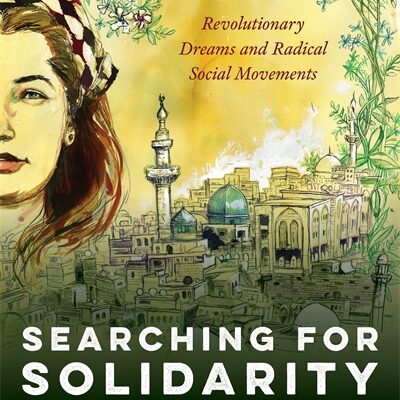
Cultivating Solidarity through Radical Subjectivity: A Review of Noor Ghazal Aswad’s  Searching for Solidarity: Revolutionary Dreams and Radical Social Movements

Cultivating Solidarity through Radical Subjectivity: A Review of Noor Ghazal Aswad’s Searching for Solidarity: Revolutionary Dreams and Radical Social Movements

By: Samantha Guajardo
Through engagement with radical subjects and their experiences, Aswad encourages readers to reconsider whose voices carry epistemic authority and how solidarity emerges through encounters with those confronting oppressive conditions firsthand (18-19). Situated at the confluence of rhetoric and critical cultural studies, Searching for Solidarity offers a compelling framework for understanding how solidarity takes shape through relationships with those engaged in revolutionary struggle
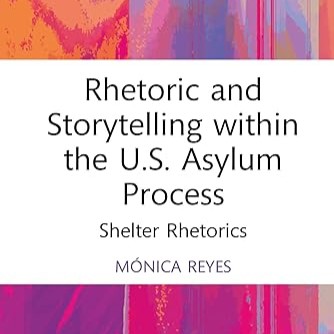
Giving Voice and Listening to the Asylee: A Review of Mónica Reyes’s Rhetoric and Storytelling within the U.S. Asylum Process: Shelter Rhetorics

Giving Voice and Listening to the Asylee: A Review of Mónica Reyes’s Rhetoric and Storytelling within the U.S. Asylum Process: Shelter Rhetorics

by Tomas Maldonado
“Relying on what she identifies as ‘shelter rhetorics’—idiosyncratic, everyday rhetorical practices that protect people’s vulnerabilities while also giving them agency in unstable situations—as presented in audio-recorded interviews, resident drawings, and photos, Reyes conducts a thorough case study of what asylees endure through the asylum process.”

Elucidating “What Trafficking Texts Do in the World as World-making Matter”: A Review of Annie Hill’s Trafficking Rhetoric: Race, Migration, and the Making of Modern-Day Slavery

Elucidating “What Trafficking Texts Do in the World as World-making Matter”: A Review of Annie Hill’s Trafficking Rhetoric: Race, Migration, and the Making of Modern-Day Slavery

by Sonia C. Arellano

“Hill makes us consider what happens when flawed logic and rhetoric inform state initiatives. In the current environment where we risk lies propagating policy change, we can learn so much from examining how such rhetoric has impacted policy previously and continues to do so.”

“Who is Worthy of Childhood?”: A Review of Wendy Hesford’s  Violent Exceptions: Children’s Human Rights and Humanitarian Rhetorics

“Who is Worthy of Childhood?”: A Review of Wendy Hesford’s Violent Exceptions: Children’s Human Rights and Humanitarian Rhetorics

by Joselyne Tellez-Cardenas
“In Violent Exceptions: Children’s Human Rights and Humanitarian Rhetorics, Hesford identifies and examines various international children’s humanitarian cases, in order to inspect how visual and political rhetorics are employed to mark children as “exceptional,” a process that has violent repercussions for those not considered worthy of exceptionalism.”

How to Spot a Fascist: A Review of  The Rhetoric of Fascism, Edited by Nathan Crick

How to Spot a Fascist: A Review of The Rhetoric of Fascism, Edited by Nathan Crick

by Carlee A. Baker
“Crick’s collection paints a broad historical and social picture, featuring in-depth analyses of the rhetoric of fascism from several regions, including the U.S., China, Italy, Mexico, Russia, and Germany. In this way, the collection of essays, taken together, provides a nuanced picture of the contours and features of fascist rhetoric via the analysis of a series of case studies.”

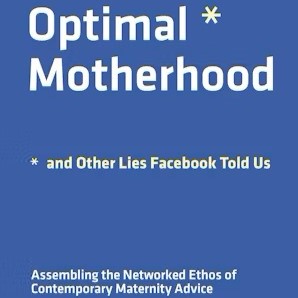
Building a Better Future for Mothers: A Review of Jessica Clements and Kari Nixon’s Optimal Motherhood and Other Lies Facebook Told Us: Assembling Networked Ethos of Contemporary Maternity Advice

Building a Better Future for Mothers: A Review of Jessica Clements and Kari Nixon’s Optimal Motherhood and Other Lies Facebook Told Us: Assembling Networked Ethos of Contemporary Maternity Advice

by Alexandria Hanson
“Throughout Optimal Motherhood, Clements and Nixon intertwine their parenting experiences with rhetorical analyses of digital media and multimethod research. Their research considers the experiences of mothers and alcohol consumption, labor and delivery, postpartum medical diagnoses, breast and bottle feeding, infant sleep, and interpreting at-home pregnancy tests.”

Leigh Gruwell’s Making Matters: Craft, Ethics, and New Materialist Rhetorics

Leigh Gruwell’s Making Matters: Craft, Ethics, and New Materialist Rhetorics

by Shiva Mainaly
“The practice of materialist rhetorics by the indigenous people of North America since time immemorial illustrates how to push back on the oppressive and exclusionary contours of power, with an intent on making it accountable via shifting the very positionality of any actant within a rhetorical assemblage in a manner most ethical and responsible. In point of fact, this is the pith and marrow of Gruwell’s text being reviewed here.”

Black Tech Matters: A Review of Charlton McIlwain’s Black Software

Black Tech Matters: A Review of Charlton McIlwain’s Black Software

by Codi Renee Blackmon
“McIlwain’s archival work illustrates how throughout the history of digital technologies, Black people have always learned how to master technical worlds and make software to help each other, providing more culturally informed narratives to the history of the Internet. Even something as simple as putting their own Blackness and Black interests onto the Web in the 1990s and the 2000s was a radical act.”

“You Know, Anger Can Be Righteous”: A Review of James Chase Sanchez’s Salt of the Earth and Joel Fendelman’s Man on Fire

“You Know, Anger Can Be Righteous”: A Review of James Chase Sanchez’s Salt of the Earth and Joel Fendelman’s Man on Fire

by Stella Takvoryan
“In Salt of the Earth, Sanchez unpacks how Grand Saline’s storytelling tradition sustains and preserves white supremacy by constellating his most salient memories of Grand Saline (Sanchez, personal interview) and scholarship on the rhetorics of race and racism, protest, silence, cultural rhetorics, and storytelling as methodology.”

Send My Love to the Family: A Review of Glasby, Gradin, and Ryerson’s Storytelling in Queer Appalachia: Imagining and Writing the Unspeakable Other

Send My Love to the Family: A Review of Glasby, Gradin, and Ryerson’s Storytelling in Queer Appalachia: Imagining and Writing the Unspeakable Other

by Vee Lawson
“This collection of eleven essays looks through singular narratives of a homogenous Appalachia—white, cisgendered or heteronormative, solely masculine, repressive, or backwards—to see many experiences of Appalachian queer identity, engaging narratives of exile, return, and liminality as the writers demonstrate that Appalachia itself is ‘a little bit quare.'”